How Does a Sidewall Conveyor Belt Work?
-
 管理者
- 19 11月, 2026
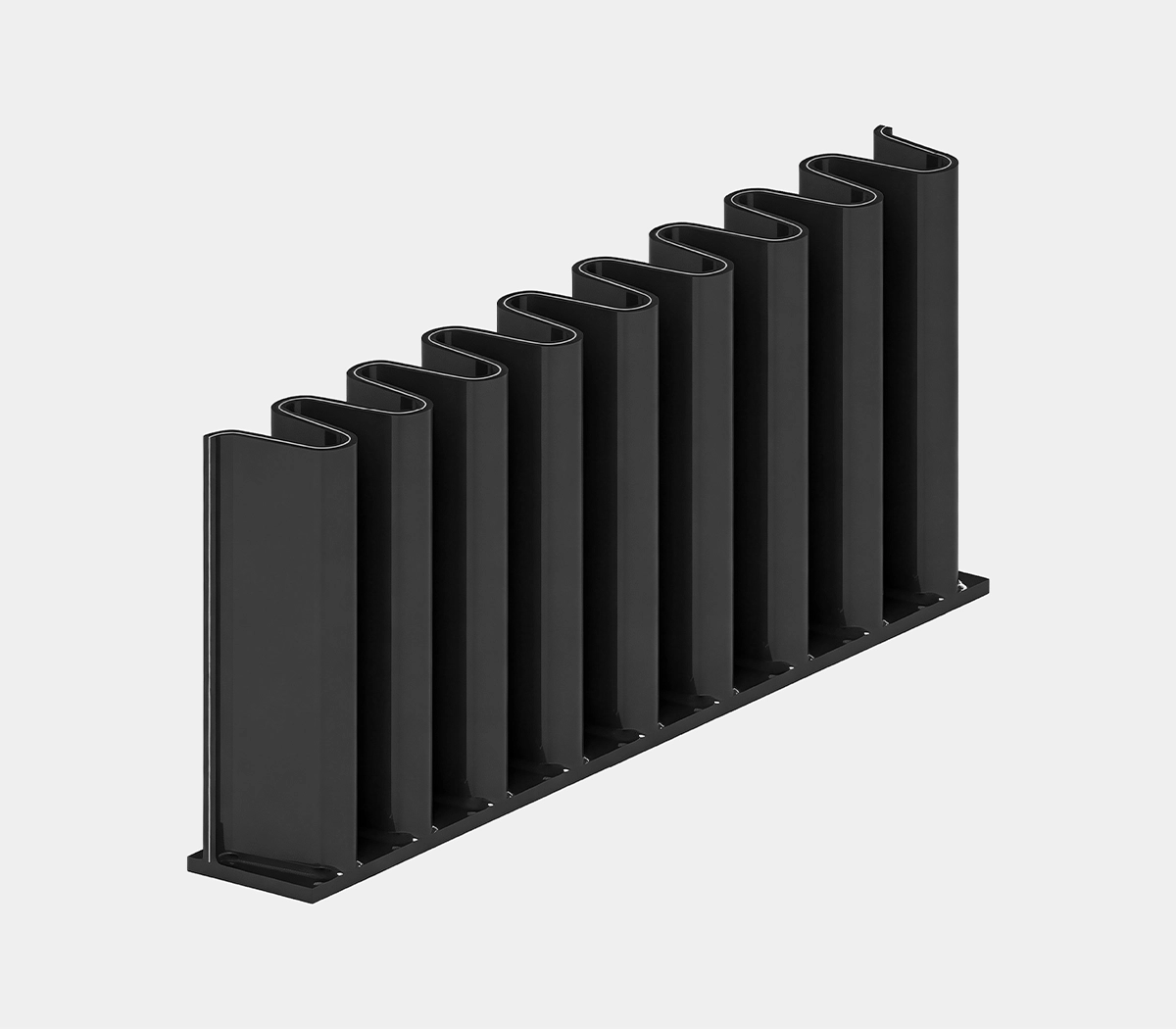
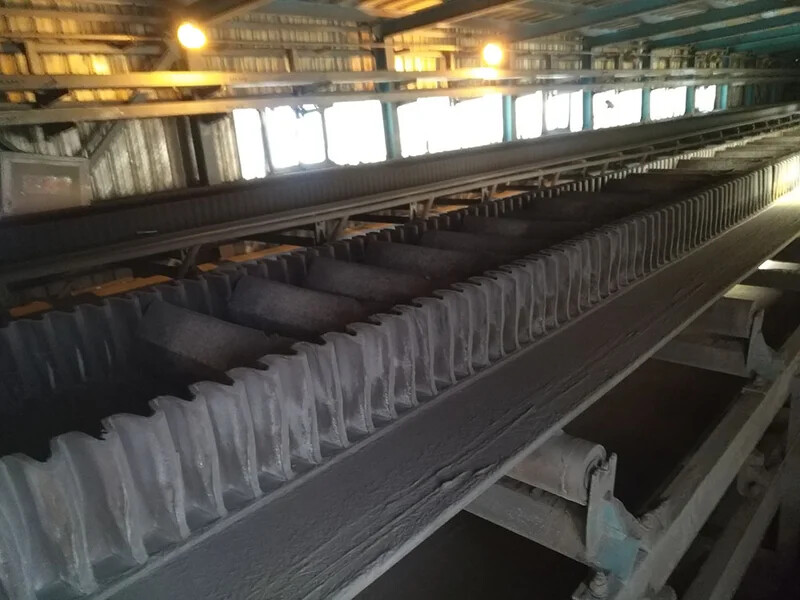
A sidewall conveyor belt lifts loose bulk material in open compartments formed by transverse cleats, corrugated sidewalls and a continuous base belt. As the belt climbs, the cleats support the load against gravity while the sidewalls stop it spilling over the edges. The material leaves at the discharge end, and the empty belt returns to the loading point.
The interesting part is what happens between those two ends. A 側壁コンベアベルト may travel horizontally, round a bend, climb almost vertically and turn again before unloading. Follow a batch of crushed stone through that journey to see how the system works.
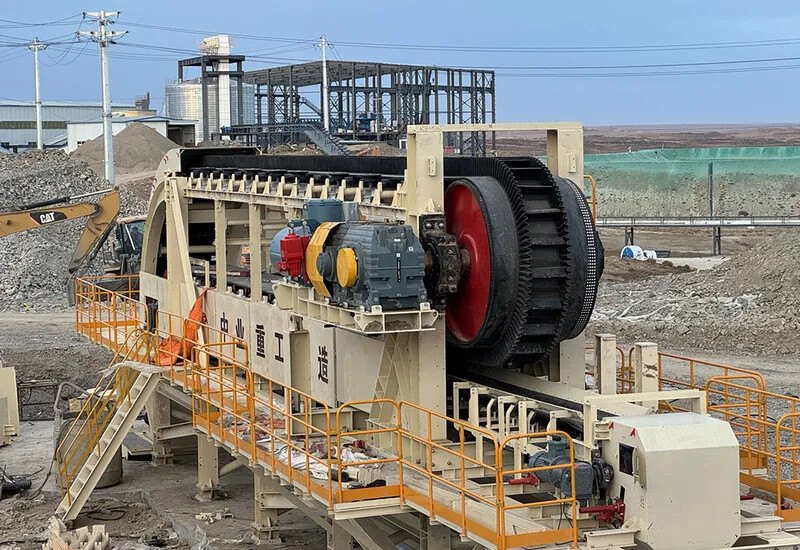
From Loading to Discharge: Five Stages of Belt Movement
1. Loading: Filling a Moving Compartment
A feed chute delivers stone, sand or another bulk solid onto the belt near its tail end. The loading run is often horizontal. That lets incoming material settle into the spaces between successive cleats as they pass beneath the chute. The base belt forms the floor, while the corrugated sidewalls define the edges of the carrying area.
The falling material meets a surface that is already moving. It accelerates to belt speed and spreads within the space available. An even feed makes those moving compartments fill more consistently before the belt begins to rise.
2. Lower Bend: Turning the Load Upward
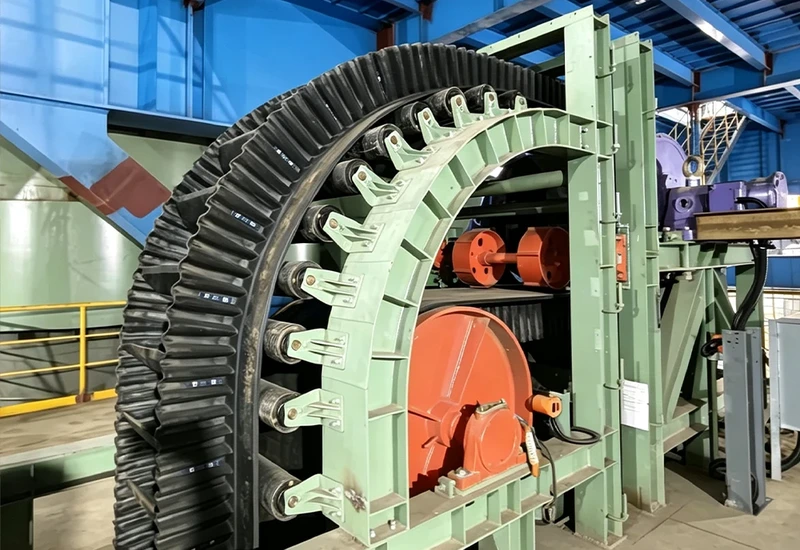
Next, the belt rounds the lower deflection point and changes from horizontal travel to an incline. A drum or deflection-wheel arrangement guides the belt through that turn. The base bends along its length, but it also has to remain stable across its width so the loaded carrying surface does not collapse or twist.
This is where the folds in the sidewalls become useful. A straight, rigid rubber wall would resist the change in curvature. Corrugations let the raised edges flex as the belt rounds the bend. Meanwhile, the stone shifts toward the cleat behind it as the carrying surface tilts upward. The load is now resting against a physical support rather than depending on belt friction alone.
3. Incline: Holding the Material During the Lift
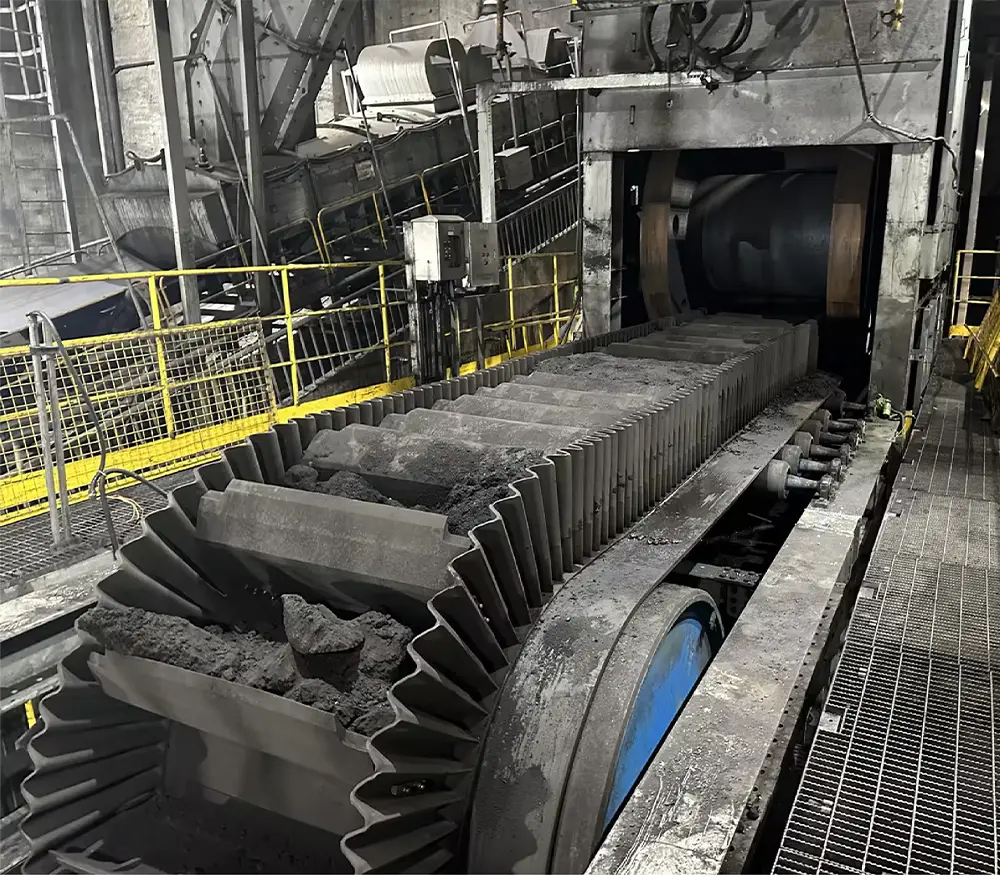
On the steep section, the cross cleats behave like a series of moving shelves. They oppose the tendency of the bulk material to slide downhill. The sidewalls keep it from spilling sideways, and the base belt carries the load between them. These three surfaces form the open compartments that travel continuously upward.
At angles approaching vertical, this support is essential: loose stone cannot stay on a smooth rising belt simply because the rubber is grippy. The cleats carry the material through the lift, while the belt drive moves the complete assembly.
4. Upper Bend and Discharge: Releasing the Load
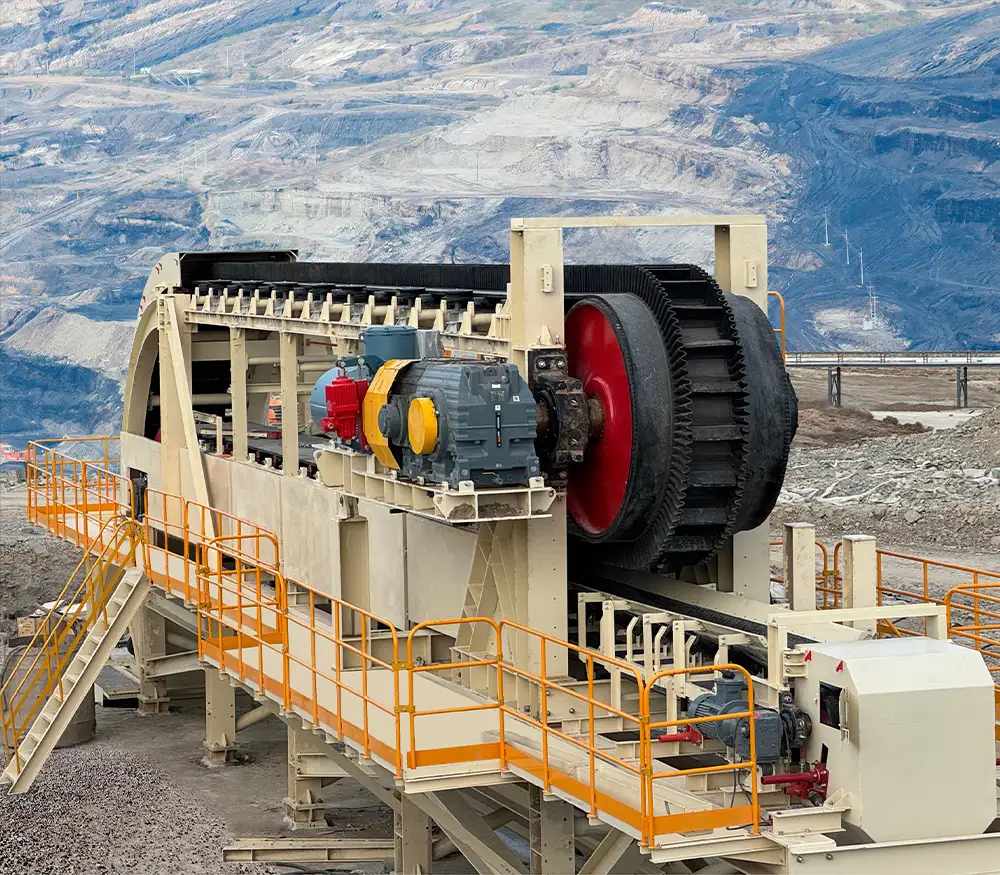
At the top of many sidewall conveyor layouts, the belt turns from a steep climb into a shorter horizontal run. This curve needs a different kind of control from the lower bend. If the change in direction is too abrupt, the moving material can be thrown out of its compartments before it reaches the discharge chute. A broad transition supported by a series of rollers can guide the load through the curve.
At the head pulley, the belt turns away from the carrying path and the bulk material falls into a chute, bin or receiving conveyor. The load is released by gravity as the moving compartment changes direction. The location of this release point explains why the upper curve and discharge chute are treated as one part of the conveying route.
5. Return: Bringing the Empty Belt Back
After discharge, the empty belt continues along the return run. A sidewall belt cannot always rest on ordinary full-width return rollers because the cleats and raised edges project from its surface. Edge-supporting rollers, guides and correctly arranged pulleys make space for those profiles while supporting the belt. It then reaches the loading end and repeats the cycle.
How Can the Base Belt Be Stiff and Flexible at Once?
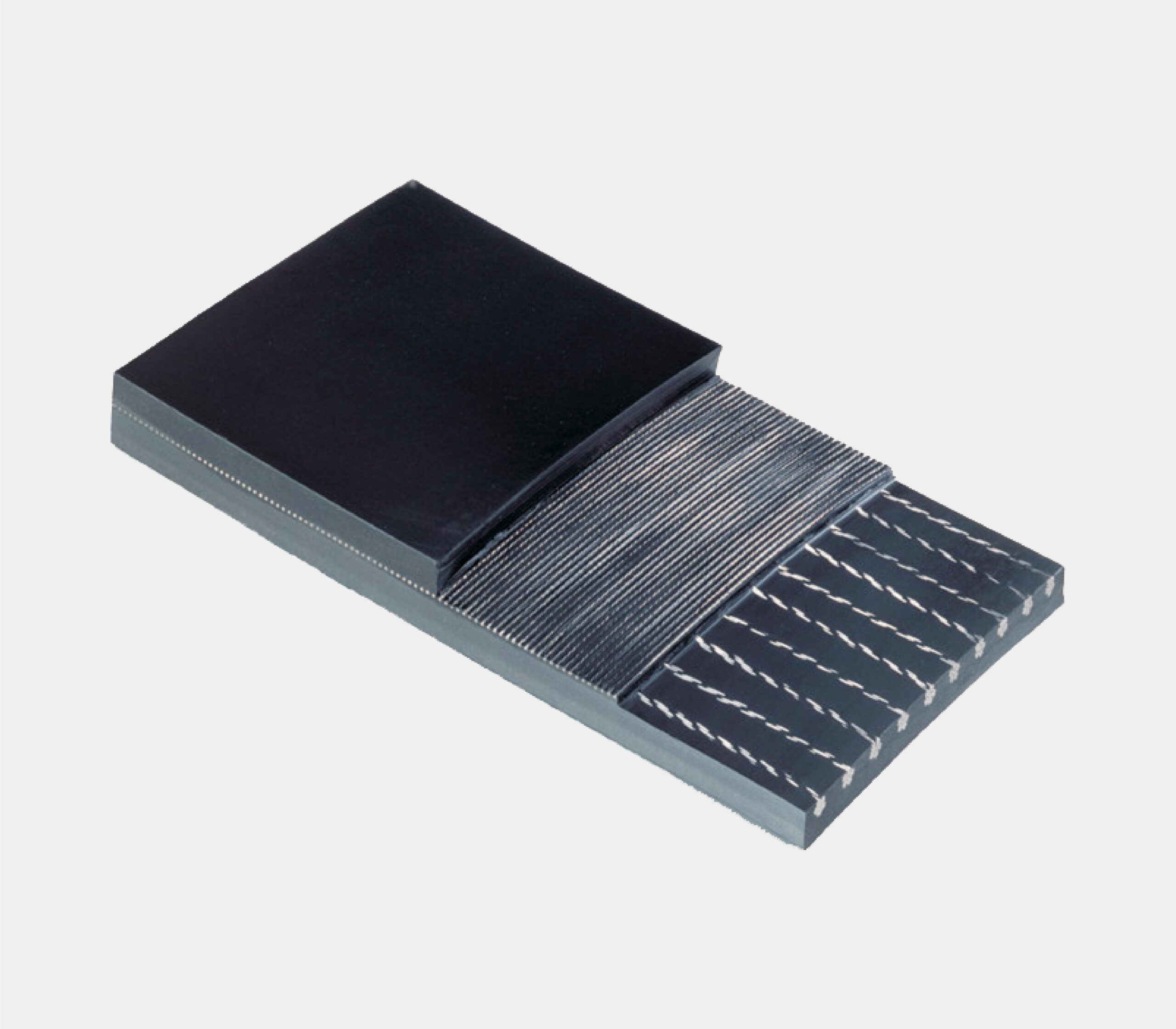
The two properties act in different directions. Longitudinal flexibility lets the belt wrap around pulleys. Transverse rigidity helps it remain flat across the loaded width, especially at deflection points where the carrying surface changes direction. Without that crosswise support, the cleats would not have a stable base beneath the load.
QBF’s base belt constructions use reinforcement to combine these properties. The important distinction is not whether a belt is simply ‘hard’ or ‘soft’, but which way it must bend and which way it must hold its shape.
Why Cleat Shape Affects Both Lifting and Discharge
A cleat has two tasks that pull in opposite directions: it must support material during the climb, then allow it to leave the compartment at discharge. Its height, spacing and profile affect how much material each space can carry, how the load settles and how cleanly it empties.
QBF’s cleat range includes T, C and TC profiles. T profiles are associated with lower conveying angles, while C and TC profiles are used for steeper routes. QBF describes the curved C and TC designs as having self-cleaning properties, which are useful when material needs to leave the belt at the head.
Why Material Behavior Changes the Cycle
Coarse aggregate tends to settle as individual pieces against the cleats. Dry sand flows into smaller gaps and levels out inside the moving compartment. Fine powders can produce dust around the feed and discharge points. Damp or sticky materials may leave residue on the rubber after the main load has fallen into the chute.
That residue is called carryback when it travels onto the return run. It can gather near the cleats or sidewalls, so some installations use cleaning or shaking devices close to discharge. A clean release matters just as much as a secure lift when a conveyor runs continuously.
よくある質問
Why are some return rollers shorter than the belt width?
Edge-supporting rollers can carry the returning belt while leaving clearance for the raised cleats. Full-width rollers would interfere with those projecting profiles in some layouts.
What is the rubber seal between a cleat and a sidewall?
QBF calls this optional piece a side blinker. It closes the small gap where a cleat meets a corrugated sidewall, helping contain particularly free-flowing bulk materials.
Closing the Loop
The belt’s route makes sense when viewed as one continuous cycle: controlled loading, a flexible lower bend, cleat-supported lifting, a guided discharge and a clear return path. Each part makes the next stage possible. If you are new to this belt construction, our sidewall conveyor belt overview introduces the components and their typical applications.
タグ:
管理者
前のページはありません
前の記事