Steel Cord Conveyor Belt

Steel Cord Conveyor Belt

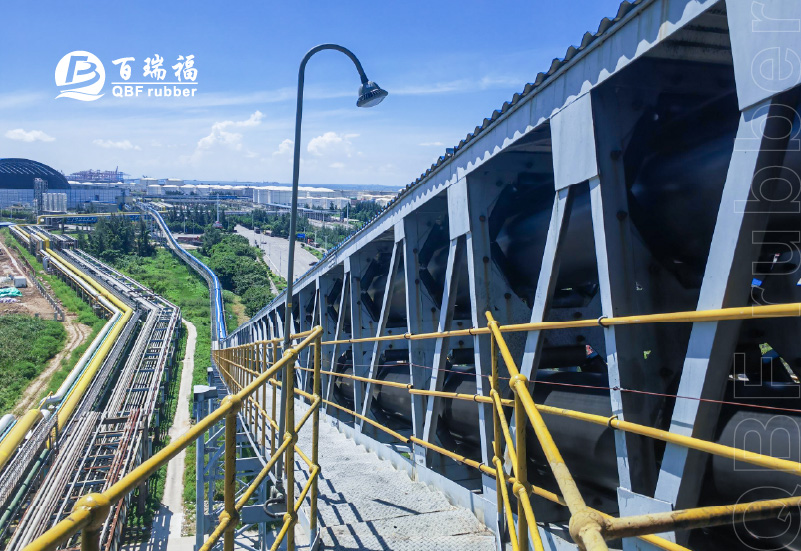
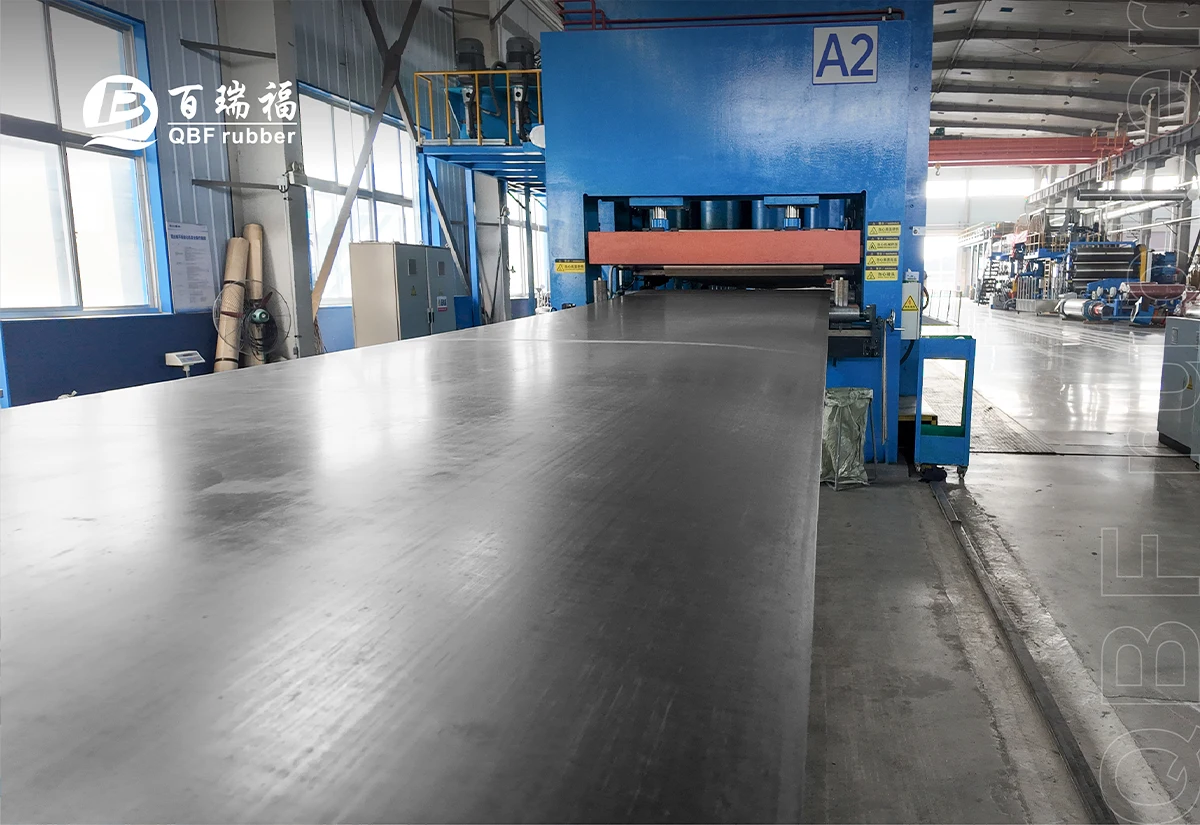
Our steel cord conveyor belt features high tensile strength, low elongation and even cord tension to avoid deviation. Strong rubber cord bonding ensures superior impact resistance and long service life. It suits small pulleys and high load troughing, with X ray internal defect inspection. Various resistant cover rubbers are available. Perfect for long distance bulk transport in mining, ports, steel and metallurgy sectors to cut downtime and costs.

Our steel cord conveyor belt delivers high tensile strength and low elongation with minimal take-up stroke. Even steel cord tension prevents deviation, while robust rubber-cord bonding offers great impact resistance and longer service life. It supports smaller drive pulleys and good troughability for higher loading, with full X-ray inspection for internal flaws. Multiple cover compounds include abrasion, heat, cold, fire and chemical resistant types. Ideal for long-distance bulk material transport in mining, ports, steel mills, cement plants and metallurgy to reduce downtime and operating costs.


Key Features

Many onsite issues come from conventional belts: excessive stretching, poor impact resistance, short service cycles and frequent drift. We designed this steel cord belt to solve these real world pain points.

Small Elongation

Once installed, the steel cord core produces minimal stretch under continuous load. You only need limited take up travel. On long conveyor lines, you will seldom re adjust tension, which saves regular maintenance work.

High Tensile Strength

Parallel high strength steel cords act as the load carrying core. The belt can handle heavy bulk cargo and long haul conveying. It copes with sudden tension surges and reduces the risk of belt rupture under high volume production.

Lower Overall Operating Cost

Long service cycle and stable running mean fewer belt change outs and less unplanned stop time. Less tension tuning and fewer onsite failures will bring down your total system cost.

Balanced Steel Cord Tension

We control cord tension precisely in production. Even tension across all internal cords keeps the belt tracking straight. This reduces side drift, material spillage and uneven edge wear during continuous operation.

Works with Small Diameter Pulleys

The steel cord carcass stands up well to repeated flexing. You can run it on relatively small drive pulleys without cord damage or rubber delamination. This allows you to adopt more compact conveyor layouts and save equipment space.

Reliable Cord to Rubber Adhesion

Galvanized steel cords and custom formula rubber are fully vulcanized together. Strong bonding resists impact and friction. It stops cord exposure and layer separation to prolong belt service life.

Good Troughability

Proper lateral flexibility allows the belt to sit well on deep trough idlers. It holds more bulk material per running cycle and helps contain fines and rock, cutting spillage along the conveyor route.

Full X ray Inspection Option

Before delivery, finished belts can receive complete X ray scanning. This test finds hidden problems: internal cord breakage, cord offset and inner voids — issues you cannot spot only by visual check. It avoids unexpected breakdowns once the belt is running on site.

Lightweight Structure for Energy Saving

We optimised the belt construction for high strength without extra weight. Lower belt mass reduces motor load in continuous operation, helping you save power consumption for heavy duty conveying.


Rubber Quality

We match cover rubber grades based on your actual working conditions: conveyed material temperature, lump size, drop height and site environment. Even a strong carcass will fail quickly without proper cover rubber protection.

  • Low Rolling resistant: Reduce running resistance for long distance conveyors
  • Oil resistant: For sites with mineral oil or grease contamination
  • Acid & Alkali resistant:Handle materials with chemical corrosion
  • Normal Abrasion resistant: General purpose bulk material handling
  • High Abrasion resistant: For sharp, heavy rock and high impact loading points
  • Flame retardant:For underground mining and fire risk working environment
  • Heat resistant: For hot clinker and high temperature bulk cargo
  • Cold resistant: Stable performance under low temperature outdoor conditions
  • Anti stick:Prevent wet or sticky material from sticking to belt surface


Application Scenarios

Steel cord conveyor belts are widely adopted for heavy load long haul bulk transport across different industries:

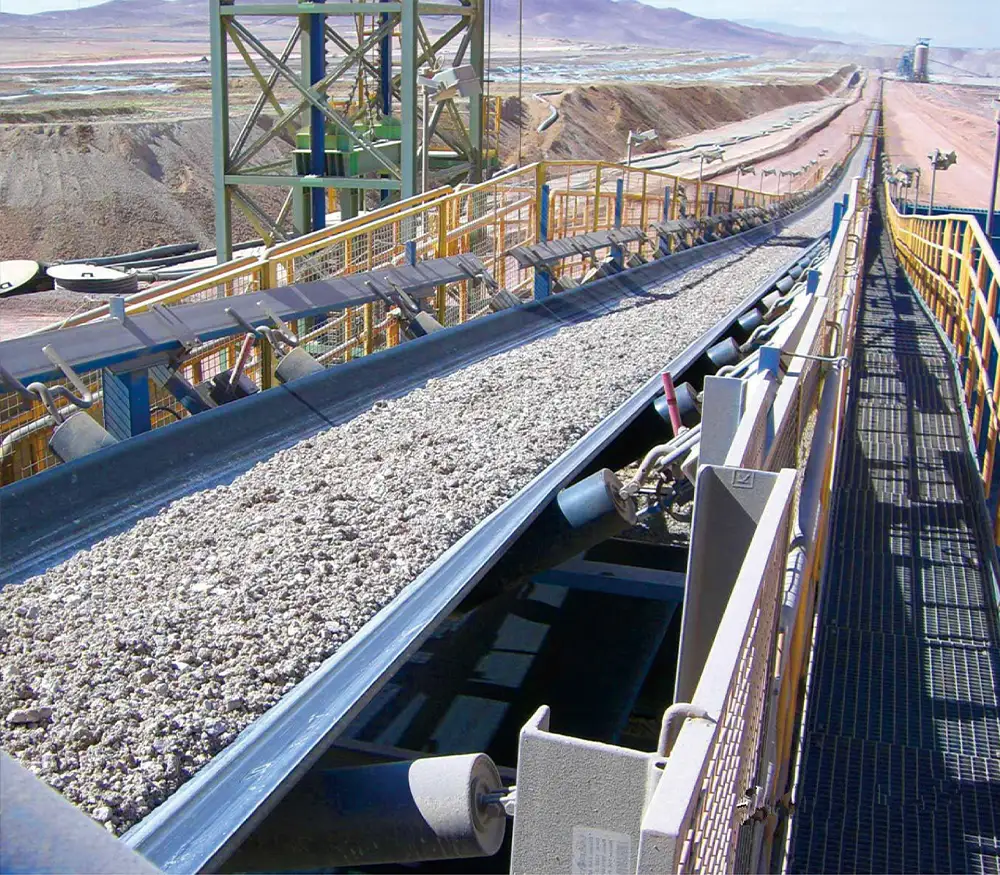
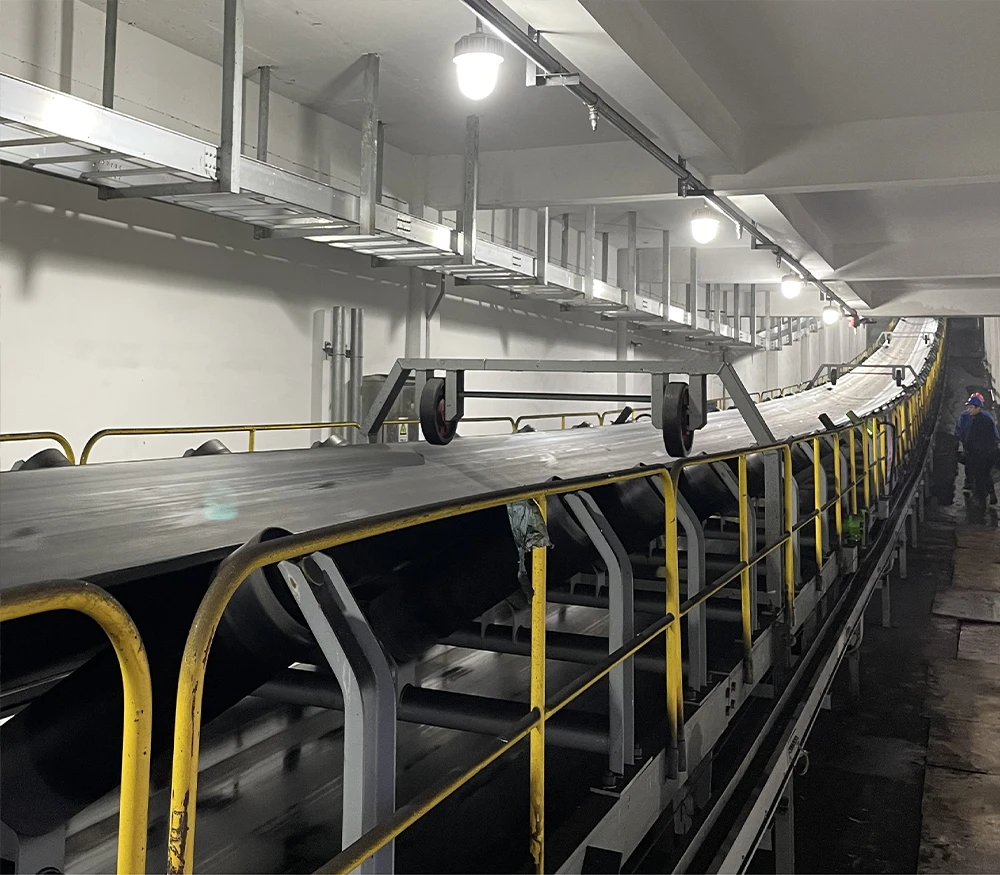
  • Mining: Open pit and underground ore transport, cope with heavy impact and high tonnage.
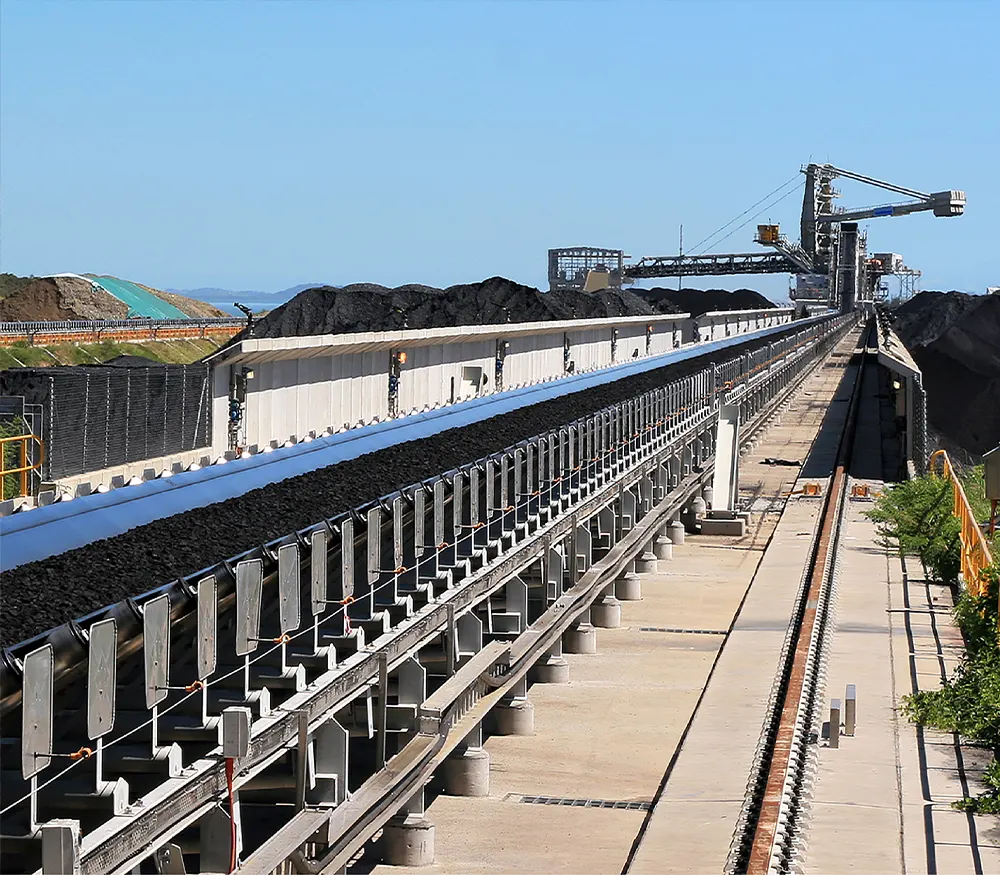
  • Ports & Terminals: Coal, mineral and grain bulk handling at dock conveyor systems.
  • Steel Mills & Metallurgy: Transport sinter, ore and other heavy raw materials.
  • Cement Plants: Raw material and clinker conveying; heat resistant covers are available for hot clinker.


Adopted Standards

Our steel cord conveyor belts follow widely accepted global standards for quality reference:

  • China: GB/T9770 2013, HG/T3973 2023, MT/T668 2019
  • Germany: DIN2213
  • Australia: AS 1333
  • Japan: JISK 6369


Splicing and Installation

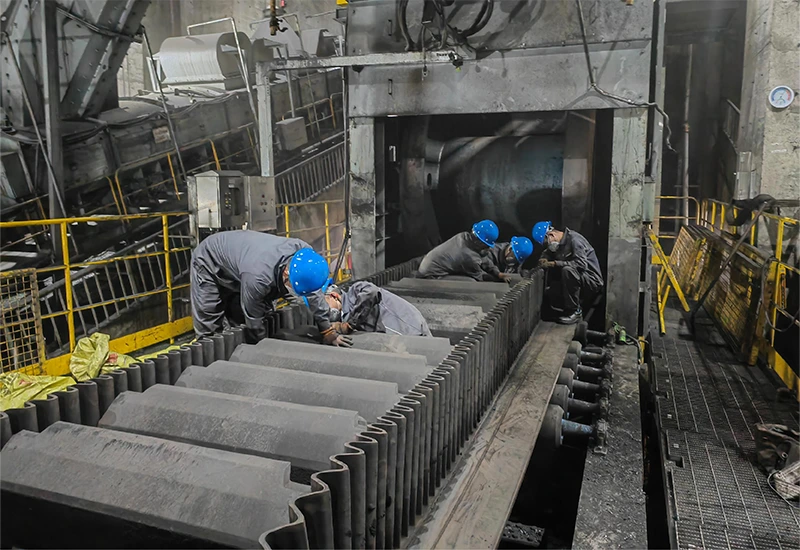
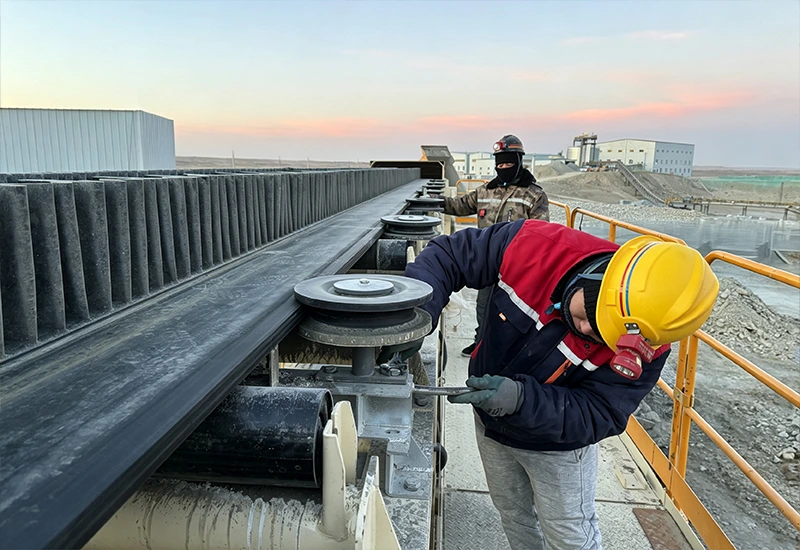
Steel cord belt field splicing is high precision work. It must be completed by certified technicians with qualified vulcanising tools and clean working space.

We can provide you practical support:

  • Step by step splicing guides with real onsite photos
  • On site technical training for your maintenance crew
  • Custom pre made splice kits, matched to your belt cord spacing and rubber formula

Splice types include single step, two step and finger splice. Selection depends on belt strength grade and your pulley configuration. Our technical team will review your conveyor layout first and recommend suitable splice type and overlap length for your project.

Points you need to pay attention to during installation:

  • Select pulley lagging with good friction and wear resistance; ceramic or grooved rubber lagging are common choices.
  • Use gradual idler angle transition between flat section and trough section.
  • Fit heavy duty suspended impact beds at loading points. Since steel cord belts barely stretch, impact force will pass directly onto your conveyor steel structure.


FAQs

Q: Can I repair a damaged steel cord conveyor belt?

A: Yes. Local cover damage can be fixed by cold repair or hot vulcanisation. Short section splice repair works if steel cord damage is limited to a small area. If damage covers a large range, full splice replacement will be required.

Q: Do steel cord belts need special idlers?

A: Standard heavy duty idlers work for most cases. For deep trough angle or high speed running, install impact idlers at loading zones. Use self aligning idlers for long distance overland conveyor lines.

Q: What is the storage shelf life for steel cord belt rolls?

A: Store rolls indoors, keep away from direct sunlight and ozone pollution. Under proper storage condition, installation can be done within 2 years. We advise stock rotation following FIFO rule. Check cover surface for cracking before installation.

Q: Can this belt be used on reversing conveyors?

A: Yes. But splice design needs to adapt to bidirectional force, and cover rubber should have balanced wear performance. We can suggest proper configuration for reversing working condition.

Q: What is the difference between steel cord belt and fabric conveyor belt?

A: Steel cord belts deliver much higher tensile strength and far lower elongation, fit for long distance, high tonnage conveying. Fabric belts are lighter, used for short to medium distance transport with lower load requirement.

Q: What does ST rating mean for steel cord conveyor belt?

A: ST stands for the nominal tensile strength of steel cord conveyor belt, such as ST1000, ST2000, ST2500. Unit is N/mm. Higher ST value means the belt can bear bigger pulling force.


Request a Quote or Engineering Review

Every conveyor system has its own limits: space layout, motor power, material property and maintenance accessibility. We will not give you generic belt suggestions.

Send over your conveyor drawings, target throughput and site photos. Our team will work out a targeted belt specification balancing performance and project budget.


  • Questionnaire List of EP·ST Conveyor Belt Download

Products

Rubber Wear Lining
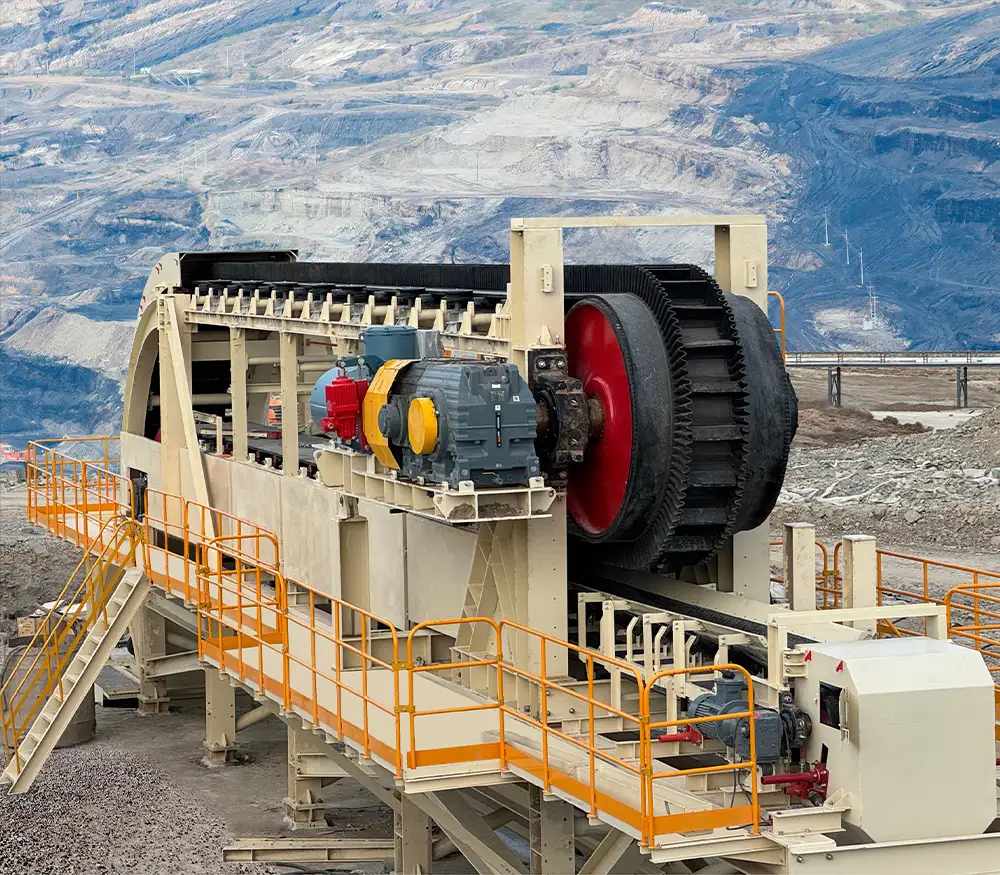
Our rubber wear lining is a high-toughness protective rubber layer engineered for industrial equipment interiors. Featuring outstanding abrasion, impact and corrosion resistance, it effectively safeguards mills, chutes and hoppers from long-term material scouring. Lightweight, durable and fully customizable, it cuts maintenance costs and reduces noise, ideal for mining, cement and chemical industrial applications.
Sidewall Conveyor Belt

Sidewall Conveyor Belt

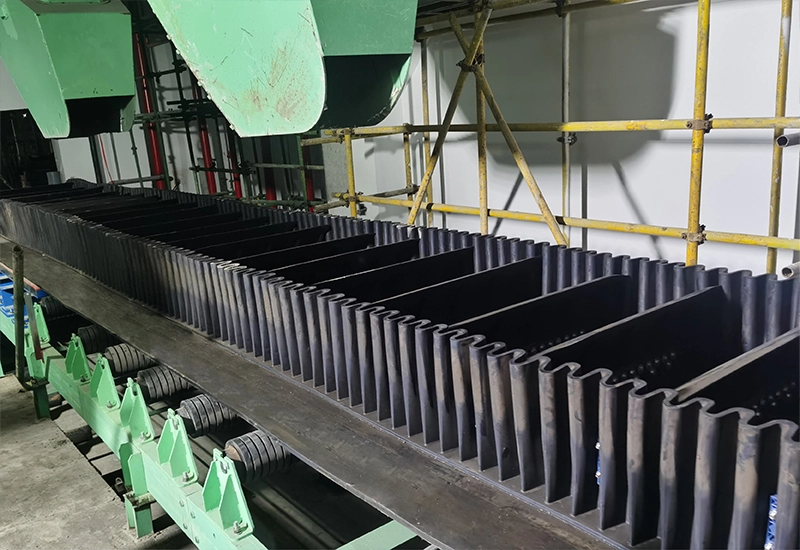
QBF rubber specializes in designing and manufacturing high-quality steep incline conveyor belts for bulk material lifting across industries such as harbors, metallurgy, tunneling, power plants, chemicals, cement, and metro. As the only Chinese manufacturer using full European molds and standards, QBF rubber provides complete solutions covering belt selection, production, installation, commissioning, and trouble shooting.
Pocket Type Conveyor Belt

Pocket Type Conveyor Belt

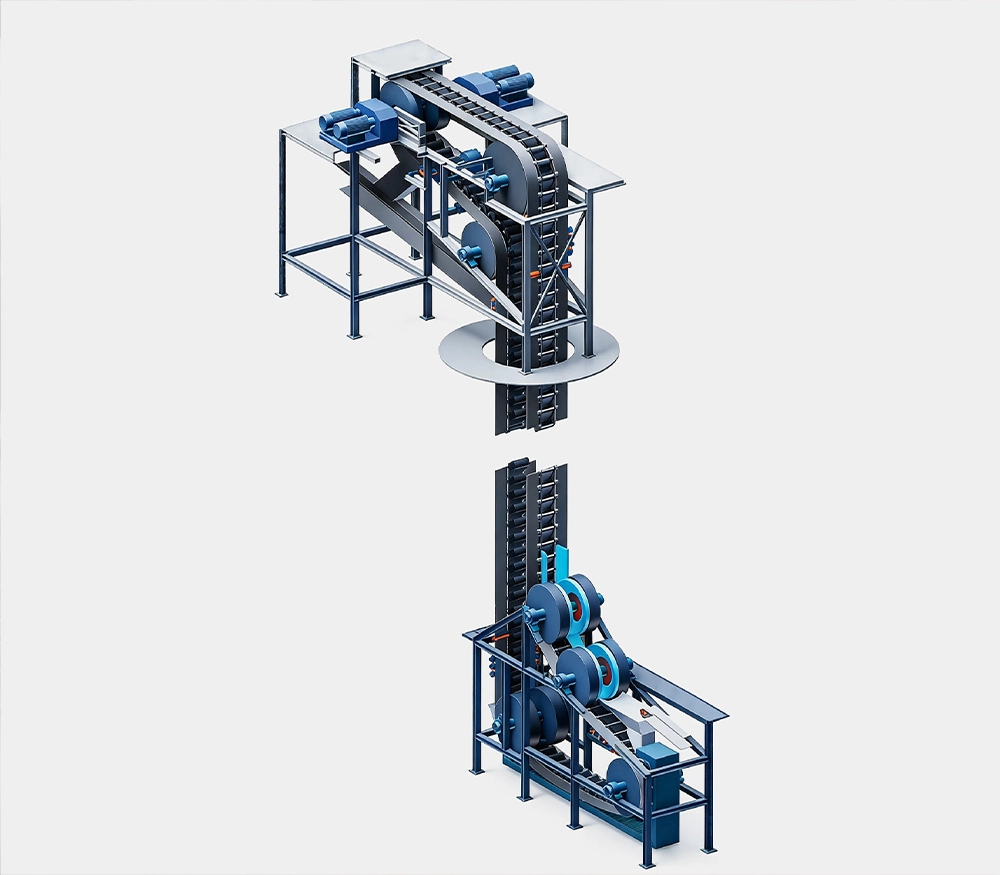
Developed from high angle sidewall belts and high capacity bucket elevators, the Pocket Type Conveyor Belt (Pocketlift) suits underground mining, tunnels, port handling and large volume silo feeding, with lifting heights up to 800 meters.
It handles ultra high lift, high throughput tasks beyond conventional high angle sidewall belts, realizing stable continuous bulk material transportation.
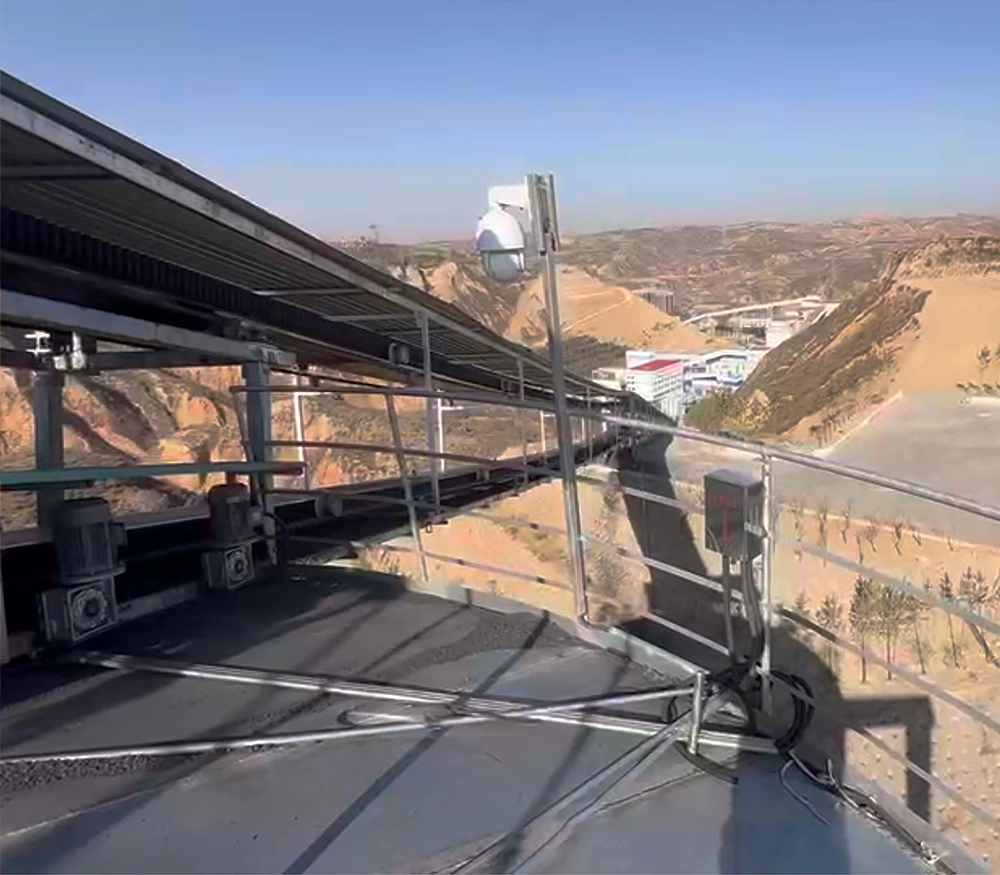
Rope track Sidewall Conveyor Belt

Rope-track Sidewall Conveyor Belt

RopeTrack corrugated sidewall steel cord conveyor belt for overhead cable conveying. ST10000 high strength, 25000 t/h throughput for mine, quarry & complex terrain long distance bulk transport. Custom engineering available.
Bucket Elevator Conveyor Belt

Bucket Elevator Conveyor Belt

Bucket elevator conveyor belts are cost effective core components for vertical bulk material handling, supporting lifting heights over 100 meters. Reinforced with high grade tear resistant polyester canvas or optional steel cord anti tear layers for heavy duty use.
They deliver low elongation, high throughput and stable operation with easy maintenance, helping operators reduce downtime from belt failures and frequent replacements.
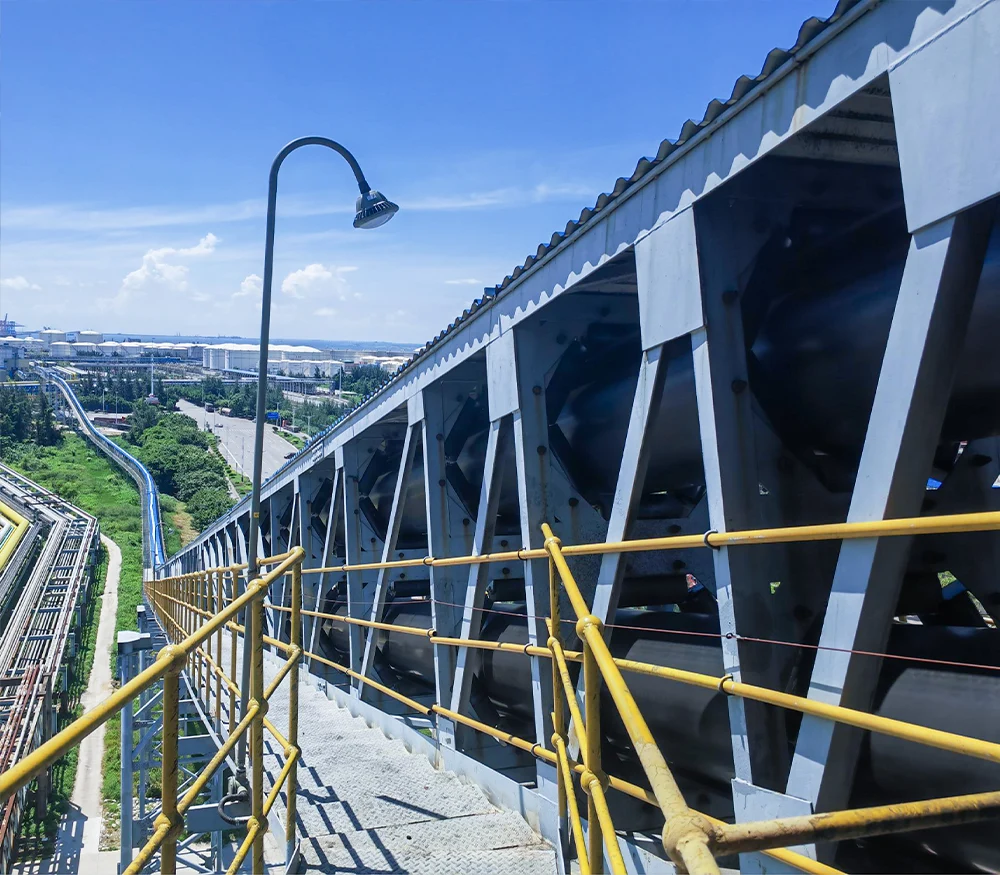
Pipe Conveyor Belt

Pipe Conveyor Belt

Pipe conveyor belt (tubular conveyor belt) folds into a closed tube in operation, fully containing bulk materials to eliminate spillage and dust emissions while shielding cargo from external contamination.
Supporting sharp horizontal and vertical bends, it meets strict environmental requirements and helps plants remove redundant transfer points, favored by operators troubled by on site dust and leakage issues.

Recent news
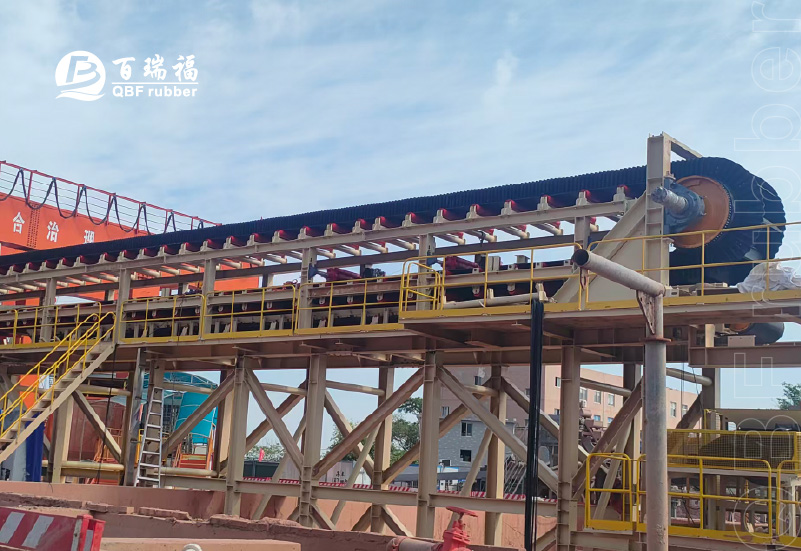
Easy Clean Sidewall Conveyor Belt

Tunnel Shield Project | QBF rubber Anti-stick Sidewall Conveyor Belt Installation Service Delivered

Oct 20, 2026
Recently, the engineering service team from QBF rubber was dispatched to a tunnel project site and successfully completed on-site installation guidance for the sidewall conveyor belt. Supported by one-stop full-process technical services, the project’s conveying equipment achieved stable commissioning and high-efficiency operation. Tunnel construction presents tough site conditions, featuring steep conveying angles and considerable risks of material back-sliding and spillage. Breaking away from the traditional product-only supply model, QBF rubber provides a full-chain custom service package for this project. The service scope includes preliminary site survey, working-condition analysis, custom belt selection and design, bespoke belt manufacturing, on-site hot-splicing joint execution and full-cycle installation technical guidance. This complete set of services fully meets the operational demands of steep-angle material handling for tunnel construction. Shield tunnel jobs have tight working spaces, limited on-site manoeuvring, high muck volumes and wet excavated spoil. These conditions commonly cause spoil and fines to stick and pile up on conveyor belts. For this project, QBF rubber Anti-stick Sidewall Conveyor Belt was selected to tackle such field-proven issues. The belt’s special surface treatment resists sticking and enables good self-cleaning capability. It keeps damp tunnel muck and fine sand from clinging to the belt surface, helping avoid common problems triggered by material build-up: belt mis-tracking, slippage, faster-than-normal wear and reduced conveying capacity. Built with heavy-duty sidewalls and cleats, the belt is robust in structure, offers high tensile properties and holds up well against abrasion. It runs reliably for both vertical and steep inclined conveying work, cutting down significantly on material fallback, spillage and leakage. This brings tangible savings in on-site cleaning work and lowers the frequency of equipment maintenance. Having expanded from standalone product supply to end-to-end technical services, QBF rubber keeps addressing practical tunnel conveying challenges through professional, custom-built solutions. Moving ahead, QBF rubber will keep focusing on shield-tunnel muck transport and steep-angle material handling applications. Continuous upgrades to product performance and service frameworks will deliver reliable support for the efficient, eco-friendly and safe running of more engineering projects.
READ MORE
Pipe Belt Conveyor Full Service Solution

Pipe Belt Conveyor Full Service Solution | Huayi Group Project Case

Oct 16, 2026
We deliver end-to-end Pipe belt conveyor services: system diagnosis, custom belt manufacturing, on-site splicing, installation and operational commissioning. Completed project for Huayi Group chemical site.
READ MORE
Sidewall Conveyor Belt Sagging Solutions QBF rubber Free Zone Base Belt Design Extends Service Life by 30%

Sidewall Conveyor Belt Sagging Solutions: QBF rubber Free Zone Base Belt Design Extends Service Life by 30%

Sep 18, 2026

According to industry statistics, up to 80% of sidewall conveyor belt failures occur due to rigidity loss–induced sagging during operation. QBF rubberaddresses this root cause with an innovative “free zone ” base belt design, significantly extending the service life of sidewall conveyor belts. What Is Belt Sagging and Why Does It Shorten Belt Life? Under heavy load, especially on the return run, the base belt often sags due to insufficient transverse rigidity. This sagging triggers a chain of serious issues: Stress concentration – Sagging causes abnormal flexing at the sidewall root as it passes over the drum, concentrating stress in a localized area. Fatigue cracking – Repeated flexing leads to fatigue cracks at the sidewall root, which can develop into through-wall damage. Baffle detachment – Vibration and deformation from sagging transfer to the baffle connection, accelerating adhesive aging and causing baffle loosening or separation. Once sidewall tearing or baffle detachment occurs, the entire sidewall conveyor belt often fails prematurely. Therefore, solving the sagging problem is the key to extending belt service life. Root Cause of Belt Sagging The core cause of sagging lies in structural deficiencies of traditional base belt designs: Insufficient transverse rigidity – Traditional base belts cannot maintain a flat profile under heavy loads or long-span conditions. Unbuffered stress transfer – The sidewall-to-base belt connection lacks a flexible transition, so abnormal sagging stress directly impacts the sidewall root. Accelerated fatigue accumulation – Repeated flexing at stress concentration points causes cracks to grow from micro to macro levels. Understanding these causes makes it clear: simply increasing sidewall thickness or changing the rubber compound is a temporary fix. The solution must start with the base belt structure. Solution: QBF rubber Free Zone Base Belt Design QBF rubber introduces a “free zone ” base belt design to directly target the root cause of sagging. How the free zone  Works Blocks stress transfer – The free zone  acts as a stress buffer, absorbing and isolating abnormal sagging stress before it reaches the sidewall root. Dissipates flexing energy – The flexible edge allows the base belt to adaptively deform as it passes over the drum, spreading concentrated flexing over a larger area. Protects sidewall and baffles – By mitigating the extra load caused by sagging, the risk of fatigue tearing at the sidewall root is greatly reduced, and the baffle adhesive layer no longer suffers excessive vibration stress. Key Advantages of the free zone  Design Advantage Result sidewall tear resistance Eliminates stress concentration points; fatigue life extended by 2–3 times Baffle detachment risk Smoother operation; significantly slower adhesive aging Overall belt service life Comprehensive service life increased by 30% or more   QBF rubber’s Free Zone Base Belt design achieves a leap from “reacting to sagging consequences” to “eliminating the root cause of sagging.” Summary: Eliminate Sagging at the Source for Longer Sidewall Belt Life The sagging problem in heavy-duty sidewall conveyor belts originates in the base belt structure. QBF rubber’s free zone  design solves this industry pain point by blocking stress transfer, dissipating flexing energy, and protecting both sidewall and baffles. If you are experiencing frequent sagging, sidewall tearing, or baffle detachment with your sidewall conveyor belt, contact QBF rubber for professional technical support and customized solutions.  
READ MORE

See Latest Service

Hot‑vulcanized Splice

Our team provides professional 24/7 hot vulcanized splicing for sidewall, steel cord, fabric and pipe conveyor belts. Staffed with fully trained, experienced technicians and equipped with advanced mobile and stationary vulcanizing presses, we deliver seamless, long-lasting belt joints that optimize both technical performance and overall operational costs.
LEARN MORE

Selection Guide

QBF rubber provides professional customized sidewall belt selection services for all types of industrial inclined conveying scenarios. Supported by our independent self-developed selection system and senior German technical experts, we deliver accurate, application-oriented belt solutions tailored to actual site conditions, avoiding specification mismatches and unnecessary performance waste for optimal system operation.
LEARN MORE

Maintenance Service

We deliver reliable, plant-focused conveyor belt and system maintenance services designed to prevent unplanned downtime. Our certified on-site teams provide round-the-clock support for routine inspections, belt realignment, wear repairs, component replacements and system tuning. We help industrial facilities maintain stable throughput while lowering long-term operational and maintenance overhead.
LEARN MORE
contact us

Contact us

    Products
    Contacts
    WhatsApp
    Email