
According to industry statistics, up to 80% of sidewall conveyor belt failures occur due to rigidity loss–induced sagging during operation. QBF rubberaddresses this root cause with an innovative “free zone ” base belt design, significantly extending the service life of sidewall conveyor belts.
What Is Belt Sagging and Why Does It Shorten Belt Life?
Under heavy load, especially on the return run, the base belt often sags due to insufficient transverse rigidity. This sagging triggers a chain of serious issues:
Stress concentration – Sagging causes abnormal flexing at the sidewall root as it passes over the drum, concentrating stress in a localized area.
Fatigue cracking – Repeated flexing leads to fatigue cracks at the sidewall root, which can develop into through-wall damage.
Baffle detachment – Vibration and deformation from sagging transfer to the baffle connection, accelerating adhesive aging and causing baffle loosening or separation.
Once sidewall tearing or baffle detachment occurs, the entire sidewall conveyor belt often fails prematurely. Therefore, solving the sagging problem is the key to extending belt service life.
Root Cause of Belt Sagging
The core cause of sagging lies in structural deficiencies of traditional base belt designs:
Insufficient transverse rigidity – Traditional base belts cannot maintain a flat profile under heavy loads or long-span conditions.
Unbuffered stress transfer – The sidewall-to-base belt connection lacks a flexible transition, so abnormal sagging stress directly impacts the sidewall root.
Accelerated fatigue accumulation – Repeated flexing at stress concentration points causes cracks to grow from micro to macro levels.
Understanding these causes makes it clear: simply increasing sidewall thickness or changing the rubber compound is a temporary fix. The solution must start with the base belt structure.
Solution: QBF rubber Free Zone Base Belt Design
QBF rubber introduces a “free zone ” base belt design to directly target the root cause of sagging.
How the free zone Works
Blocks stress transfer – The free zone acts as a stress buffer, absorbing and isolating abnormal sagging stress before it reaches the sidewall root.
Dissipates flexing energy – The flexible edge allows the base belt to adaptively deform as it passes over the drum, spreading concentrated flexing over a larger area.
Protects sidewall and baffles – By mitigating the extra load caused by sagging, the risk of fatigue tearing at the sidewall root is greatly reduced, and the baffle adhesive layer no longer suffers excessive vibration stress.
Key Advantages of the free zone Design
Advantage
Result
sidewall tear resistance
Eliminates stress concentration points; fatigue life extended by 2–3 times
Baffle detachment risk
Smoother operation; significantly slower adhesive aging
Overall belt service life
Comprehensive service life increased by 30% or more
QBF rubber’s Free Zone Base Belt design achieves a leap from “reacting to sagging consequences” to “eliminating the root cause of sagging.”
Summary: Eliminate Sagging at the Source for Longer Sidewall Belt Life
The sagging problem in heavy-duty sidewall conveyor belts originates in the base belt structure. QBF rubber’s free zone design solves this industry pain point by blocking stress transfer, dissipating flexing energy, and protecting both sidewall and baffles.
If you are experiencing frequent sagging, sidewall tearing, or baffle detachment with your sidewall conveyor belt, contact QBF rubber for professional technical support and customized solutions.
READ MORE

The customized S400 B1800 TCS360 anti-stick Sidewall Belt — developed by QBF Rubber for the Shenzhen Tunnel Project — is now under installation! With a total length of 190m, this high-performance non-stick belt is set to play a crucial role in ensuring smooth and efficient tunnel construction.
More Than Just a Product – Full-Service Support!
Our after-sales team is fully committed to providing:
✔ Tailored installation plans
✔ Professional on-site guidance
✔ Hot vulcanization splicing services
✔ Comprehensive commissioning & operation support
Every step is meticulously handled to ensure flawless performance of the sidewall belt!
Technology + Service Facilitate Tunnel Construction
“This cooperation reflects QBF rubber’s R&D strength and service capability in the field of special conveyor belts,” the project manager said, “The application of the anti-stick sidewall conveyor belt will significantly improve the conveying efficiency, reduce the downtime for maintenance, and provide key support for the project to be pushed forward on schedule.”
In the future, QBF rubber will continue to focus on technological innovation and customer needs to provide more efficient and durable conveyor system solutions for global infrastructural projects.
READ MORE

As mining operations go deeper, vertical lifting efficiency and safety have become major constraints on mine output. Designed for deep shafts, inclined shafts and complex terrain, our vertical lifting system works across 0 500 m vertical heights and supports steep angle, long distance material transport. Thanks to modular design, high throughput and full lifecycle services, it has gained wide attention in the mining material handling industry.
Three Core Solutions for Varied Lifting Applications
Our portfolio includes three main product lines to cover diverse vertical transport demands.
Steep Angle Sidewall Conveyor Solution
Engineered as an alternative to conventional mine cages, this solution handles vertical heights from 0 m to 500 m. In inclined shaft conditions, throughput can exceed 10 000 tons per hour. It overcomes the low efficiency, intermittent nature of cage hoisting and enables fast, continuous material transfer from underground to surface.
Pocket Type Vertical Lifting System
Optimized for high height, high volume tasks, this system is ideal for muck removal shaft main lines and blind shaft intermediate transfer. Proven in tunneling projects, it runs stably above 250 m lift height with capacities over 800 m³/h. It fills performance gaps under tight space conditions and can reach lifting heights over 500 m.
Long Distance Rope track Conveying System
Boasting single spans beyond 2 000 m, this system serves mountain and river valley sites. It reduces transfer points, cuts energy consumption and lowers overall maintenance costs for difficult terrain material haulage.
Full Chain “EPC+M+O” Service Model
Beyond equipment supply, Bairui provides a complete EPC+M+O service package:
E (Evaluation & Custom Design): Custom engineer conveyors and belts based on mine geology, production targets and existing site infrastructure.
P (Core Equipment Manufacturing): In house production of sidewall belts, lifting pockets and drive units for reliable quality and on time delivery.
C (Installation Guidance): On site technical support for installation and commissioning to ensure smooth startup.
M (Operation Management): Partial or full operational outsourcing to help mines hit production targets quickly.
O (Smart O&M): Condition monitoring and predictive maintenance platform for early fault warnings and optimized maintenance schedules.
Key Benefits vs Traditional Lifting Equipment
For shafts deeper than 500 m, traditional multi rope friction hoists suffer from short rope life, batch type loading and complex controls. The Steep Angle Sidewall Conveyor Solution fits compactly within limited shaft space. Its continuous output connects directly to processing plants or silos, eliminating intermediate stockpiles and re handling expenses.
In tunnel construction, the Pocket Type Vertical Lifting System features small turning radii and steep climbing performance. It has replaced imported equipment on multiple inclined shaft tunnel projects, delivering local manufactured cost savings. It requires minimal maintenance space and tolerates heavy dust and poor water conditions.
Field Proven Project Experience
Our solutions are operational across global metal mines, coal mines and large tunneling infrastructure. China’s first 255 m mine used vertical lifting system is now in service, boosting vertical conveying efficiency by over 10× with safe, energy saving and eco friendly operation.
September Global Exhibition Roadshow
This September, Bairuifu will attend four key mining expos across Central Asia, Africa and China to showcase our full vertical lifting portfolio and EPC+M+O service model. Industry professionals are welcome to visit our booths for technical exchanges.
Exhibition Schedule
Mining World Central Asia 2026
Sep 16 18, 2026|Atakent International Exhibition Centre, Almaty | Booth: 11 307
Electra Mining Africa 2026
Sep 7 11, 2026|Johannesburg Expo Centre | Booth: P10
The 28th China Mining Conference and Exhibitlon
Sep 10 12, 2026|Meijiang Convention and Exhibition Center, Tianjin | Booth: N2 2607
The 20th Yulin International Coal and High-end Energy Chemical Industry Expo
Sep 13 15, 2026|Yulin Convention & Exhibition Center| Booth: H342 / H335
READ MORE
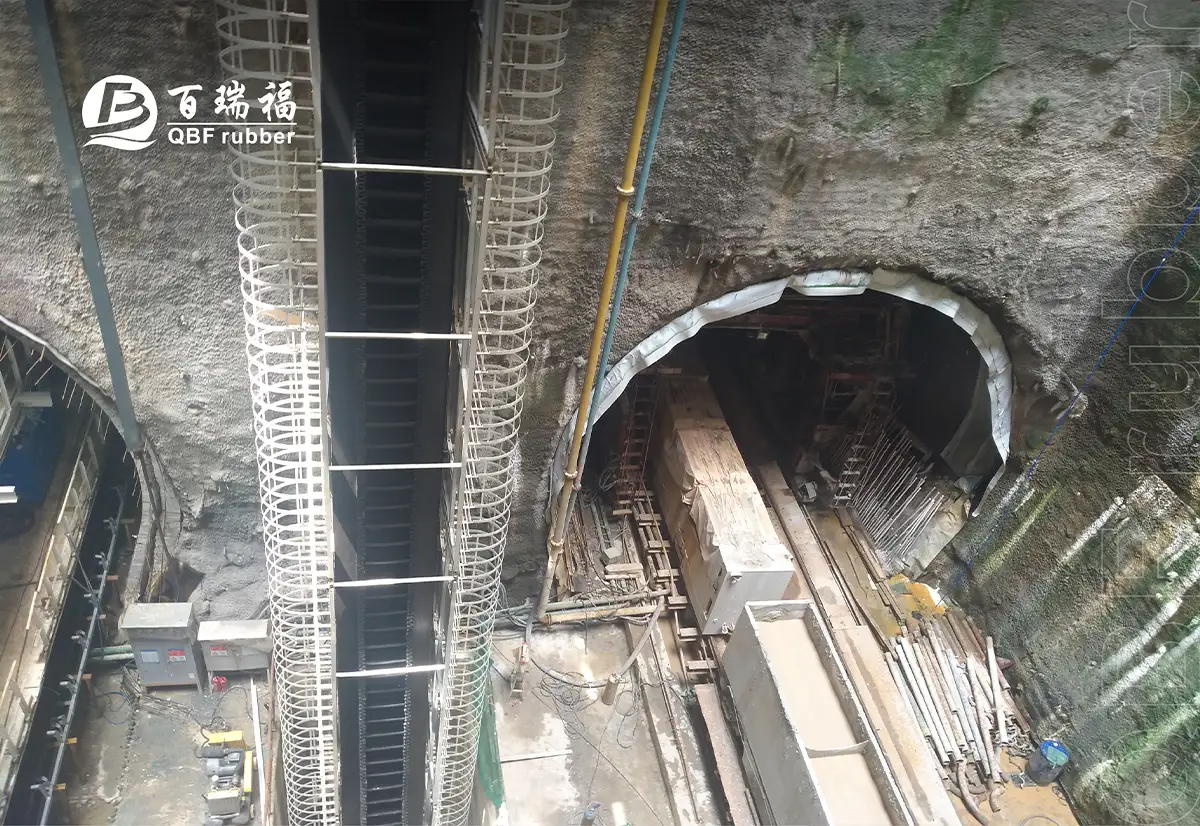
Based on the experience of serving tunnel projects around the world, QBF rubber analyzes the common problems of tunnel sidewall conveyor belt as follows:
Design Selection Error
Design capacitycannot meet the actual demand, resulting in overload and material spillage in vertical section.
Size of particles from TBM is not fully considered. The actual size is too large, causing impact damage to the belt.
Belt is not able to well accommodatematerials with high water content. Material spills from belt two sides.
Poor anti-stick performance leads to serious material carryback and hence limit the belt capacity.
Improper Design of Key Parts
Small pulley is selected; take-up and bend pulley are not properly arranged.
Inappropriatetracking measures are used.
Deflection wheels are not designed reasonably.
Bad parts qualityand poor machining precision cause poor stability.
The design selection of the tunneling sidewall conveyor belt should be based on material characteristics, conveying requirements, environmental conditions and safety requirements and comprehensively consider the factors such as sidewall height, cleat design, rubber compound properties, belt width and speed. Only through scientific selection and reasonable design can the sidewall belt be ensured to operate efficiently, safely and stably in tunnel projects.
QBF Rubber provides the following solutions for sidewall conveyor belt design based on the characteristics of tunnel construction and different muck properties.
①The base belt adopts steel cord free zone design to protect cross rigidity.
②Anti-stick rubber compound is used to effectively reduce material carryback.
③The belt is configured with side blinkers to accommodate materials with high water content.
④Cleats are reinforced to resist to impact caused by large-sized material. TCS cleats are also available which enables quick replacement of damaged cleat blade.
⑤Hot vulcanized spicing delivers higher strength and longer service life.
QBF rubber has been focusing on European standard long-life sidewall conveyor belt to provide the fit-for-purpose solutions for tunnel projects. The market share of QBF rubber sidewall conveyor belt in tunnel project in China reaches 70% to support customer’s efficient construction.
READ MORE
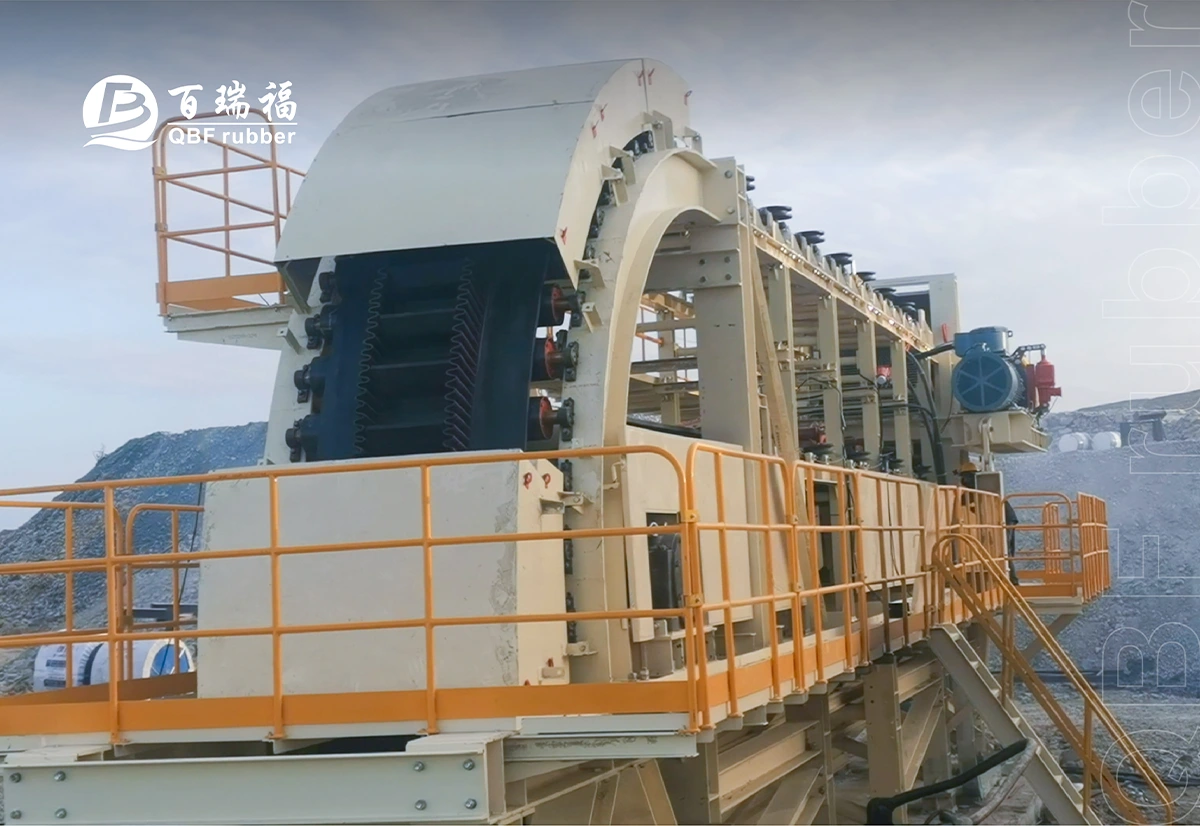
In the key link of deep mine mining and vertical material transportation, facing the severe challenge of high tension, strong impact and complex working conditions, the reliability of the sidewall conveyor belt of the mine vertical lifting system is put forward to be almost demanding.
QBF rubber is deeply rooted in its relentless pursuit of “R&D capabilities” and “process control,” establishing a comprehensive support system covering on-site installation and professional maintenance. It has become the preferred partner for numerous large-scale mining enterprises both domestically and internationally. Currently, QBF rubber holds two industry records in the mining sector: the longest single one sidewall conveyor belt (930m – Mexico Silver Mine Project) and the highest vertical lift for a sidewall conveyor belt (255m – China Gold Mine Project).
R&D-Driven: Redefining Industry Standards Through Material and Structural Innovation
QBF rubber collaborates with multiple universities and research institutes, focusing on tackling key technological challenges in the vertical lifting field, including high lifting heights, large capacities, new materials, and innovative structures.
Precision Craftsmanship: Forging European-standard reliability through smart manufacturing and rigorous quality control.
QBF rubber operates the world’s largest single-site production base for sidewall conveyor belts. The company handles all processes in-house—from mixing and calendering to molding, base belt production, semi-finished goods, and finished goods vulcanization. Vulcanization processes are digitally controlled, with full traceability throughout quality inspection, prioritizing both quality and longevity.
Service Empowerment: Professional Installation and Proactive Maintenance to Support the Full Lifecycle
The “Vertical Lift Special Service Team”, composed of senior engineers, provides customized installation solutions for each project. The “Mine Partner Program” is launched to establish exclusive equipment profiles for clients. While offering customised, differentiated products such as heat-resistant conveyor belts, flame-retardant conveyor belts and patterned conveyor belts, we also provide comprehensive support capabilities encompassing pre-project selection assistance, installation services and after-sales support.
From the laboratory to the production line, from manufacturing to application sites, QBF rubber has established a comprehensive value system centered on technological leadership and grounded in reliable delivery. Choosing QBF rubber sidewall conveyor belts means not only selecting a high-performance product, but also embracing a steadfast commitment to mine safety and comprehensive assurance throughout the entire process.
READ MORE
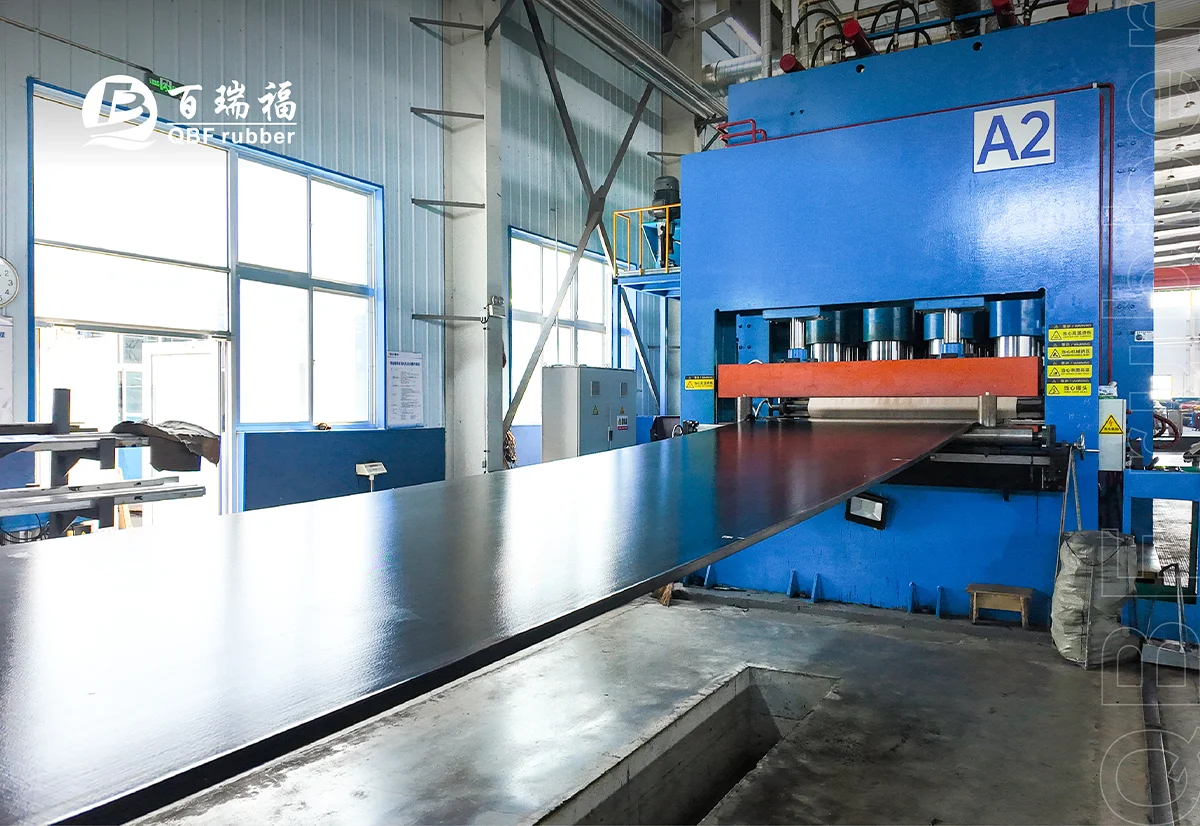
When a demanding Japanese power plant chooses QBF rubber, it is no coincidence. Recently, QBF rubber began production on a custom-engineered large-inclination corrugated sidewall conveyor belt for a major thermal power plant in Japan. This order is more than a product delivery — it is a testament to QBF rubber’s EU-standard manufacturing, stringent quality control, and technical expertise. From enabling OEM replacement in Chinese power plants to serving the Japanese power market, QBF rubber is demonstrating the global competitiveness of China’s sidewall conveyor belt industry.
From Order to Production: Steady Progress on QBF rubber Sidewall Belts
After receiving the purchase order from a Japanese power plant, QBF rubber completed technical discussions, sample testing, and design validation. The customized sidewall conveyor belts are now in production at QBF rubber’s facility and will be delivered and installed in Japan shortly.
Why Did This Japanese Power Plant Choose QBF rubber?
Japanese customers are known for their strict requirements for industrial products. Among numerous sidewall belt suppliers, why did this Japanese power plant ultimately select QBF rubber? The answer can be summarized in five key points:
1. EU-Standard Production with Rigorous Technical Requirements
Since its founding, QBF rubber has aligned its production with European standards. From rubber compounding to final product inspection, every process follows EU technical specifications. The Japanese power plant gave high praise to QBF rubber’s EU-standard system during the initial factory audit.
2. European Manufacturing Processes — Mature and Leading Technology
The core technology of QBF rubber sidewall belts originates from Europe. Through years of adaptation and optimization, QBF rubber has developed a mature, stable, and repeatable process system. Key steps such as corrugated sidewall forming and diaphragm hot vulcanization have reached industry-leading levels.
3. Fully In-House Production from Mixing to Vulcanization — Strict Quality Control
QBF rubber has a complete in-house production chain for sidewall belts: mixing → calendering → semi-finished goods → vulcanizing, with no outsourcing. Every step is controlled under the same quality system, ensuring product consistency and full traceability.
4. China’s First Manufacturer to Achieve OEM Replacement of Sidewall Belts in Power Plants
QBF rubber was one of the first companies in China to realize OEM replacement of sidewall conveyor belts in power plants. Previously, high-end sidewall belts for large domestic power plants relied heavily on imports. QBF rubber’s success broke the monopoly of foreign brands and laid a solid foundation for expanding into international markets, including Japan.
5. Leading Global Market Share and Participation in Major Projects Worldwide
QBF rubber sidewall conveyor belts are widely used across multiple industries in numerous countries and regions worldwide, including power generation, ports, metallurgy, mining, and tunnels. The company’s market share consistently ranks among the top in the industry. From Europe and the Americas to Southeast Asia, and from the Middle East to Africa, and now to this Japanese power plant, QBF rubber is demonstrating through proven performance that China-made sidewall belts have the capability to serve high-end customers globally.
Production Status: Strict Control & Real-Time Inspection
The order for the Japanese power plant is currently being produced in an orderly manner. QBF rubber strictly follows EU-standard processes. From mixing and calendering to vulcanizing, every step is monitored in real time by quality inspectors, ensuring stable and controllable product quality.
From EU standards and European processes to fully in-house production, being a pioneer in OEM replacement for power plants, and earning global market recognition — QBF rubber has won the trust of a Japanese power plant through five core strengths. And this is just the beginning of a new chapter.
READ MORE



