
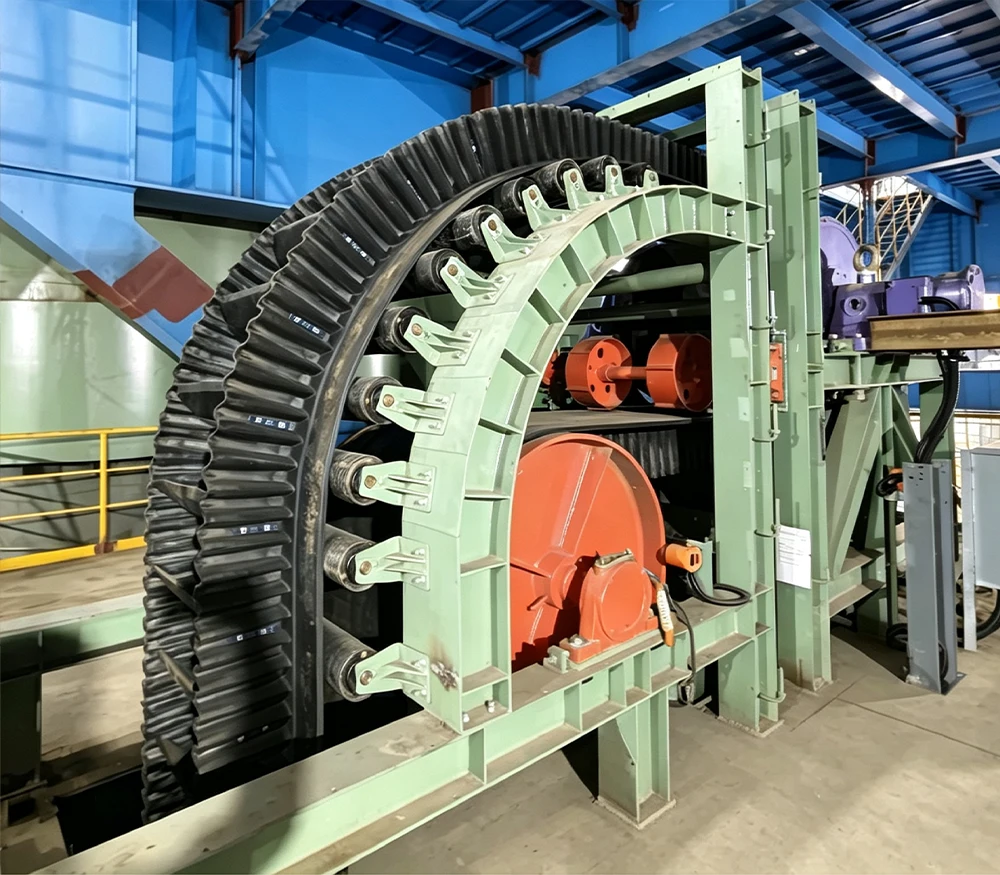
Sidewall Conveyor Belt
-
QBF rubber Features
-
Sidewall Conveyor Belt
-
Base belt
-
Sidewall
-
Cleat
-
FAQ
-
Download
European Standard Molds
Full range of European standard molds meet various customer demands.
International standard
Manufacturing follows international standards and European technologies. Belting workmanship originate from 50 years of European production experience.
Hot vulcanization
Advanced hot vulcanization processes are adopted, delivering high adhesion strength to ensure product reliability.
Professional R&D
Professional R&D team continuously launches innovative solutions to harsh working conditions to meet evolving customer needs.
World-Class Production Capacity
World’s largest individual sidewall belt manufacturing base realizes tremendous production capacity and efficiency and hence enables short lead time.
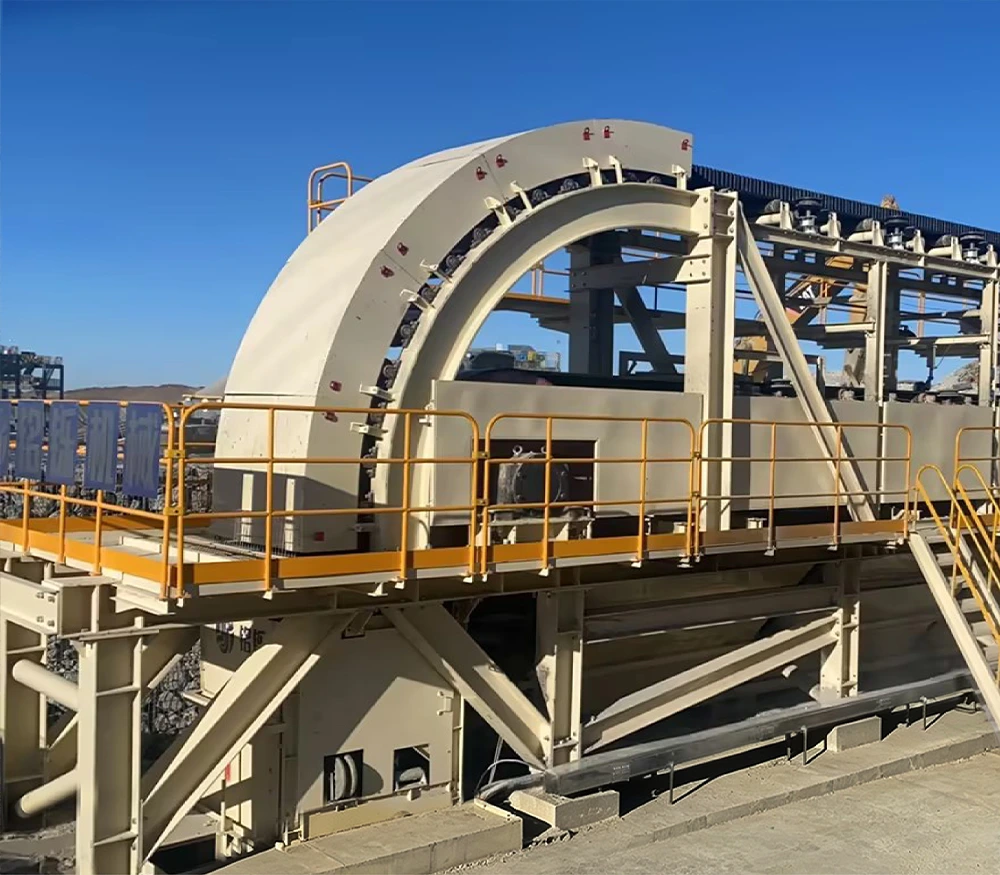
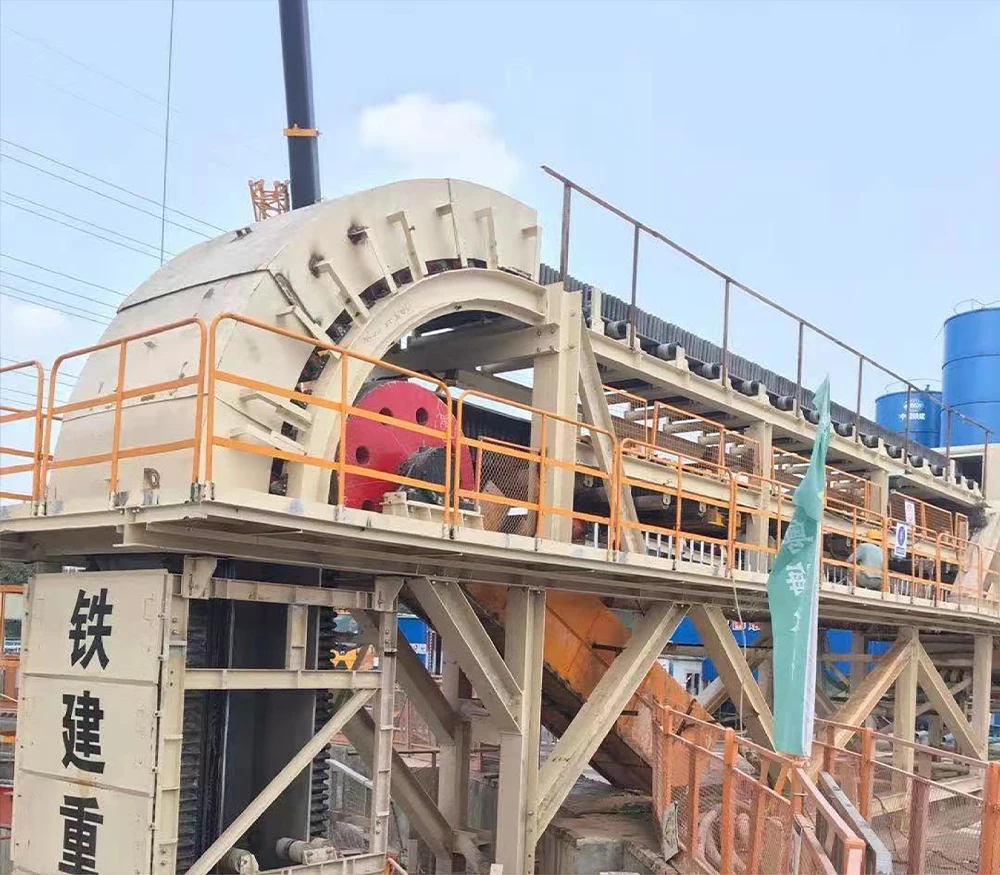
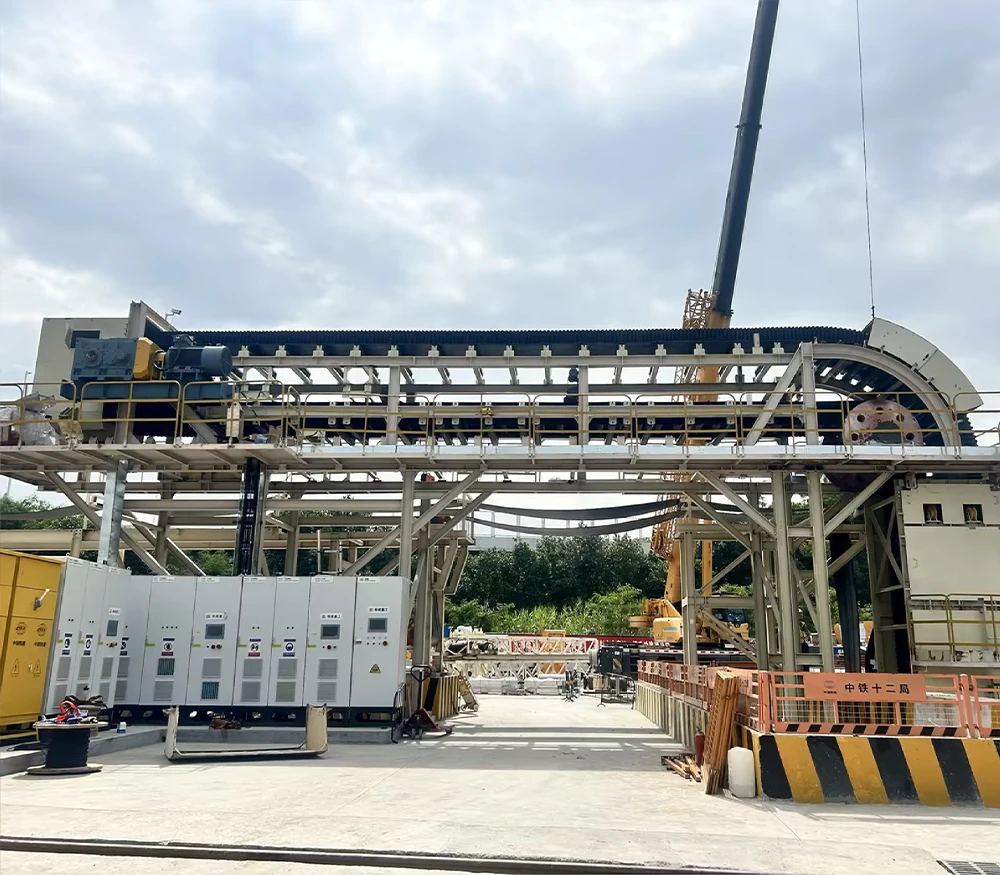
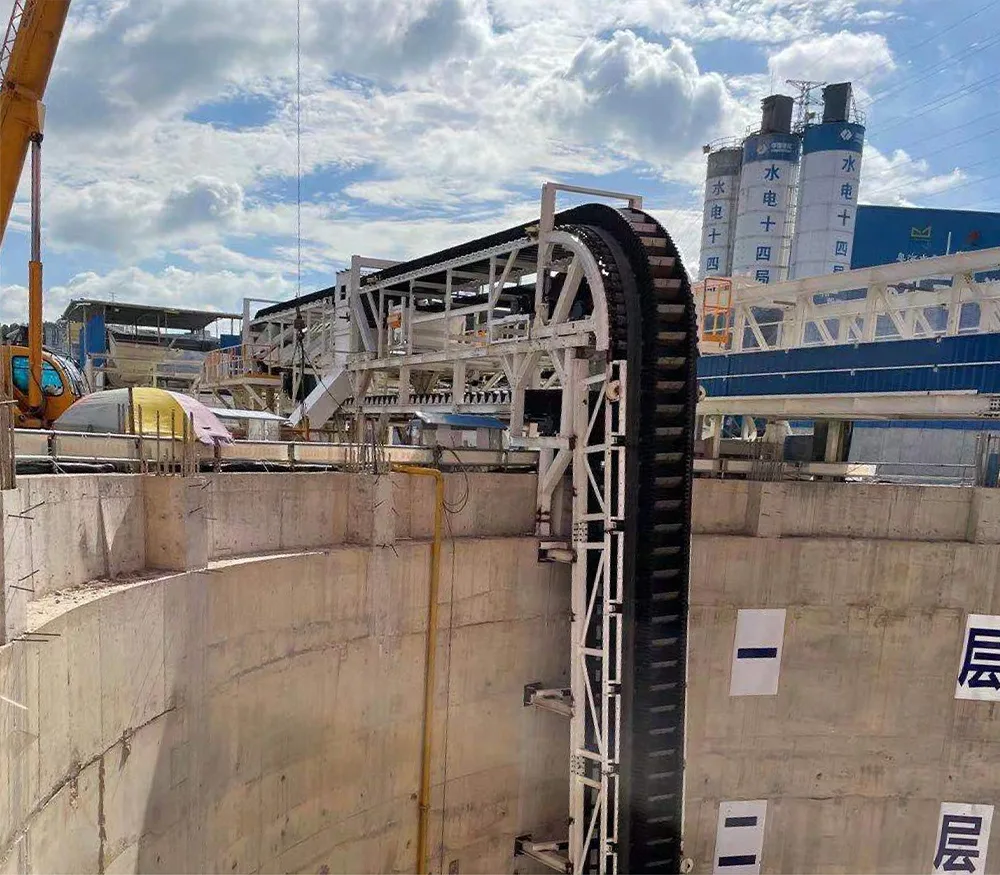
Sidewall conveyor belts are used for bulk material handling in steep incline applications in port, metallurgy, tunnelling, hydraulic engineering, power, mining, building material, grain, chemical and cement industries.
- Steep incline conveying from 0~90°
- Wide range of applications for conveying materials
- Large conveying capacity, high elevation range
- Small footprint
- Stable operation, long service life
- Low investment and maintenance costs
Manufacturing Capability
- Belt Width: 300-2800mm
- Sidewall Height: 40-630mm
- Cleat Height: 35-600mm
- Belt Strength: 250-10000N/mm
Hot Vulcanization Assembly
The sidewall and cleat are hot vulcanized to the base belt to achieve high adhesive strength.
Sidewall and cleat adhesion will not be affacted due to high temperature material.
| Method | Cold Bonding | Hot Vulcanization |
| Adhesion | ≥10N/mm | >17N/mm |
Automatic Cutting & Buffing – Precision Meets Adhesion
QBF rubber utilizes patented automatic buffing and cutting machines to ensure every base belt, sidewall, and cleat meets exacting standards. Our automatic buffing process delivers superior adhesion strength for reliable splicing, while precision automatic cutting guarantees accurate dimensional specifications—eliminating on-site fitting issues and extending belt service life.
QBF rubber Features
As the foundation of every steep incline conveyor system, QBF rubber base belts are specially designed to deliver the ideal balance of tensile strength, abrasion resistance, and cross rigidity.
Unlike standard belts, our base belts feature enhanced transverse stiffness to prevent deformation at deflection points, while maintaining longitudinal flexibility for smooth operation around pulleys. Manufactured strictly in accordance with international standards (DIN/ISO/EN), our base belts ensure long-term stability and reliable performance across demanding bulk handling applications.

QXE
This belt incorporates the transverse polyester monofilament cords within the fabric, used for small and medium sized applications.
QXE+2
The cross rigid and tensioning plies are separate, in this case the belt has 2 cross-rigid polyester monofilament plies, application areas are medium to heavy.
QXE-SC+2
This belt incorporates textile tensioning plies with Bekaert steel breaker. The high transverse stiffness means the belt can be used in application areas where rigidity is a crucial factor, i.e. High lift heights and wide belts.
QXST-SC*
This belt incorporates steel cord tensioning with Bekaert steel breaker. High tensile strengths can be achieved making the belt ideal for high vertical lift applications.
| Base Belt type | Strength (N/mm) | Cover Thickness (mm) | EST. Weight (Kg/m²) | Min. Pulley Dia. (mm) | ||
 |
250/2 | 2·2 | 8.60 | 315 | ||
| 400/3 | 4·2 | 12.90 | 400 | |||
 |
400/3+2 | 4·2 | 15.30 | 630 | ||
| 500/3+2 | 4·2 | 15.70 | 630 | |||
| 630/3+2 | 4·2 | 16.30 | 630 | |||
| 630/4+2 | 4·2 | 17.00 | 800 | |||
| 800/4+2 | 4·2 | 17.30 | 800 | |||
| 800/5+2 | 4·2 | 18.40 | 1000 | |||
| 1000/5+2 | 4·2 | 18.90 | 1000 | |||
| 1250/5+2 | 4·2 | 20.55 | 1250 | |||
| 1250/6+2 | 4·2 | 21.70 | 1250 | |||
 |
315/2+2 | 4·2 | 18.40 | 315 | ||
| 400/3+2 | 4·2 | 19.60 | 400 | |||
| 500/3+2 | 4·2 | 19.95 | 400 | |||
| 630/3+2 | 4·2 | 20.60 | 400 | |||
| 630/4+2 | 4·2 | 21.40 | 500 | |||
| 800/4+2 | 4·2 | 21.70 | 500 | |||
| 800/5+2 | 4·2 | 23.00 | 630 | |||
| 1000/5+2 | 4·2 | 23.30 | 800 | |||
| 1250/5+2 | 4·2 | 24.90 | 1000 | |||
| 1250/6+2 | 4·2 | 25.50 | 1000 | |||
| Base Belt type | Strength (N/mm) | Cover Thickness (mm) | EST. Weight (Kg/m²) | Min. Pulley Dia. (mm) | ||
| 315RE | 500RE | 800RE | ||||
 |
1250 | 8·8 | 31.40 | 33.10 | 34.90 | 800 |
| 1600 | 8·8 | 33.20 | 34.80 | 36.60 | 1000 | |
| 2000 | 8·8 | 34.90 | 36.50 | 38.40 | 1000 | |
| 2500 | 8·8 | 38.90 | 40.60 | 42.30 | 1250 | |
| 3150 | 8·8 | 42.30 | 43.80 | 45.80 | 1400 | |
| 3500 | 8·8 | 43.80 | 45.40 | 47.20 | 1400 | |
| 4000 | 8·8 | 45.80 | 47.50 | 49.30 | 1600 | |
| 4500 | 8·8 | 48.60 | 50.20 | 52.10 | 1600 | |
| 5000 | 8·8 | 51.20 | 52.80 | 54.70 | 1600 | |
| 5400 | 8·8 | 53.10 | 54.70 | 56.50 | 1800 | |
| 6000 | 8·8 | 56.10 | 57.70 | 59.60 | 1800 | |
Remarks: Data above are subject to normal abrasion resistant rubber quality.
Rubber Quality
Abrasion-resistant
Acid & Alkali-resistant
Flame-retardant
Anti-stick
High/Moderate Oil-resistant
Cold-resistant
Heat-resistant (100~150℃)
High Temperature-resistant (150-250℃)
Other Customized Types
Sidewall – Reinforced for Maximum Flexing Resistance
Premium Rubber Compound
Specially formulated rubber compound delivers exceptional flexing and fatigue resistance.
Ensures long service life under continuous bending stress.
Fabric-Reinforced Crack Prevention
Integrated fabric reinforcement effectively prevents cracks at corrugation folds.
Targets the most critical stress points where cracks typically initiate.
Standard & Custom Reinforcement Options
Models from type S120/MDSF120 and above: diagonal fabric reinforcement within corrugations as standard.
Smaller profiles: this feature available upon request.
Validated by Dynamic Fatigue Testing
Rigorous dynamic fatigue testing simulates real-world working conditions.
Validates every sidewall’s reliability before leaving the factory.
Rubber Quality
Abrasion-resistant
Acid & Alkali-resistant
Flame-retardant
Anti-stick
High/Moderate Oil-resistant
Cold-resistant
Heat-resistant (100~150℃)
High Temperature-resistant (150-250℃)
Other Customized Types
| Type | H (mm) | Sw (mm) | Tw (mm) | P (mm) | Est. Weight (Kg/m) | Min. Pulley Dia. (mm) |
| S | 40 | 30 | 20 | 25 | 0.48 | 160 |
| 60 | 50 | 45 | 40.7 | 1.38 | 200 | |
| 80 | 50 | 45 | 40.7 | 1.66 | 200 | |
| 100 | 50 | 45 | 40.7 | 2 | 250 | |
| 120 | 50 | 45 | 40.7 | 2.21 | 315 | |
| Diagonal fabric reinforcement is suggested for sidewall higher than 120mm. This carcass reinforcement is also available for sidewall below 120mm. | ||||||
| MDSF | 120 | 75 | 65 | 63.5 | 3.61 | 315 |
| 160 | 75 | 65 | 63.5 | 4.18 | 400 | |
| 200 | 75 | 65 | 63.5 | 4.88 | 500 | |
| 240 | 75 | 65 | 63.5 | 5.87 | 630 | |
| 250 | 75 | 65 | 63.5 | 6.1 | 630 | |
| 280 | 75 | 65 | 63.5 | 6.76 | 800 | |
| 300 | 75 | 65 | 63.5 | 6.98 | 800 | |
| HHDF | 300 | 100 | 88 | 84 | 11.98 | 800 |
| 400 | 100 | 88 | 84 | 14.83 | 1000 | |
| 500 | 100 | 88 | 84 | 17.73 | 1250 | |
| 630 | 100 | 88 | 84 | 21.9 | 1600 | |
| Remarks: Data above are subject to DINY quarit. | ||||||
QBF rubber Features
Optimized Profile Design
‘C’ and ‘TC’ type cleats are specifically shaped for maximum conveying capacity.
Excellent self-cleaning properties reduce material carryback and maintenance needs.
Durable Material & Construction
Manufactured from European standard molds for precision and consistency.
Specially formulated rubber compound delivers strong abrasion resistance and impact resistance.
High stiffness ensures superior shape retention even when conveying high-density materials.
High-Capacity Vertical Lifting
Optimized configuration minimizes deformation under pressure.
Enables higher loading capacity in vertical lifting operations.
Side blinker
Side blinker can be fitted in between the cross cleats profile and the sidewall to make a seal.
Side blinker is used when the material is particularly free flowing.

Cleat type application
| Cleat Type | Application | Features |
| T | Conceying angle≦40 deg. | |
| C | 40deg.<Conveying angle≦90 deg.
Light duty. |
Small capacity,excellentself-cleaning properties,no screw reinforcement withsidewall. |
| TC | 40deg.<Conveying angle≦90 deg. | Capacity big,excellent self-cleaning properties. |
| TC-XS | 40 deg.<Conveying angle≦90 deg.
Leavy duty |
Capacity big,replaceable cleat blade. |
| Type | Height (mm) | Base Width (mm) | Est. Weight (Kg/m) | Min. Pulley Dia. (mm) |
| C
|
55 | 100 | 1.40 | 125 |
| 75 | 100 | 1.47 | 150 | |
| 90 | 110 | 3.01 | 250 | |
| 110 | 110 | 3.57 | 315 | |
| T
|
55 | 100 | 1.58 | 125 |
| 75 | 100 | 1.82 | 150 | |
| 90 | 110 | 2.53 | 250 | |
| 110 | 110 | 3.11 | 315 | |
| 140 | 160 | 5.70 | 400 | |
| 180 | 160 | 6.81 | 500 | |
| 230 | 160 | 8.71 | 630 | |
| TC
|
55 | 75 | 1.17 | 125 |
| 75 | 100 | 1.93 | 150 | |
| 90 | 110 | 3.57 | 250 | |
| 110 | 110 | 3.72 | 315 | |
| 140 | 150 | 5.70 | 400 | |
| 180 | 150 | 6.81 | 500 | |
| 220 | 160 | 7.75 | 630 | |
| 230 | 160 | 7.85 | 630 | |
| 280 | 180 | 14.34 | 800 | |
| TC XS | 220 | 160 | 10.27 | 630 |
| 230 | 160 | 11.05 | 630 | |
| 280 | 160 | 15.18 | 800 | |
| 360 | 230 | 25.45 | 1000 | |
| 470 | 230 | 30.6 | 1250 | |
| 470 (Heavy) | 230 | 39.05 | 1250 | |
| 600 | 240 | 76.50 | 1600 | |
| Remarks: Data above are subject to DINY quarity.
Fabric reinforcement is suggested for cleat higher than 110mm. This carcass reinforcement is also available for cleatbelow 110mm. |
||||
Q1: What’s the real world maximum conveying angle for sidewall conveyor belts?
Our sidewall belts are technically rated for 0 90° vertical lifting. In actual use, the working angle depends on material particle size, moisture level, cleat style and how full the belt is loaded. For most bulk materials, we recommend running between 30° 75°. If your working angle goes above 40°, go with TC or TC XS heavy duty cleats to stop material rolling back.
Q2: What is the practical difference between hot vulcanization and cold bonding for sidewall and cleat attachment?
At QBF rubber, we use hot vulcanization for all factory mounted sidewalls and cleats. Hot vulcanization creates a strong molecular bond, with adhesion strength over 17N/mm. Joint performance stays stable even when handling hot materials. Cold bonding only reaches ≥10N/mm adhesion. It tends to peel when the belt flexes repeatedly, sees temperature shifts or carries heavy loads. Cold bonding works only for quick on site repairs, not for original belt production.
Q3: How do I pick the right base belt grade: QXE, QXE+2, QXE SC+2 or QXST SC*?
QXE: Transverse polyester monofilament built into fabric layers, good for light to medium duty jobs. QXE+2: Two cross rigid polyester monofilament plies, fits medium heavy working conditions. QXE SC+2: Textile tension plies plus Bekaert steel breaker. Great cross rigidity for wide belts and high lift heights. QXST SC*: Steel cord tension carcass with Bekaert steel breaker. Very high tensile strength for extreme vertical lifting.
Key points for selection: belt width, lift height, required tensile strength and cross rigidity needs.
Q4: Why do sidewalls crack along the corrugation folds during operation?
This issue usually comes from one of these causes: poor flex fatigue performance of rubber compound, missing fabric reinforcement inside corrugations, pulley diameter too small for the belt, or improper cleat pitch that puts repeated pull and squeeze stress on sidewall roots. For sidewalls 120 mm and taller, QBF rubber fits diagonal fabric reinforcement as standard. Every sidewall also goes through dynamic fatigue testing before shipment to lower this failure risk.
Q5: How to choose between T, C, TC and TC XS cleats?
T type: For conveying angles ≤40°, general use for light to medium bulk materials.
C type: 40° 90° angle, light duty. Good self cleaning, lower volume capacity.
TC type: 40° 90° angle, larger capacity with solid self cleaning performance.
TC XS: 40° 90° angle, heavy duty service; replaceable cleat blade.
We suggest adding fabric reinforcement when cleat height is over 110 mm, to avoid deformation and cracking.
Q6: Can sidewall belts handle high temp, acid alkali or oily materials?
Yes. QBF rubber offers multiple custom rubber compounds: heat resistant (100 150℃), high temperature resistant (150 250℃), acid alkali resistant, oil resistant, flame retardant, cold resistant and anti stick grades. Send us your material specs, operating temperature and chemical conditions so we can match the correct rubber formula.
Q7: What does minimum pulley diameter mean, and why does it matter?
Minimum pulley diameter is determined by your sidewall height and cleat height, check our technical datasheet for exact figures. If you run the belt on a pulley smaller than the recommended size, excessive bending stress will form. This speeds up sidewall cracking, cleat delamination and shortens overall belt service life. Your conveyor design needs to follow these minimum pulley requirements.
Q8: How can I cut down material carry back on sidewall belts?
Carry back normally happens with sticky fine materials, poor cleaner setup, deformed cleats or material stuck inside corrugation pockets. Possible fixes: Use TC series self cleaning cleats; install dedicated cleaners for sidewalls and cleats; fit side blinker seals for highly free flowing material; carry out regular inspection and cleaning.
Q9: Is on site splicing allowed for sidewall conveyor belts? Which splicing method should I use?
Yes, field splicing is acceptable. Hot vulcanized splicing is your best option for long service life. Mechanical fasteners are NOT recommended. Fasteners will damage sidewalls and cleats when the belt bends around pulleys. Always cut splice edges straight to prevent belt mis tracking and local stress build up.
Q10: What information do you need from me for accurate belt selection and quotation?
Please share these main parameters:
- Conveying angle, lifting height and required throughput
- Material details: particle size, temperature, moisture, chemical features (abrasive, acid alkali, oily etc.)
- Conveyor setup: pulley diameter, belt width and working environment
- Special requirements, such as flame retardant, cold resistant or high temperature resistant.
Q11: What are the main advantages of sidewall belts compared with bucket elevators?
Sidewall belts deliver continuous material flow instead of the intermittent discharge you get from bucket elevators. They have fewer moving parts, lower maintenance costs, take up less space and are easier to install. Bucket elevators still work better for very high vertical lift with extra fine materials.
Q12: What parts should I check during routine sidewall belt inspections? A:
- Check sidewall roots and cleat bonding areas for cracks, delamination or peeling.
- Check wear level on sidewalls, cleats and cover rubber.
- Watch belt tracking, make sure sidewalls do not rub against conveyor frame.
- Check splice sections for opening or delamination.
- Keep hard foreign objects out of corrugation pockets.
-
Questionnaire List of Sidewall Conveyor Belt Download
Products

Pocket Type Conveyor Belt
It handles ultra high lift, high throughput tasks beyond conventional high angle sidewall belts, realizing stable continuous bulk material transportation.

Rope-track Sidewall Conveyor Belt

Bucket Elevator Conveyor Belt
They deliver low elongation, high throughput and stable operation with easy maintenance, helping operators reduce downtime from belt failures and frequent replacements.

Pipe Conveyor Belt
Supporting sharp horizontal and vertical bends, it meets strict environmental requirements and helps plants remove redundant transfer points, favored by operators troubled by on site dust and leakage issues.

Chevron Conveyor Belt
Various chevron patterns are available for different slope demands. Widely used in mining, farming, construction and recycling, it maintains stable performance under harsh on site working conditions.
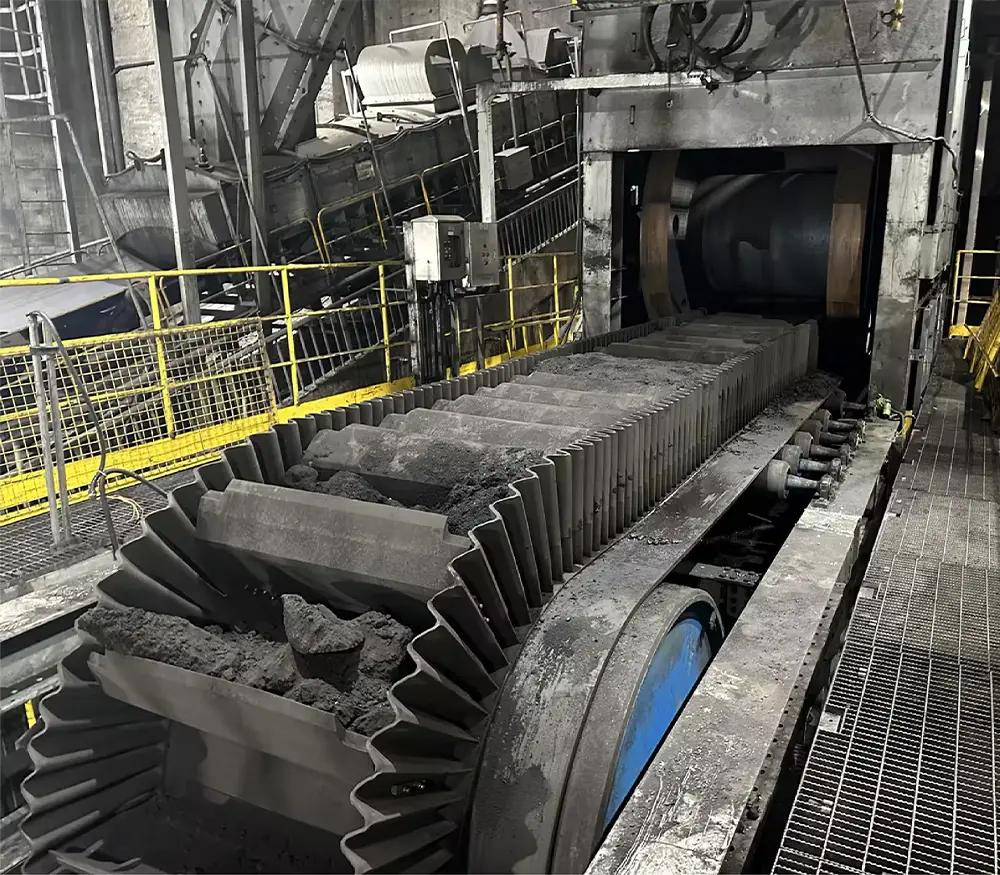
EPDM High Temperature Sidewall Conveyor Belt
Recent news

Sidewall Conveyor Belt Sagging Solutions: QBF rubber Free Zone Base Belt Design Extends Service Life by 30%
Sep 18, 2026

QBF Rubber Anti-stick Sidewall Belting Helps Shenzhen Tunnel Construction
Sep 18, 2026

Mining Vertical Lifting System Solution: Tackling Continuous Conveying Challenges for Deep-Mine Operations
Sep 17, 2026
See Latest Service





