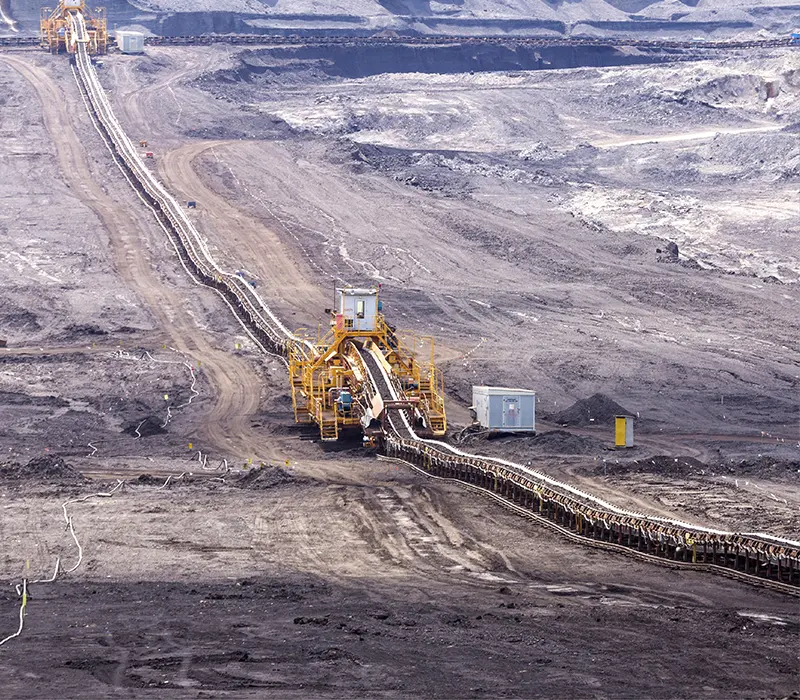
STH High Strength Steel Cord Conveyor Belt
-
Description
Overview
“Moving bulk material over long distances is tough on equipment — and even tougher on energy bills. The STH is built for exactly that: heavy loads, continuous runs, and sites where power cost matters. It’s not a short-haul belt. We designed it specifically for long overland routes, with lower rolling resistance built into the cover rubber and a lighter carcass that still holds up to high tension.”
Key Features
Reduced System Energy Consumption
Two things drive the energy saving here. First, indentation deformation drops by 30–60% versus conventional belts. Second, the cover rubber cuts loss angle tangent by 20%. Add those together, and you get measurably less friction drag across the whole conveyor. On a 10 km overland line, that difference shows up in the monthly power bill — not just in a spec sheet.
Improved Cover Rubber Wear Life
We ran lab abrasion tests against standard steel cord belts. The STH cover came out 50% ahead. What that means on site: sharp ore, rock drops, and constant scraping don’t chew through it as fast. Less cover wear equals longer belt life — especially on abrasive material lines.
Puncture Resistance & Reliable Troughing
A belt that doesn’t trough properly spills material — plain waste. The STH tracks well through idler sets, so you get less carryback and fewer clean-up hours. And when you’re feeding sharp rock or heavy lump material, the puncture resistance buys you extra protection against belt damage.
Compact Pulley Compatibility to Lower Equipment Investment
Minimum bend pulley diameter? 250 mm. That means you can spec smaller pulleys across the layout. Smaller pulleys mean lighter structures, smaller foundations, and lower capex — whether you’re building new or retrofitting an existing line.
Low Elongation with Light Weight High Strength Construction
The 7×7 cord construction does two things at once. It gives you the tensile strength for high-tension overland runs, but it doesn’t add unnecessary carcass weight. Lower weight means less dead load to drag around. And low stretch? That keeps tension stable over kilometres — so you’re not retensioning every week.
Dependable Splicing Performance
Get the hot-vulcanized splice right, and you’ll see over 95% of rated strength at the joint. That joint also holds up under sustained heavy loading — no progressive fatigue cracking. And if you want fewer splices to begin with, we can supply longer factory rolls. Fewer joints, less field work, lower risk.
Custom Tuned Cover Rubber for Site Specific Conditions
Not every site runs the same material. Heat, oil, abrasion, impact — your cover rubber needs to match what you’re moving. We can tweak the compound for mining, power plant ash, cement clinker, or other tough conditions. Send us your material specs and operating temps. We’ll recommend a cover that actually fits the job.
Benefits
The STH steel cord conveyor belt delivers real cost and operational benefits for your bulk material conveying project.
Lower Running Power for Long Term Operation
Less drag means less power draw — plain and simple. On a long overland route, those daily kilowatt savings stack up fast. Procurement teams tend to like that number when they run the annual cost comparison.
Fewer Unplanned Stops & Reduced Maintenance Work
Better wear and puncture resistance means the cover holds up longer. Longer factory rolls mean fewer splices to make on site. And fewer splices? That’s fewer failure points. Maintenance crews notice the difference — especially when they’re not out on the line at 2 AM fixing a failed joint.
More Flexibility for Conveyor Layout Design
Smaller bend pulleys give you layout flexibility. That means you can fit the belt into tighter spaces, downsize pulley structures, and avoid oversize hardware. Works for new builds. Works for retrofits too — less structural steel to cut and weld.
Stable Tension for Non Stop Heavy Load Operation
Low stretch keeps tension steady — even when the belt runs 24/7. Operators aren’t constantly out there retensioning. On a conventional belt, that’s a weekly chore. On the STH, it’s not.
Technical Details
Here’s what goes into the STH construction — and why it performs the way it does.
Core reinforcement in warp direction: 7×7 low elastic steel cords
Top/bottom cover: Low rolling resistance rubber compound to minimize running energy loss
Manufacturing process: Steel cords laid under controlled tension, followed by hot vulcanization curing
Standards compliance: Manufactured in accordance with DIN and ISO relevant conveyor belt standards
Structural advantage: Optimized internal construction reduces indentation deformation and running friction for stable, long term energy saving operation
STH vs Ordinary Steel Cord Conveyor Belt
This energy saving belt is purpose built for long distance, high tonnage conveying projects. It is not prioritised for short haul general material transportation.
| Item | STH High Strength Steel Cord Conveyor Belt | Ordinary Steel Cord Conveyor Belt |
| Indentation deformation | 30% 60% reduction | High indentation deformation, higher system energy loss |
| Cover abrasion performance | 50 % performance improvement | Standard level abrasion resistance |
| Minimum bend pulley diameter | 250 mm | Larger pulley diameter required |
| Loss angle tangent | 20 % reduction | Higher rolling resistance |
| Splicing performance | >95 % of belt rated strength, good splice fatigue life | General level splice fatigue performance |
| Belt weight | Light weight high strength structure | Heavier carcass for equal strength grade |
Applications
This high strength steel cord conveyor belt targets long distance, high capacity bulk material conveying. Typical industries and project types include:
- Mining operations
- Steel mills
- Harbour and port logistics terminals
- Cement plants
- Thermal power stations
- Grain and salt processing facilities
- Large scale overland conveyor systems
Complementary Supporting Products
Combine these supporting items to improve overall conveyor system reliability:
STH Splice Compound Kit – Specially formulated to match STH belt steel cords and cover rubber, helping maintain consistent joint strength and splice fatigue life.
Belt Condition Monitoring System – Real time sensor based monitoring to track splice elongation, cover wear and cord damage. Supports predictive maintenance planning instead of reactive breakdown repairs.
Ceramic Lagged Drive Pulleys – Increase driving friction and mitigate slip risk, especially on long distance or high tension conveyor lines.
Impact Bed & Loading Chute Liners – Protect belt surface at material loading zones, extend cover rubber service life for high drop feeding conditions.
FAQ
Q1: What is the main application for STH high strength steel cord conveyor belt?
A: Long haul, high tonnage jobs — think mining overland conveyors, port stockyard feeds, and cement plant raw material lines. If your run is short, this belt is probably overkill. If you’re moving thousands of tons a day over kilometres, it’s worth a look.
Q2: What is the minimum bend pulley size for this belt?
A: The minimum applicable bend pulley diameter is 250 mm. This allows designers to adopt smaller pulley assemblies and cut overall equipment investment.
Q3: How does the belt perform in splicing?
A: Get the hot-vulcanized splice done right, and you’ll get over 95% of rated strength at the joint — with good fatigue life under sustained loads. We strongly recommend hot-vulcanization over mechanical fasteners. And if you order longer rolls, you’ll have fewer splices to make on site. Fewer joints, less risk.
Q4: Can cover rubber properties be customized?
A: Yes — we adjust the compound to match the job. Abrasive rock? High heat? Oil exposure? We’ve got formulations for each. Tell us what you’re moving and at what temperature. We’ll recommend the right cover.
Q5: What manufacturing standards apply to this belt?
A: STH high strength steel cord conveyor belt is produced according to DIN and ISO industry standards.
Get In Touch For Your Project
Planning a project? Send us your layout, material specs, and site conditions. We’ll get back with belt recommendations, roll length options, and cover rubber suggestions that actually fit your operation — not just a generic quote.
Products

Sidewall Conveyor Belt

Pocket Type Conveyor Belt
It handles ultra high lift, high throughput tasks beyond conventional high angle sidewall belts, realizing stable continuous bulk material transportation.

Rope-track Sidewall Conveyor Belt

Bucket Elevator Conveyor Belt
They deliver low elongation, high throughput and stable operation with easy maintenance, helping operators reduce downtime from belt failures and frequent replacements.

Pipe Conveyor Belt
Supporting sharp horizontal and vertical bends, it meets strict environmental requirements and helps plants remove redundant transfer points, favored by operators troubled by on site dust and leakage issues.

Chevron Conveyor Belt
Various chevron patterns are available for different slope demands. Widely used in mining, farming, construction and recycling, it maintains stable performance under harsh on site working conditions.
Recent news

Sidewall Conveyor Belt Sagging Solutions: QBF rubber Free Zone Base Belt Design Extends Service Life by 30%
Sep 18, 2026

QBF Rubber Anti-stick Sidewall Belting Helps Shenzhen Tunnel Construction
Sep 18, 2026

Mining Vertical Lifting System Solution: Tackling Continuous Conveying Challenges for Deep-Mine Operations
Sep 17, 2026
See Latest Service





