
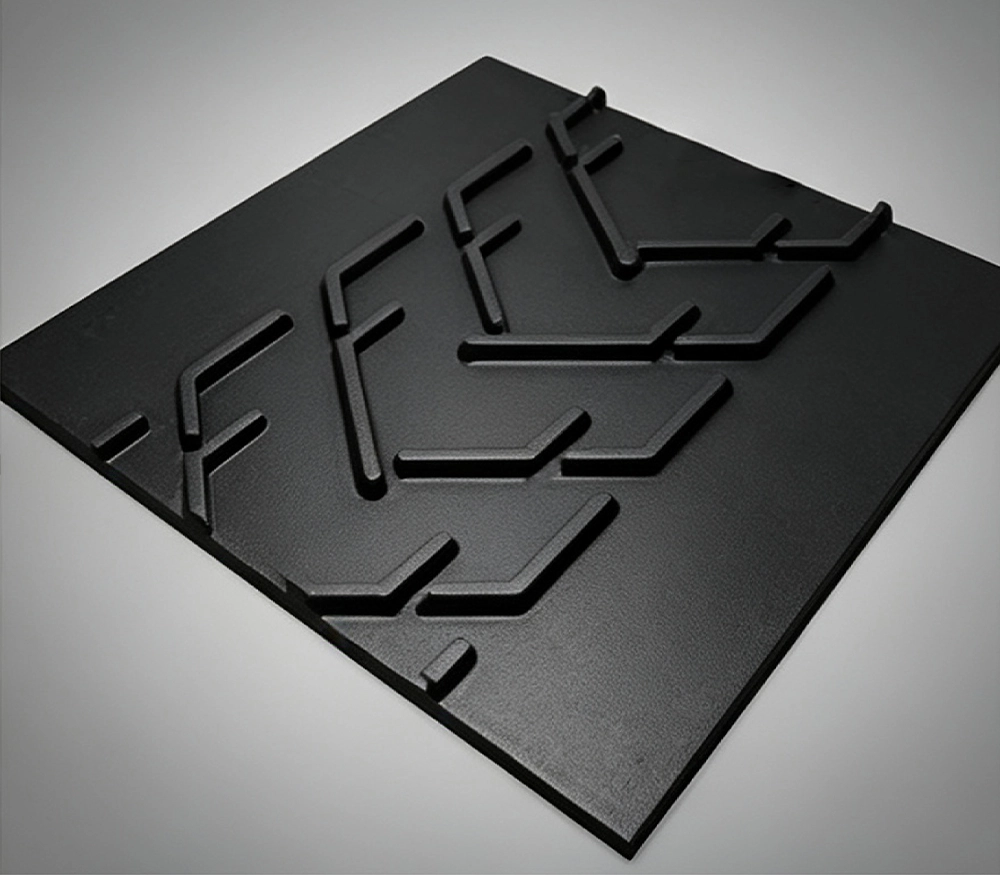
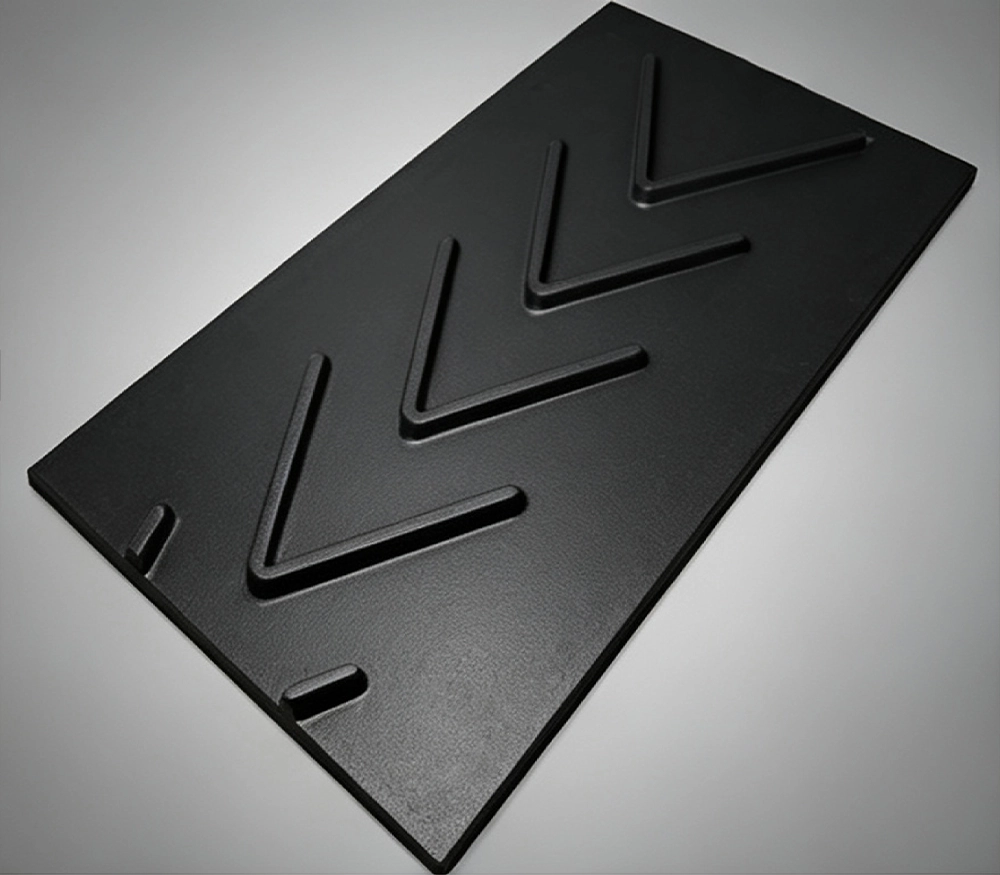
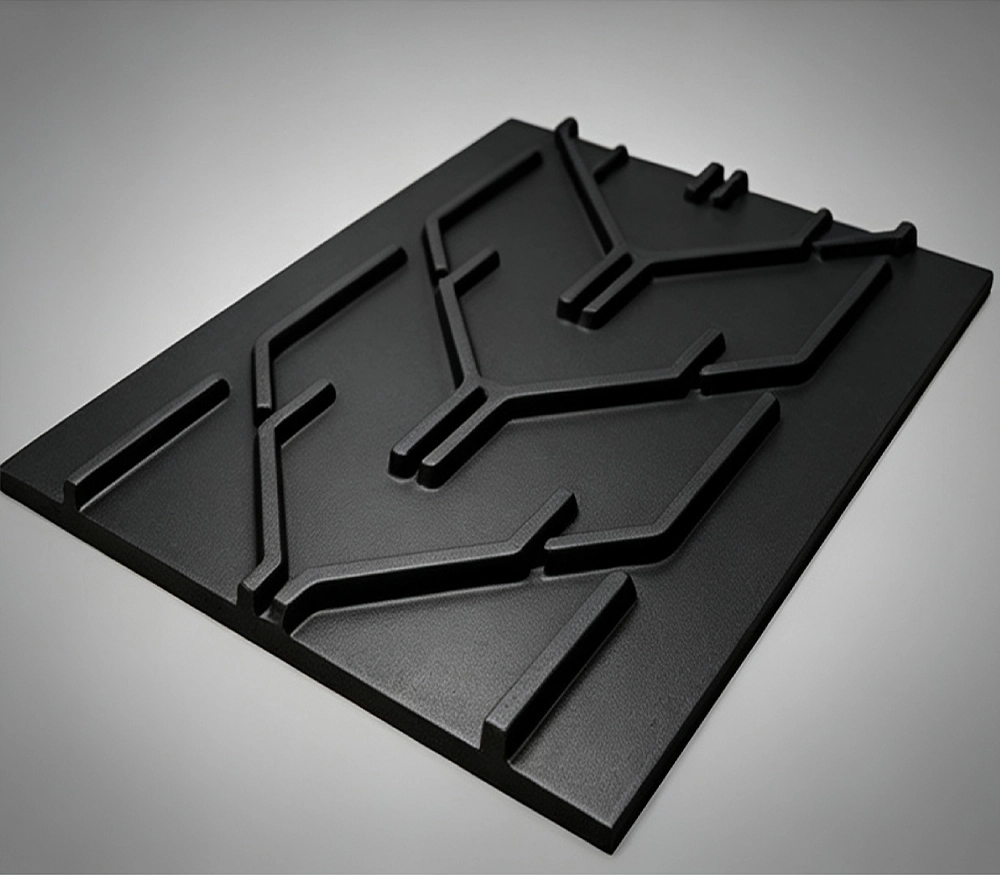
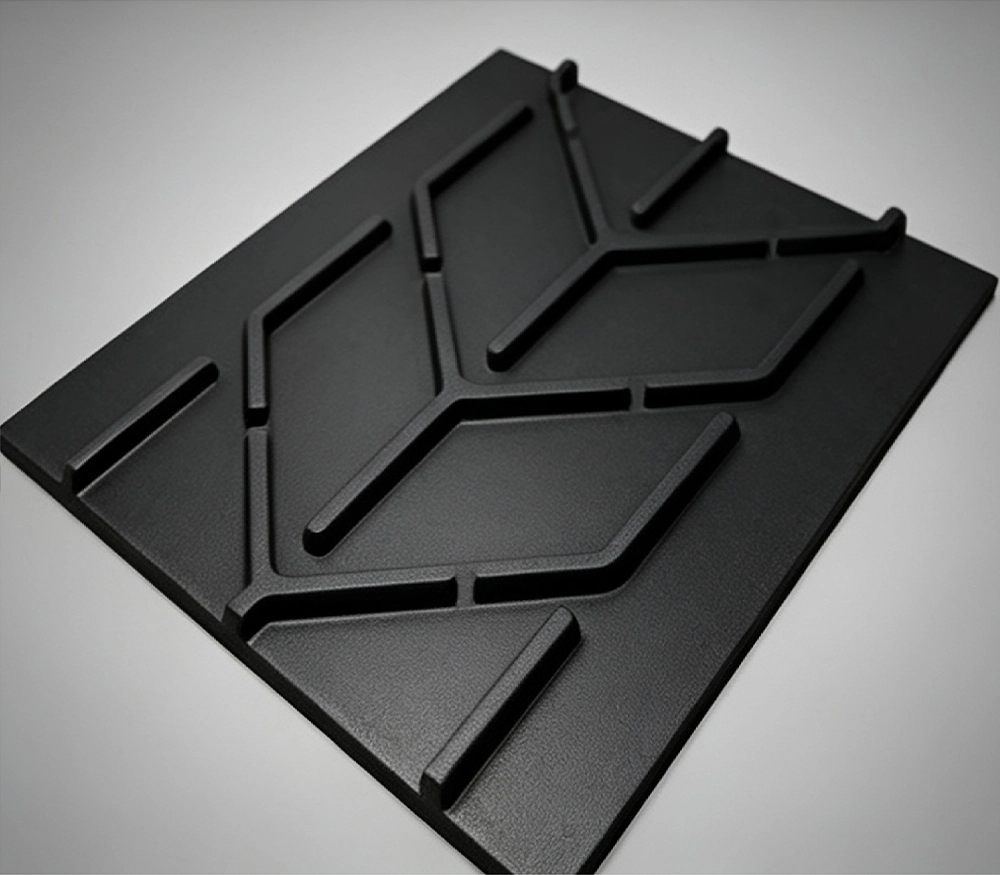
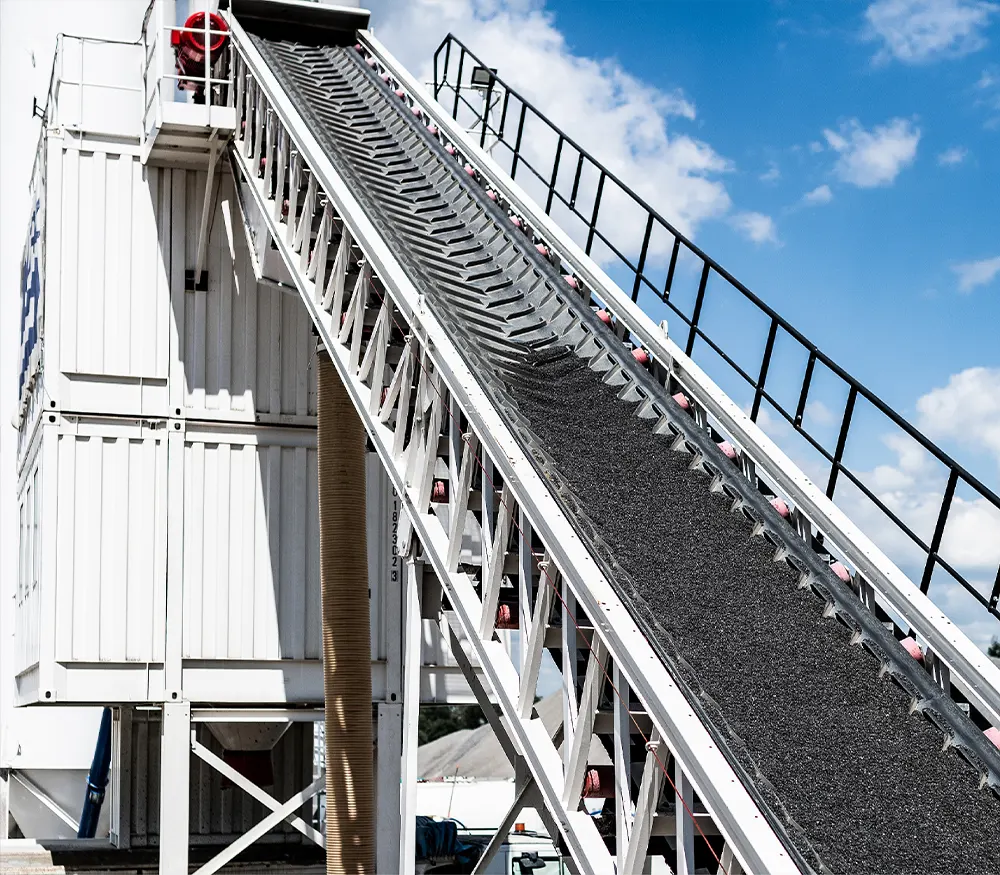
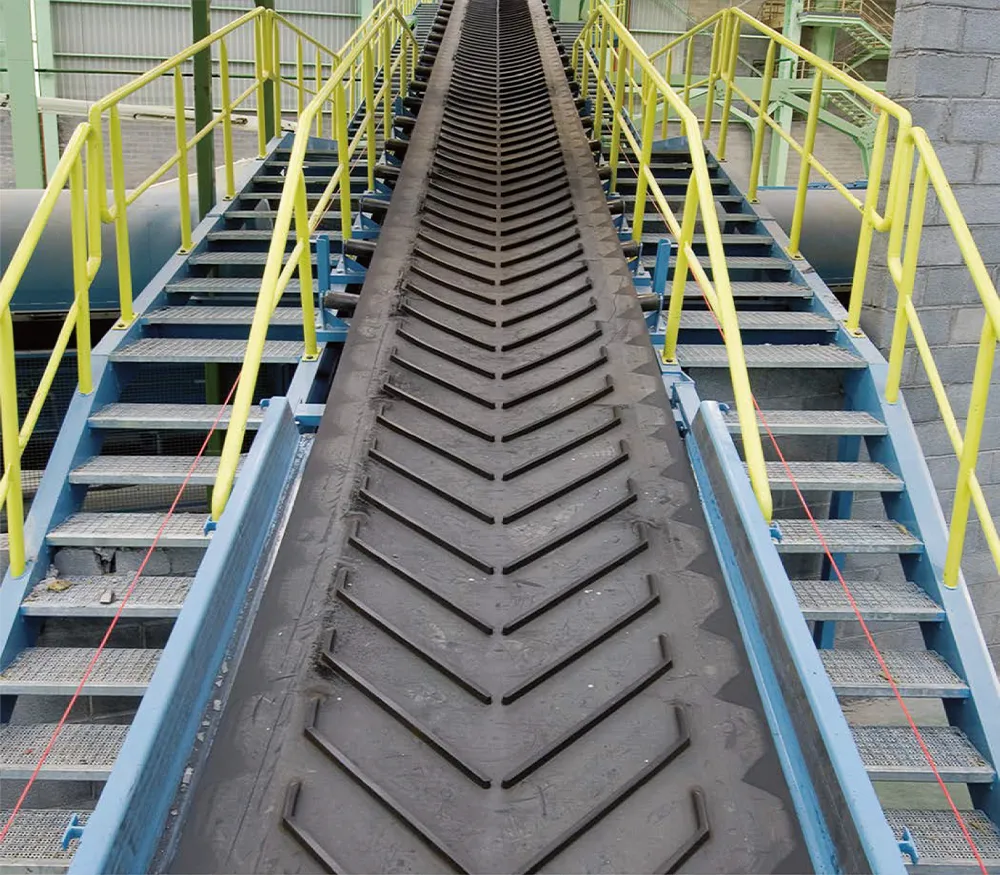
Chevron Conveyor Belt
Various chevron patterns are available for different slope demands. Widely used in mining, farming, construction and recycling, it maintains stable performance under harsh on site working conditions.
-
Description
Product Overview
Chevron conveyor belt, sometimes called cleated chevron rubber conveyor belt, is built to work for steep angle material conveying jobs. Standard smooth belts hit limits when lifting bulk goods on sharp slopes — loose material will slide or roll backwards. The raised chevron cleats lock bulk material in place and stop fallback during inclined transport.
We carry multiple chevron pattern styles to match different slope requirements. These belts see heavy use across mining sites, farms, construction and recycling operations. They hold up well even under rough, real world site conditions.
Key Features
- Cleats are integrally vulcanized on the belt with high adhesion to prevent coming off.
- Various pattern designs are available to meet conveying inclination angles.
- High flexibility and excellent performance ensures excellent performance and longer service life.
Technical Capabilities & Main Specifications
Cleat Height Options: 5 mm, 8 mm, 10 mm, 15 mm, 17 mm, 20 mm, 25 mm, 32 mm Usable Belt Width: 300 mm up to 2000 mm
Max practical conveying angle: Up to 40 degrees
Keep in mind: Higher cleat heights support steeper conveying angles. Fine wet materials normally need taller cleats to avoid back sliding. Results shift based on particle size and moisture level of your raw material.
Chevron Type
C17P440 / C17P630 / C17P750

| Profile height (mm) |
Profile width (mm) |
Profile pitch (mm) |
Belt width (mm) |
| 17 | 440 | 330 | 1200 |
| 17 | 630 | 330 | 1200 |
| 17 | 750 | 330 | 1200 |
C25P330 / C25P330 /C25P440

| Profile height (mm) |
Profile width (mm) |
Profile pitch (mm) |
Belt width (mm) |
| 25 | 260 | 245 | 1200 |
| 25 | 330 | 245 | 1200 |
| 25 | 440 | 245 | 1200 |
C32P1000
| Profile height (mm) |
Profile width (mm) |
Profile pitch (mm) |
Belt width (mm) |
| 32 | 1000 | 330 | 1300 |
C10P700 Closed V / C15P400 Closed V / C15P550 Closed V

| Profile height (mm) |
Profile width (mm) |
Profile pitch (mm) |
Belt width (mm) |
| 10 | 700 | 220 | 1200 |
| 15 | 400 | 200 | 1200 |
| 15 | 550 | 200 | 1200 |
Typical Applications
Chevron conveyor belts handle diverse bulk materials on steep inclined conveyors. Common use cases include:
- Crushed minerals, mine ore and coal
- Sand, gravel and construction aggregates
- Wood chips, biomass fragments
- Grain and agricultural fertilizers
- Mobile crushers, vibrating screening plants
- Road milling machine waste material removal
Smooth ordinary belts work well for small inclination. Once you push conveyor angle higher, chevron cleated belts become the practical solution to hold loose bulk materials in position.
Rubber Compound Quality Options
Match your rubber formulation to your working environment. Below are available grades:
- Flame retardant: Best for underground mining and locations with high fire risks
- Abrasion resistant: Heavy grade for sharp, jagged mineral loads
- Acid & Alkali resistant: Suited for fertilizer and corrosive bulk products
- Heat resistant: For conveying hot mineral discharge
- Oil resistant: Use when materials carry oil or grease
- Cold resistant: For outdoor winter work in low temperature zones
Quick onsite tip: Sticky wet materials will speed up cleat wear. Simple regular visual inspections help spot wear issues before they turn into bigger failures.
FAQ
Q1:What is the maximum angle for chevron conveyor belts?
Real world working angles can go as high as 40°, but this number is not fixed. Material moisture, particle size and your chosen cleat height all change performance. Wet fine sand, for example, almost always requires taller cleats. Send over your site data and we can suggest the right cleat dimension for you.
Q2:Do chevron cleats fall off easily?
Our cleats are vulcanized into the top cover instead of glued on afterwards. They form one solid rubber unit with the belt. With correct installation and normal loading, peeling risks stay very low. Still, heavy sharp edged material with repeated direct impact can damage cleats over time.
Q3:How should I select cleat height for my project?
As a general rule, steeper slopes call for higher cleats. Light, fine grain materials can run with shorter cleats. Heavy, coarse or wet bulk goods need taller profiles. Share your belt width, conveyor angle and material details, and our team will give you practical recommendations.
Q4:Will this belt work on mobile crusher setups?
Yes, many mobile crushing and screening machines run chevron belts. Good rubber flexibility handles constant movement of portable site equipment without extra trouble.
Q5:Can I get custom chevron patterns?
Standard chevron patterns are readily available. Custom special cleat shapes are possible mainly for larger volume orders. Small batch custom requests may not be feasible.
Q6:Which rubber grade should I choose?
Look at your operating conditions: working temperature, whether material is oily, corrosive or hot, plus any fire safety requirements. Tell us about your site environment and we help you pick the suitable rubber compound.
Products

Sidewall Conveyor Belt

Pocket Type Conveyor Belt
It handles ultra high lift, high throughput tasks beyond conventional high angle sidewall belts, realizing stable continuous bulk material transportation.

Rope-track Sidewall Conveyor Belt

Bucket Elevator Conveyor Belt
They deliver low elongation, high throughput and stable operation with easy maintenance, helping operators reduce downtime from belt failures and frequent replacements.

Pipe Conveyor Belt
Supporting sharp horizontal and vertical bends, it meets strict environmental requirements and helps plants remove redundant transfer points, favored by operators troubled by on site dust and leakage issues.
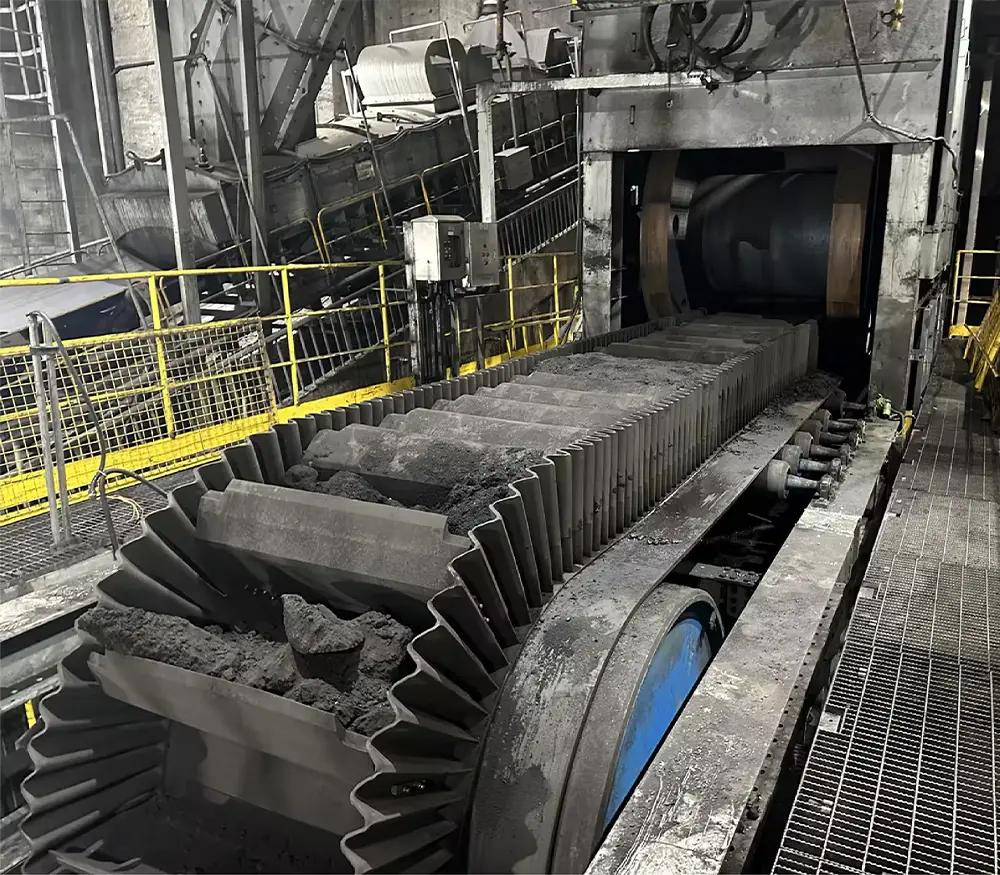
EPDM High Temperature Sidewall Conveyor Belt
Recent news

Sidewall Conveyor Belt Sagging Solutions: QBF rubber Free Zone Base Belt Design Extends Service Life by 30%
Sep 18, 2026

QBF Rubber Anti-stick Sidewall Belting Helps Shenzhen Tunnel Construction
Sep 18, 2026

Mining Vertical Lifting System Solution: Tackling Continuous Conveying Challenges for Deep-Mine Operations
Sep 17, 2026
See Latest Service





