-
Description
Product Overview
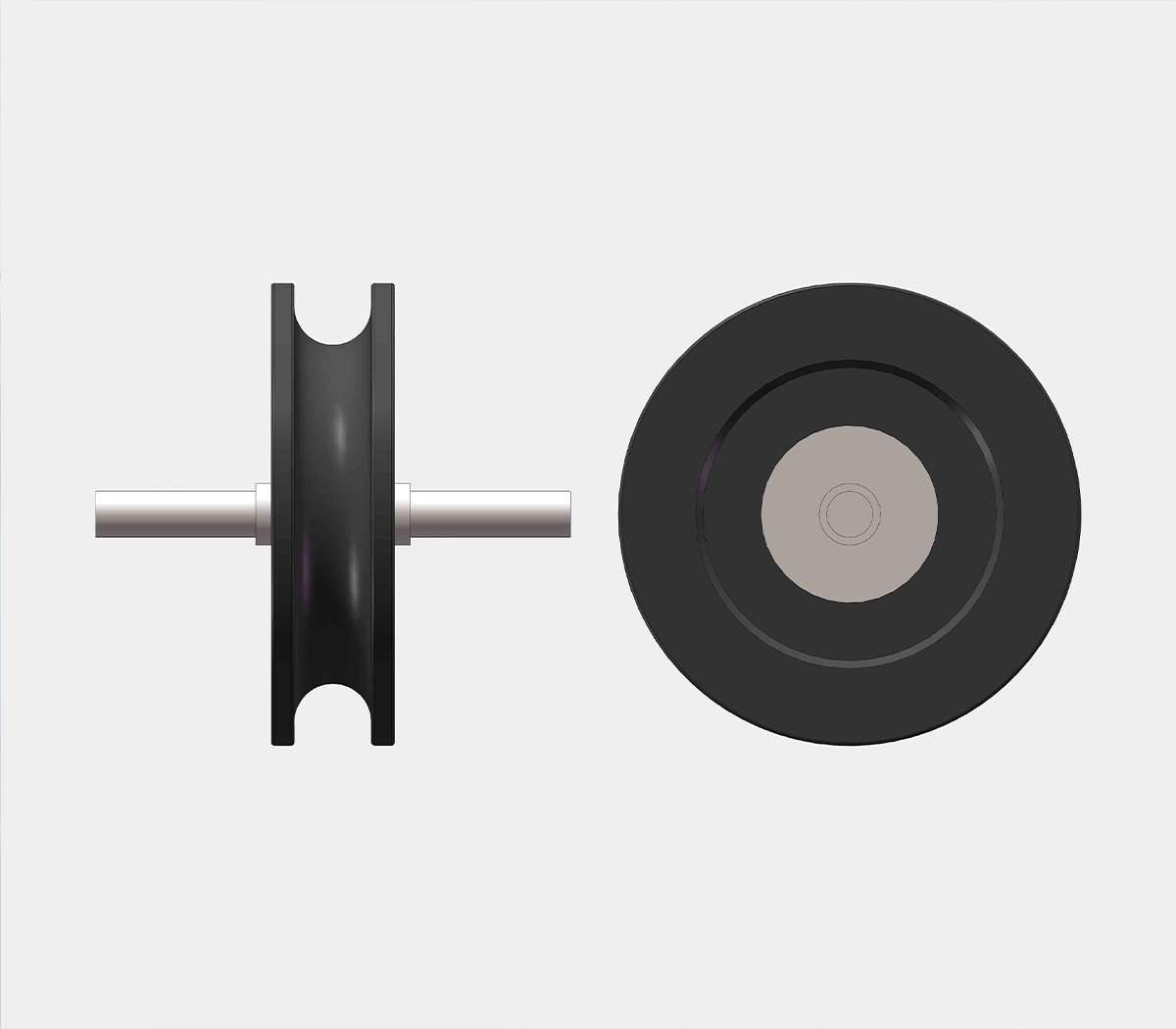
Sidewall Belt Guide Roller, also called anti wandering roller for sidewall conveyor belts, is a purpose built part to stop sidewall belts from shifting sideways while the conveyor runs. Install these rollers correctly, and you can both prevent and fix belt drift issues. This helps cut down premature belt wear, belt tears, and unexpected stops on your sidewall conveyor line.
Our GW300/80 sidewall belt guide roller follows German manufacturing standards. It works with most sidewall conveyor belts that come with transverse reinforcement layers.
A lot of sites still use plain metal vertical idlers for belt correction. These rigid metal rollers often scratch and wear away the base section of sidewall belts. The GW300 series uses high content natural rubber for its disc face. It makes soft, physical adjustments against the belt instead of forcing it hard sideways. This greatly lowers the chance of damaging your belt surface.
The bearing set on the GW300 guide roller uses a special buffered design. It soaks up shocks from belt vibration and sudden material load spikes. This helps the roller last much longer even under continuous heavy duty site conditions.
Product Types
Type I Guide Roller
– Split style Built for general load sidewall conveyors. Easy to take apart on site for part swap and routine checks. Fits most medium speed bulk material conveying lines.
Type II Guide Roller
– Split style Deep Groove Heavy Duty Features a deep groove build for heavy loads and high volume material feed. The deep groove holds belt side movement in check. It suits mines, quarries and other high capacity bulk transfer sites. The split setup still lets field workers service parts easily, even in heavy dust.
Type III Guide Roller
– Integrated style Made as one solid assembly with strong structural rigidity. Fewer assembly gaps mean better dust resistance. Pick this when installation space is tight and you do not need frequent disassembly.
Core Advantages
- Flexible rubber disc contact, avoids harsh scratching on sidewall belt base layer
- Buffered bearing setup handles impact from material loading
- Compatible with all sidewall belts fitted with transverse reinforcement
- Three build versions cover light, medium through heavy duty working conditions
- Minimise belt wandering, lower belt damage and unplanned downtime
- Built to German process standards for steady real world performance
Application Scenarios
These sidewall belt guide rollers see wide use on steep angle sidewall conveyors. Typical sites include mines, cement plants, aggregate processing yards, grain handling facilities, power plants and bulk material transfer stations.
Installation Notes
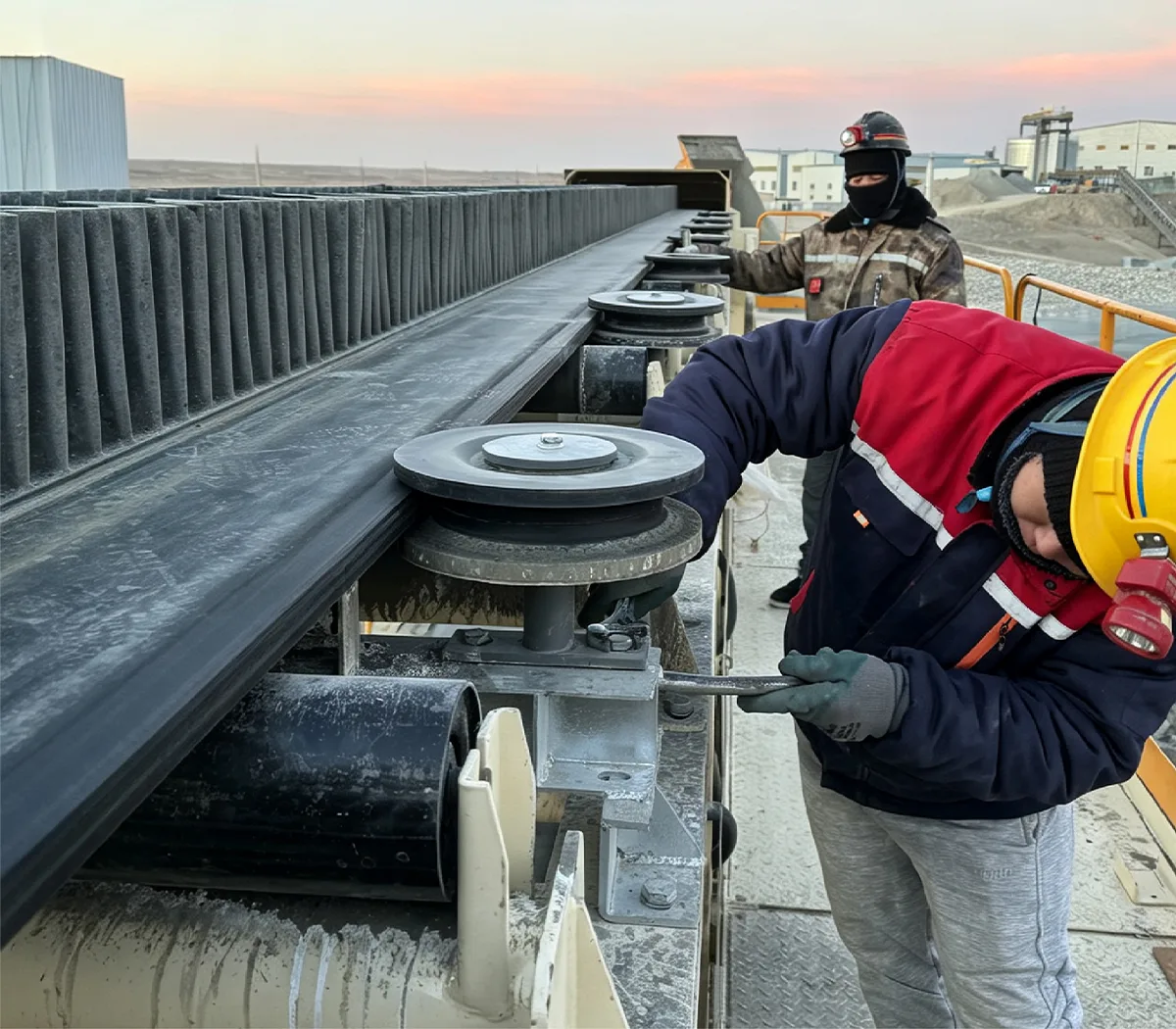
Fit guide rollers to both sides of your sidewall belt. Focus mounting points on sections where your belt tends to drift most often.
Leave suitable clearance between rubber disc and belt edge. Do not push the disc too tight against the belt. Too much contact pressure will wear the rubber disc out fast.
Tighten all fasteners once installation finishes. Loose mounting will make the anti drift effect much weaker.
Carry out regular visual checks. Look for cracks or heavy abrasion on rubber discs. Listen for strange noise coming from bearings while the conveyor is running. Replace worn components in good time.
FAQ
Q1: Can I fit this sidewall belt guide roller on sidewall belts without transverse reinforcement?
A: The GW300/80 model is made mainly for belts with transverse reinforcement. Belts missing this layer can deform easily under side force. Reach out to us to confirm fit before you place your order.
Q2: What is the practical difference between split style and integrated style guide rollers?
A: Split style units (Type I and Type II) can be taken apart on site. You can swap worn rubber discs or bearings without pulling off the whole roller unit. The integrated Type III delivers better dust performance and higher rigidity, but partial component replacement takes more work.
Q3: Why should I move away from traditional metal vertical idlers for sidewall belt correction?
A: Metal vertical idlers push the belt with hard metal surfaces. Constant friction scuffs and damages the soft base of sidewall belts, leading to early belt failure. Rubber faced guide rollers work with gentle contact to keep your belt in good shape for longer.
Q4: How many guide rollers will one conveyor system actually need?
A: There is no fixed number. It changes based on conveyor length, belt width, material weight and how badly your belt drifts on site. Usually add one group near each spot where drift keeps happening. Send over your conveyor specs and we can give you a practical suggestion.
Q5: What kinds of working conditions do these guide rollers cope with?
A: They perform well in dusty mines, cement plants, grain depots and regular bulk material workshops. If your site runs at high temperature or has chemical corrosion, let us know and we can work out custom material options.
Products

Sidewall Conveyor Belt

Pocket Type Conveyor Belt
It handles ultra high lift, high throughput tasks beyond conventional high angle sidewall belts, realizing stable continuous bulk material transportation.

Rope-track Sidewall Conveyor Belt

Bucket Elevator Conveyor Belt
They deliver low elongation, high throughput and stable operation with easy maintenance, helping operators reduce downtime from belt failures and frequent replacements.

Pipe Conveyor Belt
Supporting sharp horizontal and vertical bends, it meets strict environmental requirements and helps plants remove redundant transfer points, favored by operators troubled by on site dust and leakage issues.

Chevron Conveyor Belt
Various chevron patterns are available for different slope demands. Widely used in mining, farming, construction and recycling, it maintains stable performance under harsh on site working conditions.
Recent news

Sidewall Conveyor Belt Sagging Solutions: QBF rubber Free Zone Base Belt Design Extends Service Life by 30%
Sep 18, 2026

QBF Rubber Anti-stick Sidewall Belting Helps Shenzhen Tunnel Construction
Sep 18, 2026

Mining Vertical Lifting System Solution: Tackling Continuous Conveying Challenges for Deep-Mine Operations
Sep 17, 2026
See Latest Service





