-
Description
Pocket Assembly Overview
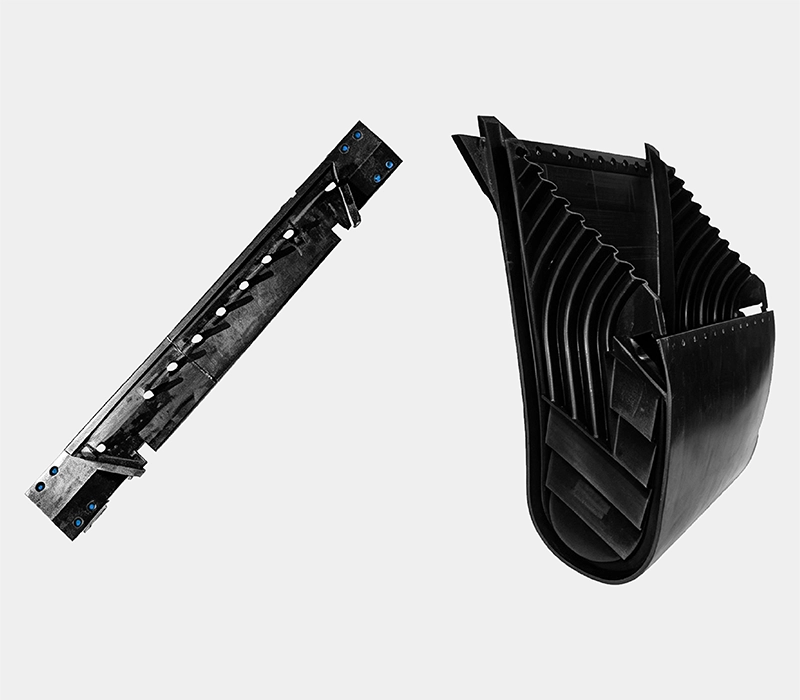
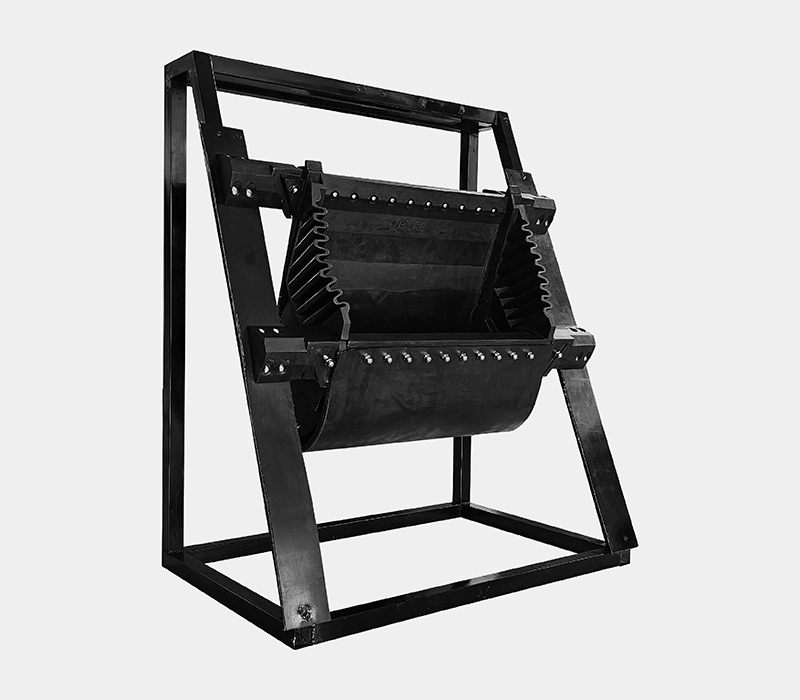
Pocket assemblies are the core functional parts of pocket type conveyor belts, directly deciding conveying stability, capacity and service life. Each complete unit consists of two key components: molded rubber pockets and rigid support cross bars.
Rubber pockets act as material carriers to hold bulk solids, while cross bars serve as reinforcing frames to prevent pocket deformation. This flexible-rigid combined structure solves common steep-angle and vertical conveying issues including material rollback, spillage and unstable discharge. All assemblies are customizable to fit different industrial working conditions for granular, powdery and small lump bulk materials.
Rubber Pockets (Main Loading Components)
Rubber pockets are permanently vulcanized onto the base belt instead of glued, ensuring tight integration, no peeling or displacement during long-term high-load operation. We offer multiple rubber formulas tailored to different materials and environments for optimal durability.
Rubber Material Options
- Standard Wear-Resistant Rubber: Cost-effective and impact-resistant. Ideal for sand, gravel, grain, coal powder and ordinary minerals for general industrial conveying.
- Oil-Resistant Rubber: Resists grease and organic solvent erosion. Suitable for oily materials in chemical and grain processing plants.
- Heat-Resistant Rubber: Stable at material temperatures up to 120°C, preventing aging and hardening for hot clinker and high-temperature ore conveying.
- Tear-Resistant Reinforced Rubber: Built with internal fiber layers to resist cuts and tears, perfect for sharp, heavy raw ore and crushed stone.
Structural & Customization Features
Key stress areas (pocket bottom, side wall roots) are thickened for impact resistance. The flared pocket opening boosts material filling rate, and smooth inner walls ensure full, clean discharge with no residue. Flexible rubber design bends smoothly around pulleys, with no jamming or loud mechanical noise.
All pocket sizes (depth, width, opening dimension, spacing) are fully customizable to match required conveying tonnage, lift height and material density.
Reinforced Cross Bars (Support & Stabilization)
Cross bars are horizontally installed on the back of rubber pockets, serving as rigid reinforcement for flexible rubber structures. They are essential to avoid pocket bulging, deformation and premature wear under heavy load.
Core Functions
-
Restrain pocket outward bulging to maintain standard loading volume and stable conveying capacity
-
Disperse local material pressure evenly across the belt to reduce root wear and extend belt lifespan
-
Keep consistent pocket shape during bending operation, ensuring uniform filling and accurate discharge
-
Relieve cyclic tensile stress to prevent pocket root cracking and fracture
Material & Quality Notes
Cross bars adopt high-strength rigid composite or reinforced metal materials, with anti-rust and anti-wear surface treatment, adapting to dusty, humid industrial environments. Precision fixed installation ensures no loosening or displacement. Thickened reinforced models are available for heavy-duty mining and large-tonnage conveying.
Unqualified cross bars (thin size, unreasonable spacing, loose installation) will cause pocket deformation, material spillage and early belt scrapping.
Key Assembly Advantages
-
Zero Rollback & Low Spillage: Flexible-rigid matched structure secures materials during 0-90° steep/vertical lifting, reducing material waste and site cleaning work
-
Strong Environmental Adaptability: Works stably in high-dust, humid, low and high-temperature harsh working conditions
-
Low Maintenance Cost: Supports partial single pocket/cross bar replacement, no need to replace the whole belt, saving downtime and replacement cost
-
High Conveying Efficiency: Standardized pocket spacing and customized volume ensure stable feeding and smooth discharge, higher efficiency than traditional steep conveyors
-
Safe & Quiet Operation: Flexible bending design avoids jamming and mechanical stuck faults, with lower running noise than metal bucket elevators
Application Scenarios
Widely used in mining, quarry, cement plants, chemical factories, grain storage, port terminals and power plants. Suitable for conveying coal, ore, gravel, limestone, grain, fertilizer, chemical powder and fly ash.
Maintenance & Troubleshooting
Routine Maintenance
-
Regularly check rubber pockets for wear, cracks and aging, repair minor damage timely
-
Inspect cross bars for looseness, deformation and displacement, fasten faulty parts immediately
-
Clean residual materials inside pockets to avoid long-term rubber corrosion
-
Shorten inspection cycle for high-temperature and oily working conditions
Common Faults & Fixes
-
Pocket Bulging: Caused by weak cross bars or overloading | Replace reinforced cross bars and control load
-
Pocket Root Cracking: Caused by sharp impact and stress concentration | Upgrade wear-resistant pockets and strengthen support
-
Material Spillage: Caused by deformation and uneven spacing | Calibrate cross bar position and replace damaged pockets
-
Cross Bar Loosening: Caused by long-term vibration | Re-fix and replace aging accessories
FAQ
Q1: Can rubber pockets convey sharp and heavy ore?
A: Yes. We provide thickened tear-resistant rubber pockets and reinforced cross bars for sharp ore and crushed stone. Routine inspection is recommended for ultra-sharp heavy materials to prolong service life.
Q2: What is the service life of the pocket assembly?
A: 2-3 years for light-duty conveying (grain, sand); 1-2 years for heavy-duty mining and high-temperature working conditions. Custom reinforced versions extend lifespan by 30%-50%.
Q3: Can I customize non-standard pocket sizes and cross bar spacing?
A: Full customization is available. We tailor pocket dimensions and cross bar spacing according to your actual tonnage, material density and lift height.
Q4: Can I replace individual damaged pockets instead of the whole belt?
A: Yes. The vulcanized integrated structure supports partial local replacement, greatly reducing maintenance cost and equipment downtime.
Q5: What temperatures do rubber pockets adapt to?
A: Standard pockets: -20°C to +80°C; heat-resistant pockets: up to 120°C; special low-temperature pockets adapt to ultra-low temperature outdoor environments.
Q6: Rubber pocket vs traditional metal bucket?
A: Rubber pocket assemblies feature flexible operation, low noise and no material sticking dead angles, ideal for sticky and powdery materials with limited installation space. Metal buckets only suit extreme high-temperature materials and have higher maintenance costs.
Q7: How to choose matching cross bar models?
A: Provide your belt width, pocket size, conveying capacity and material type, and our team will match the most suitable cross bar specifications.
Products

Sidewall Conveyor Belt

Pocket Type Conveyor Belt
It handles ultra high lift, high throughput tasks beyond conventional high angle sidewall belts, realizing stable continuous bulk material transportation.

Rope-track Sidewall Conveyor Belt

Bucket Elevator Conveyor Belt
They deliver low elongation, high throughput and stable operation with easy maintenance, helping operators reduce downtime from belt failures and frequent replacements.

Pipe Conveyor Belt
Supporting sharp horizontal and vertical bends, it meets strict environmental requirements and helps plants remove redundant transfer points, favored by operators troubled by on site dust and leakage issues.

Chevron Conveyor Belt
Various chevron patterns are available for different slope demands. Widely used in mining, farming, construction and recycling, it maintains stable performance under harsh on site working conditions.
Recent news

Sidewall Conveyor Belt Sagging Solutions: QBF rubber Free Zone Base Belt Design Extends Service Life by 30%
Sep 18, 2026

QBF Rubber Anti-stick Sidewall Belting Helps Shenzhen Tunnel Construction
Sep 18, 2026

Mining Vertical Lifting System Solution: Tackling Continuous Conveying Challenges for Deep-Mine Operations
Sep 17, 2026
See Latest Service





