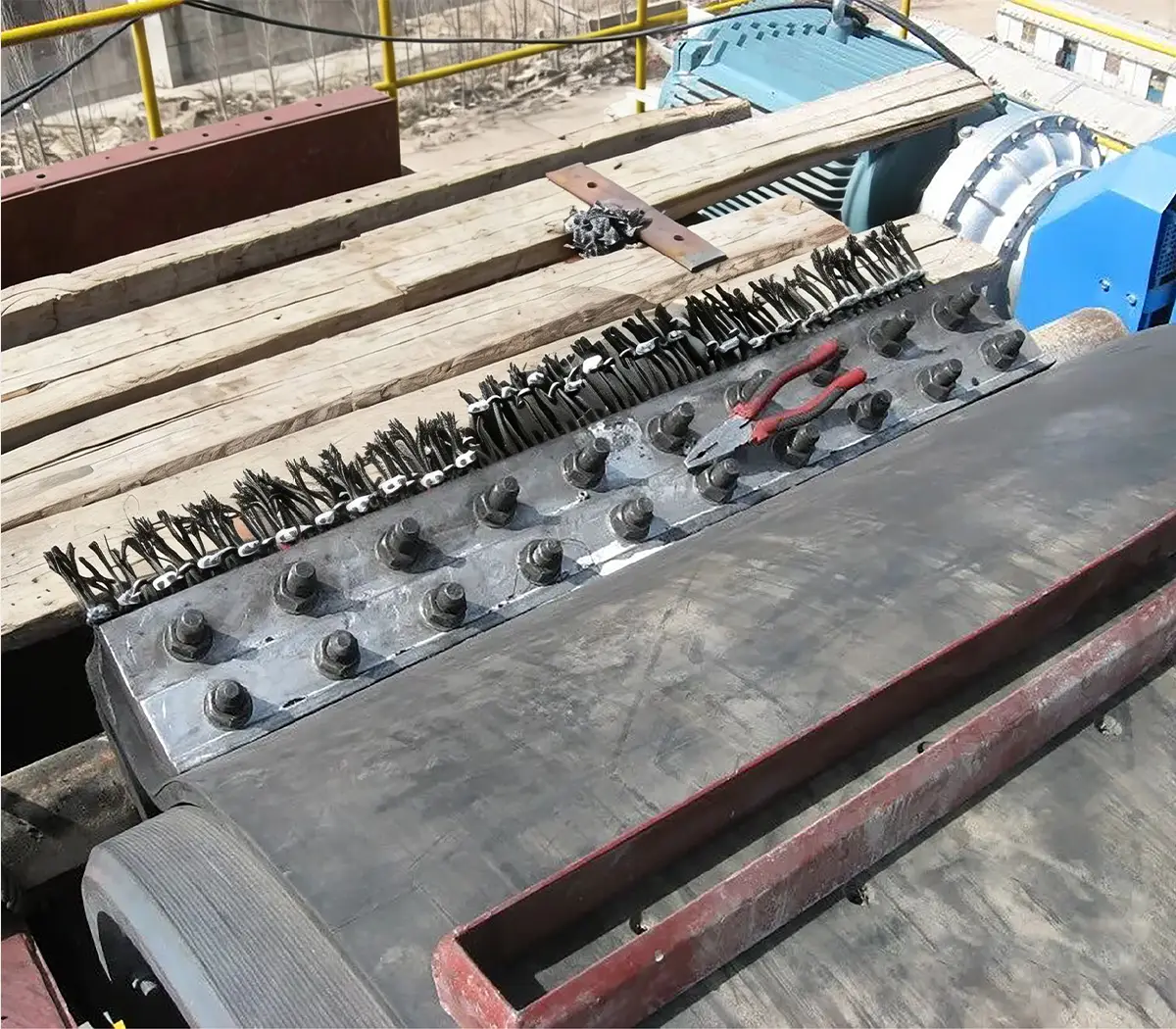
Elevator Conveyor Belt Splicing Fastener
-
Description
Product Overview
Bucket elevator belt splicing fastener (aluminum alloy clamp for elevator belt) acts as a vital connection component for bucket elevator belts. It firmly locks two belt ends together to build a solid belt joint, keeping your bucket elevator running stable during vertical bulk material lifting. Poor belt joints often trigger joint rupture, belt slip and costly unplanned downtime. This splicing clamp fixes these common site issues, delivering secure connections and protecting overall elevator system safety.
Many plant operators choose mechanical splicing clamps instead of vulcanized joints for on site urgent maintenance. No large heating gear or long curing waiting time is required. It greatly cuts equipment shutdown hours and lowers your regular maintenance expense.
Built for real world field operations, this aluminum alloy splicing clamp simplifies belt joint assembly. On site workers can finish most procedures without highly specialized tools. Apart from reliable clamping performance, the fastener also guards belt edges and joint sections against impact and abrasive damage, reducing premature belt failure and extending belt service life.
Key product features
- Practical on site assembly, no complex special tooling required
- Effectively reduces scratch, tear and impact damage on elevator conveyor belt joints
- Stable clamping force for long lasting, dependable belt joint performance
- Supports safe and continuous operation of bucket elevator conveying systems
- Aluminum alloy main clamp structure, complete supporting accessories for full set installation
Applications
Suitable for many vertical bulk material lifting bucket elevator lines.
- Grain & feed processing: corn, wheat, feed pellet bucket elevators
- Mineral & sand processing: ore, quartz sand vertical conveying
- Cement and building material production lines
- On site repair & routine maintenance for industrial bucket elevator belts
This aluminum alloy belt splicing clamp fits steel cord elevator belts. Available working width ranges from 150 mm up to 2000 mm. Select proper size according to your actual belt width.
Material & Included Accessories
Main clamp set: 1 inner clamping piece + 2 outer clamping pieces (aluminum alloy body) Complete supporting parts: high strength bolts, filling box, filling compound, marble glue, curing agent, quartz stone, steel wire rope clips, work gloves, belt hole puncher
Main clamp body adopts aluminum alloy construction. Matched high strength bolts resist loosening caused by long run machine vibration. Even clamping pressure distributes over the joint area to avoid local stress concentration that may tear belt layers.
Installation Quick Tips
Practical operation notes translated from official product manual
1.Secure both ends of the elevator belt tightly with main clamps and high strength bolts.
2.Strip off the surface rubber cover from belt ends to expose inner steel wire ropes.
3.Fasten exposed steel wire ropes one by one with wire rope clips, cut away redundant rope length.
4.Cover the locked steel rope section with the filling box.
5.Pour 1.0 L marble glue into mixing container. Add 50 ml curing agent and stir thoroughly, then mix in quartz stone. Pour the blended mixture into the filling box.
6.Repeat mixing and pouring until the filling box is fully filled. Smooth the outer surface, allow more than 40 minutes for full solidification.
Extra practical tips:
- Make sure belt cutting ends stay flat and clean before clamping
- Tighten bolts in cross sequence rather than tightening one side fully first
- Re inspect all bolts and clips after the first 2 3 hours of full load running; machine vibration may loosen new fittings
- Do not apply excessive bolt torque; over tightening will crush belt carcass
FAQ
Q1: What bucket elevator scenarios fit this splicing fastener?
It is designed for steel cord bucket elevator belts for vertical lifting of grain, sand, ore and other bulk materials. Confirm your actual belt width before ordering to get the correct model.
Q2: Do I need professional skills to mount these fasteners?
Basic mechanical operation experience is necessary. Operators need to strictly follow the full installation workflow including glue mixing and solidification. Even tightening and correct glue proportion are critical for joint stability under working load.
Q3: Why does my belt joint still wear fast after using splicing fasteners?
Two frequent causes. First, clamp size does not match your belt width. Second, uneven bolt tightening or incorrect marble glue to curing agent mixing ratio. Uneven stress will create local heavy wear.
Q4: Can this fastener replace vulcanized belt joints completely?
No. Mechanical aluminum alloy splicing clamps excel for fast on site field repair. For extreme heavy load and high abrasion continuous service, vulcanized splices remain an alternative solution based on your working conditions.
Q5: What material options are available for these splicing fasteners?
Standard main clamp is aluminum alloy. Contact our sales team if you need special anti corrosion solutions for damp working environments.
Q6: What data do I need to provide to get correct fastener size?
Please offer your elevator belt width, belt structure (steel cord type), and maximum working tension of your bucket elevator. With these details we can recommend the proper product set.
Q7: Can I reuse these belt splicing fasteners after disassembly?
Aluminum alloy clamps and bolts can be reused only when no bending, cracking or heavy corrosion occurs. Any deformed accessories must be replaced to prevent unexpected joint failure.
Q8: How long should I wait for the filling compound to cure?
Minimum 40 minutes curing time under normal temperature. Adjust waiting time if the site temperature is too high or too low, as curing speed changes with ambient conditions.
Products

Sidewall Conveyor Belt

Pocket Type Conveyor Belt
It handles ultra high lift, high throughput tasks beyond conventional high angle sidewall belts, realizing stable continuous bulk material transportation.

Rope-track Sidewall Conveyor Belt

Bucket Elevator Conveyor Belt
They deliver low elongation, high throughput and stable operation with easy maintenance, helping operators reduce downtime from belt failures and frequent replacements.

Pipe Conveyor Belt
Supporting sharp horizontal and vertical bends, it meets strict environmental requirements and helps plants remove redundant transfer points, favored by operators troubled by on site dust and leakage issues.

Chevron Conveyor Belt
Various chevron patterns are available for different slope demands. Widely used in mining, farming, construction and recycling, it maintains stable performance under harsh on site working conditions.
Recent news

Sidewall Conveyor Belt Sagging Solutions: QBF rubber Free Zone Base Belt Design Extends Service Life by 30%
Sep 18, 2026

QBF Rubber Anti-stick Sidewall Belting Helps Shenzhen Tunnel Construction
Sep 18, 2026

Mining Vertical Lifting System Solution: Tackling Continuous Conveying Challenges for Deep-Mine Operations
Sep 17, 2026
See Latest Service





