CFW Conveyor Belt
-
Description
Product Overview
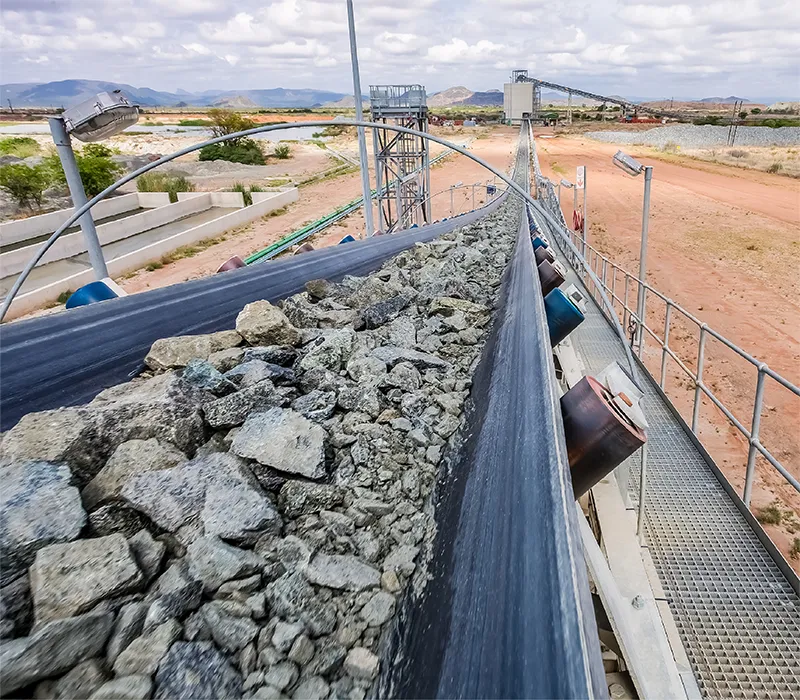
Crows-Foot Weave (CFW) Conveyor Belt, also known as broken twill weave conveyor belt, is a specialized fabric core conveyor belt engineered exclusively for harsh working conditions with heavy impact and severe abrasion. Different from standard EP and plain weave conveyor belts, this belt features a professional 2/2 broken twill crows-foot weaving structure, delivering outstanding tear resistance and impact resistance that solve the most common failure problems of ordinary canvas belts in heavy-duty industries.
CFW tear resistant conveyor belt is not a common general-purpose belt. Its optimized yarn weaving structure greatly improves the effective strength utilization rate of the canvas, especially the longitudinal tear resistance. It is the ideal upgrade solution for mining, quarrying, cement and aggregate conveying lines that face frequent material impact, sharp material cutting and high belt tearing risks.
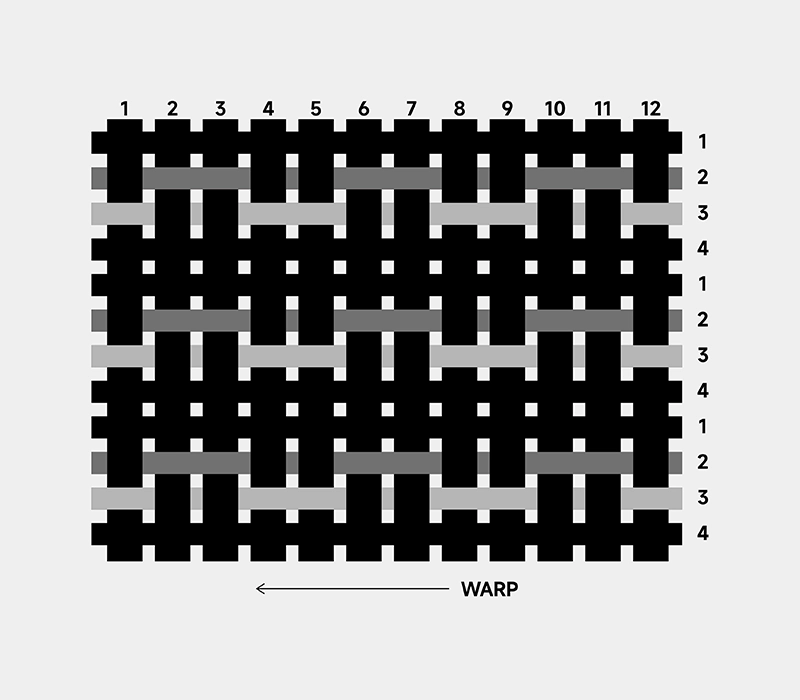
Unique CFW 2/2 Broken Twill Weave Structure & Working Principle
The core competitiveness of the CFW conveyor belt comes from its exclusive 2/2 broken twill crows-foot weaving structure. Compared with traditional plain weave fabric canvas, the CFW structure greatly reduces warp and weft intersection points inside the fabric.
This structural optimization allows the yarns to bear force more evenly and efficiently, avoiding local stress concentration. The overall strength utilization rate of the canvas is significantly improved, and the longitudinal tear resistance, which is the weakest point of ordinary conveyor belts, is greatly enhanced. Even under sudden heavy impact and sharp material scratching, the belt can effectively restrain crack expansion and prevent longitudinal tearing failure.
Core Performance Features
-
Superior Tear Resistance & Heavy Impact Resistance: The weft strength of CFW canvas is more than 5 times that of ordinary conveyor belt canvas. It performs excellently when conveying large, blocky and sharp materials such as raw ore, rock and limestone, effectively resisting cutting and piercing damage.
-
Low Elongation & Dimensional Stability: CFW fabric features low operating elongation. The belt body keeps stable length and tension during long-term operation, which effectively reduces the tensioning stroke requirement and avoids belt deviation and sagging issues.
-
Low Rolling Resistance: Optimized fabric structure and surface flatness reduce running friction, helping enterprises lower equipment operating energy consumption and save production costs.
-
High Interlayer Adhesion Strength: The special woven texture provides an excellent bonding interface with rubber layers. The fabric core and rubber fit tightly without gaps, effectively preventing delamination, degumming and belt bulging under continuous heavy load.
-
Moderate Troughability & Flexibility: CFW belt has medium flexibility and troughability. Though not as soft and flexible as standard EP belts, its comprehensive flexibility fully meets the requirements of most conventional and heavy-duty conveying equipment.
-
Professional Splicing Method: Lap splicing is the standard and most reliable joint method for CFW conveyor belts, ensuring stable joint strength and no easy breakage.
Typical Application Scenarios
CFW crows-foot weave conveyor belt is the best choice for working conditions with high impact and high tear risk. It is widely applied in bulk material handling industries worldwide:
-
Mining Industry: Conveying coal, iron ore, raw mineral materials and other heavy bulk materials.
-
Quarry & Cement Industry: Handling large limestone, cement clinker and hard stone materials with high drop impact.
-
Aggregate & Crushing Plant: Suitable for conveying sharp broken stones, gravel and building aggregates.
-
Port & Material Processing Yard: Stable operation in high-drop transfer, stockpiling and frequent impact conveying links.
Standard CFW Technical Parameters (CFW200-CFW500)
CFW conveyor belts are available in multiple specifications ranging from CFW200 to CFW500 to match different load and impact requirements. Taking the classic CFW200 model as the standard reference:
-
Warp Breaking Strength: ≥ 240 N/mm
-
Weft Breaking Strength: ≥ 80 N/mm
-
Warp Breaking Elongation: ≥ 15%
-
Weft Breaking Elongation: ≤ 45%
-
Single Canvas Thickness: Approximately 0.85 mm
CFW Belt vs EP Belt | Selection Guide
Many customers confuse CFW conveyor belts with ordinary EP conveyor belts. The selection standard is clear and industry-recognized:
Choose CFW Conveyor Belt: If your on-site working conditions feature heavy material impact, large block materials, sharp materials and high longitudinal tearing risk. CFW provides far better tear resistance and impact resistance than EP belts and reduces belt replacement frequency.
Choose Standard EP Conveyor Belt: If your working condition is conventional, requiring good flexibility, excellent troughability and cost performance. EP belts are the economical and universal choice for general light and medium-duty conveying.
FAQ
Q1: What does CFW stand for in conveyor belts?
CFW stands for Crows-Foot Weave, also professionally defined as 2/2 broken twill weave. It is a special high-strength canvas weaving technology designed for anti-tear and anti-impact conveyor belts.
Q2: What is the main advantage of CFW belt compared with ordinary canvas belt?
CFW belt adopts 2/2 broken twill structure with fewer yarn intersection points. It improves strength utilization rate greatly. Its weft strength is over 5 times higher than ordinary canvas belts, providing excellent anti-tear and anti-impact performance for harsh mining and quarry conditions.
Q3: Is CFW belt better than EP belt?
It depends on working conditions. CFW outperforms EP belts in tear resistance and impact resistance for heavy, sharp and large block materials. EP belts are better in flexibility and troughability, more suitable for conventional general conveying scenarios.
Q4: What splicing method is used for CFW conveyor belt?
Lap splicing is the standard and most stable joint method for CFW belts, which maintains high joint tensile strength in long-term heavy-load operation.
Q5: What are the common CFW belt specifications?
Common industrial models cover CFW200, CFW250, CFW300, CFW400 and CFW500, covering light to super heavy-duty anti-tear conveying demands.
Q6: Does CFW conveyor belt have low elongation?
Yes. CFW fabric features low operating elongation and stable dimensional performance, which effectively reduces tensioning system adjustment frequency and improves conveyor line stability.
Customization & Supply Service
We supply full-series CFW crows-foot weave tear resistant conveyor belts with complete specifications from CFW200 to CFW500. Customized width, thickness, layer number and special upgraded performance (aging resistance, wear resistance) are available. All products strictly follow industrial standard parameters, with stable quality, fast delivery and professional global after-sales technical support.
Products

Sidewall Conveyor Belt

Pocket Type Conveyor Belt
It handles ultra high lift, high throughput tasks beyond conventional high angle sidewall belts, realizing stable continuous bulk material transportation.

Rope-track Sidewall Conveyor Belt

Bucket Elevator Conveyor Belt
They deliver low elongation, high throughput and stable operation with easy maintenance, helping operators reduce downtime from belt failures and frequent replacements.

Pipe Conveyor Belt
Supporting sharp horizontal and vertical bends, it meets strict environmental requirements and helps plants remove redundant transfer points, favored by operators troubled by on site dust and leakage issues.

Chevron Conveyor Belt
Various chevron patterns are available for different slope demands. Widely used in mining, farming, construction and recycling, it maintains stable performance under harsh on site working conditions.
Recent news

Sidewall Conveyor Belt Sagging Solutions: QBF rubber Free Zone Base Belt Design Extends Service Life by 30%
Sep 18, 2026

QBF Rubber Anti-stick Sidewall Belting Helps Shenzhen Tunnel Construction
Sep 18, 2026

Mining Vertical Lifting System Solution: Tackling Continuous Conveying Challenges for Deep-Mine Operations
Sep 17, 2026
See Latest Service





