-
Description
Product Overview
When bulk materials keep scouring metal chutes and hoppers day in and day out, standard manganese steel liners wear out fast. Frequent shutdowns for part swap eat into your site’s production time.
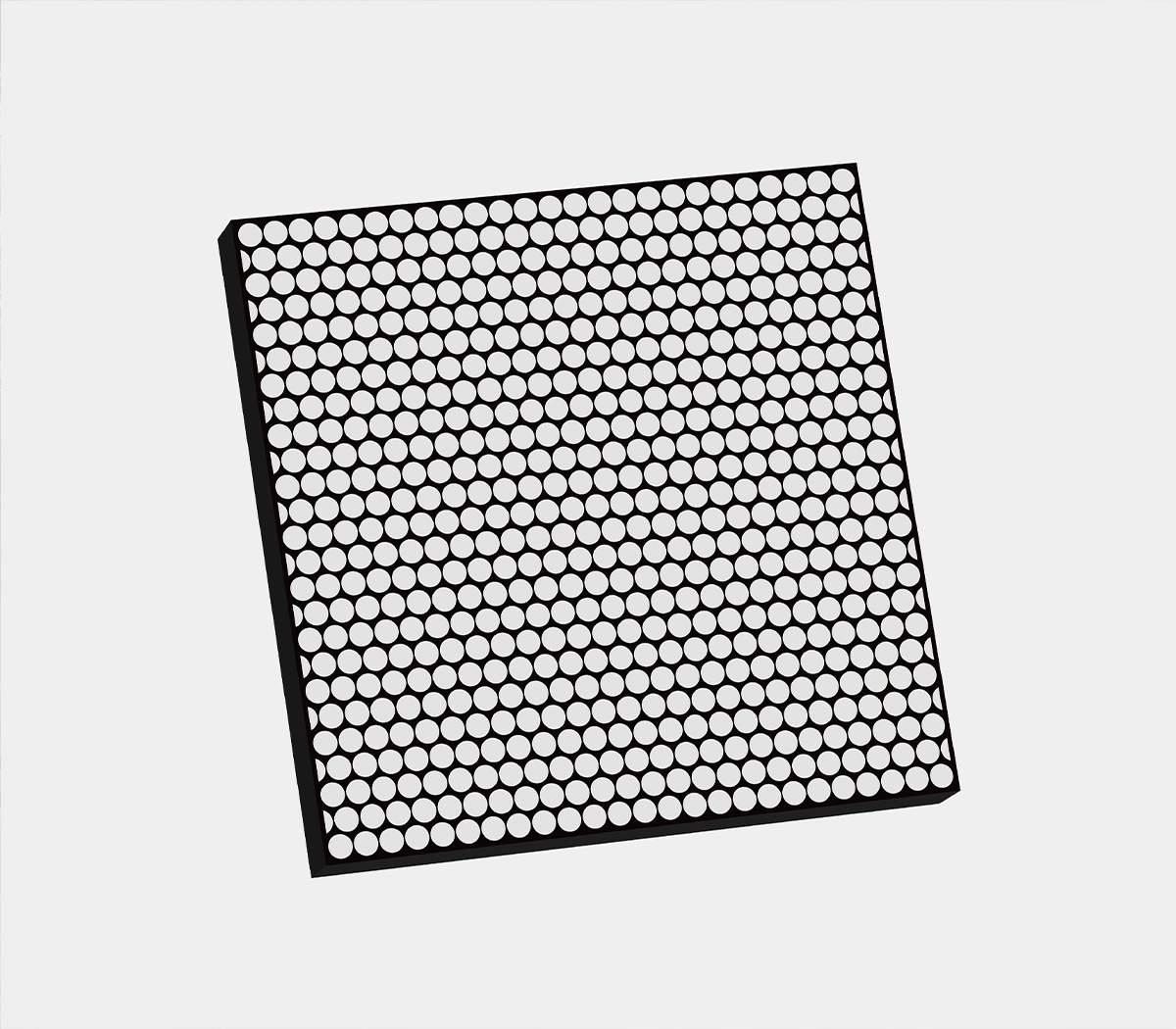
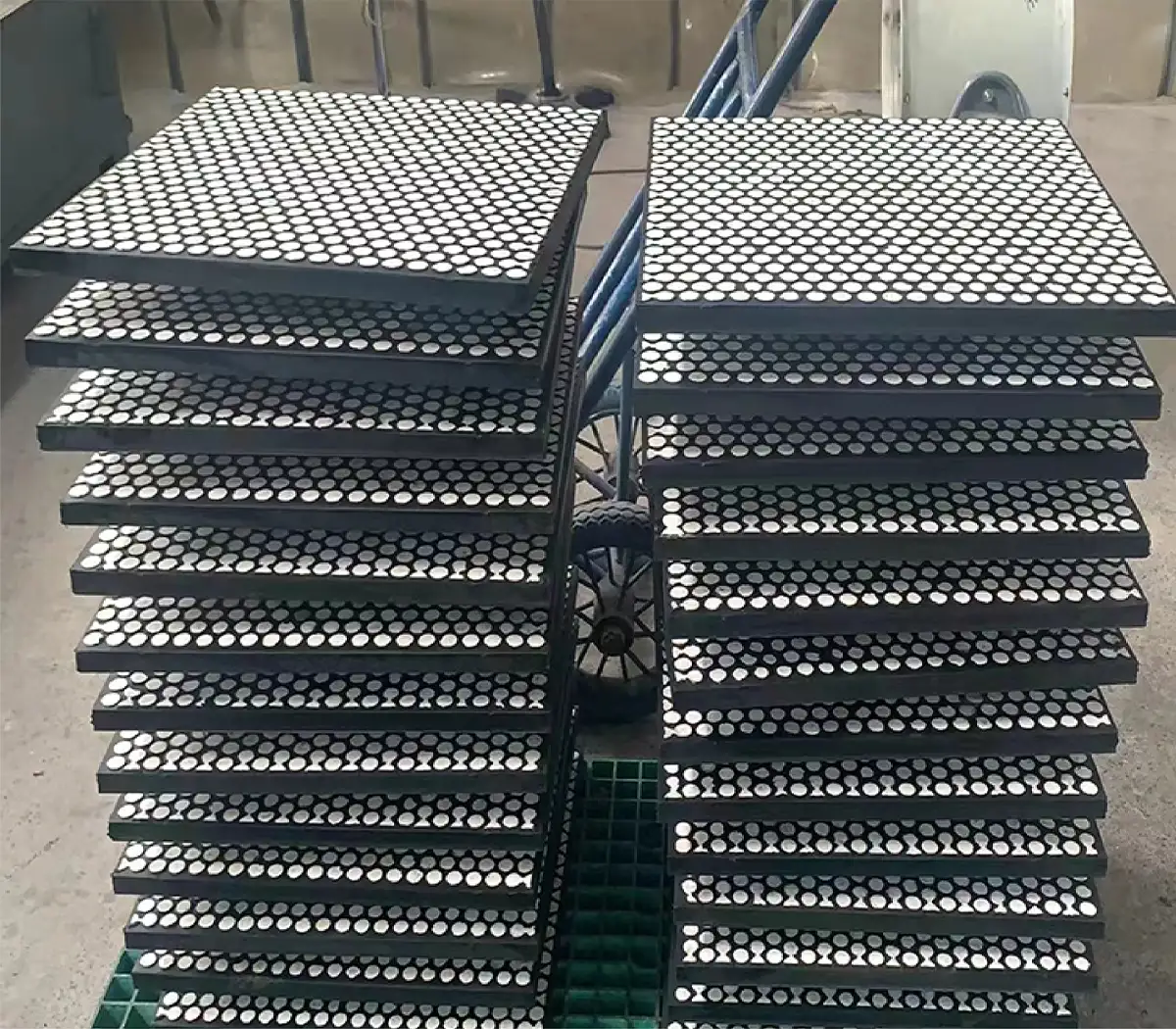
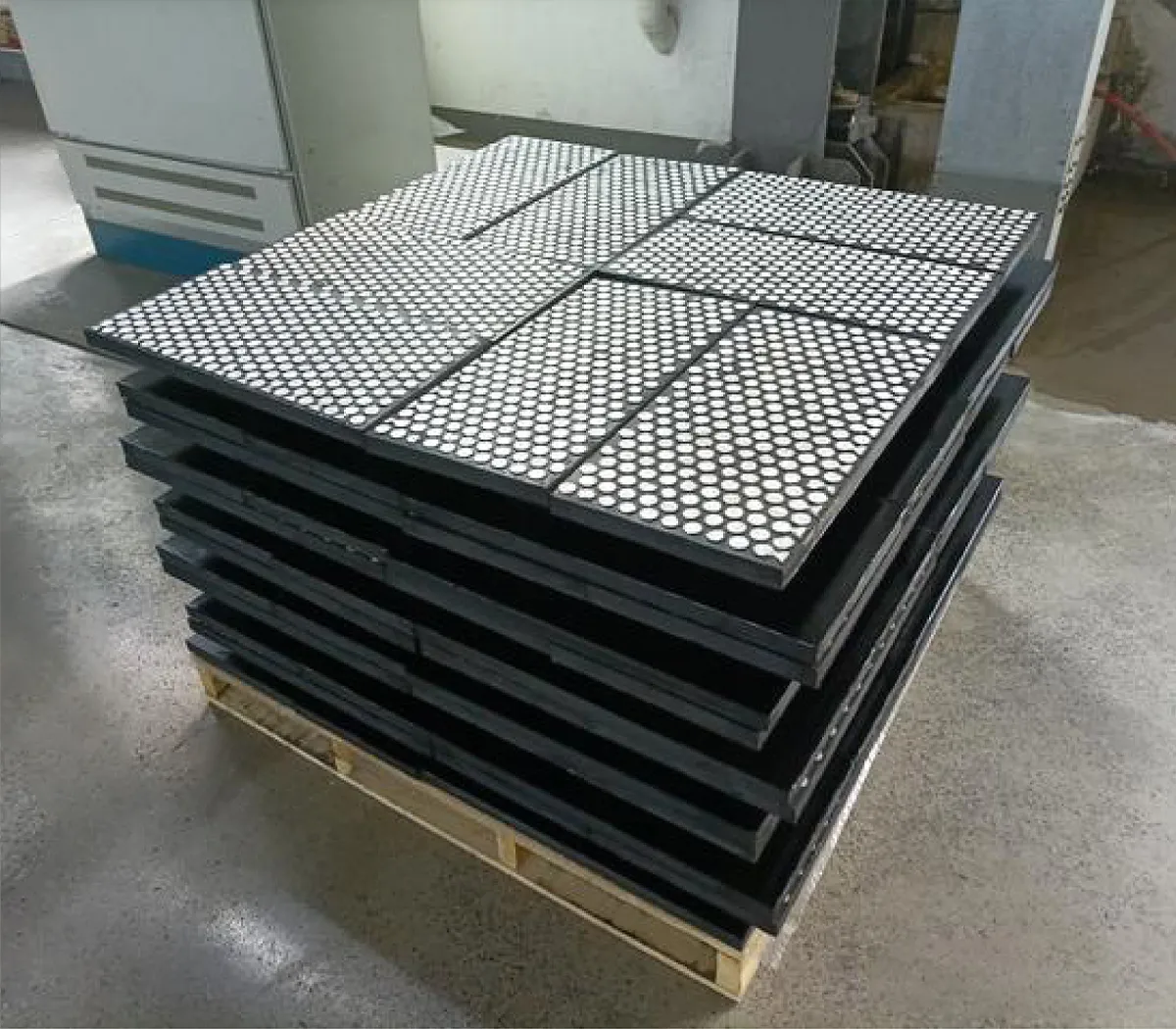
Our QMH ® ceramic wear lining solves this real world pain point. It is a three part composite built through hot vulcanization. High grade alumina ceramic tiles, shock absorbing rubber, plus steel backing plate bond tightly as one solid piece. No glue only bonding that can peel off under heavy impact.
Plant operators from mining, thermal power, cement, coal, port and metallurgy sites pick this ceramic wear lining for heavy duty wear and impact protection. It fits retrofits as well as brand new equipment builds.
Product Structure
Three functional layers make up our rubber ceramic wear liner:
- 92% Al₂O₃ Alumina Ceramic TilesThis hard surface touches flowing ore, coal or gravel directly. Low friction property cuts material buildup and sliding abrasion. We supply cylindrical, hexagonal or block style ceramic pieces to match different site working conditions.
- High elastic Impact resistant Rubber Layer (HD25 / HD35 grade, customizable)Sandwiched between ceramic tiles and steel plate. This rubber buffer soaks up sharp blows from large lumps of rock and ore hitting the liner surface. It greatly lowers ceramic chipping risk you often see on unbuffered ceramic panels.
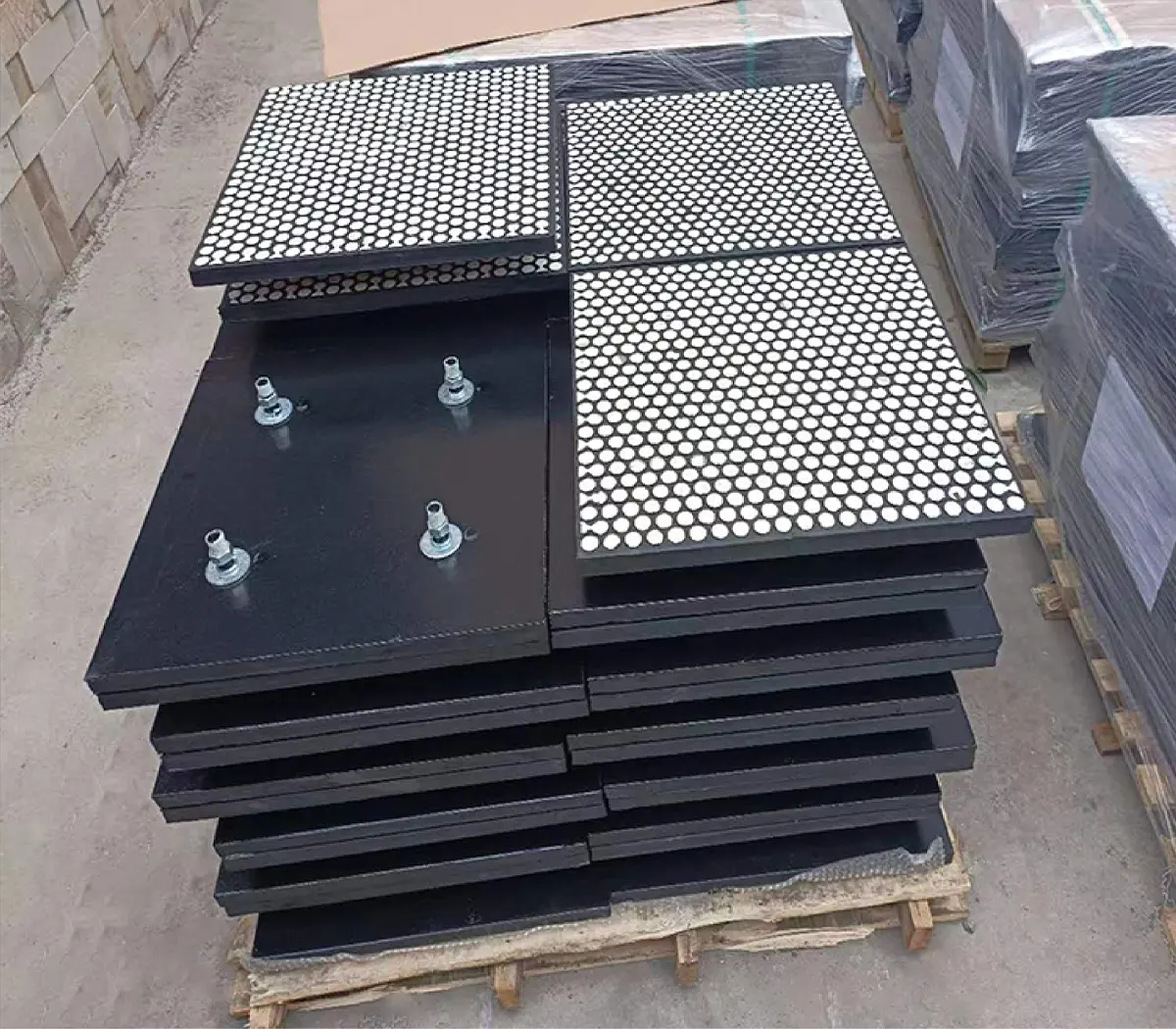
- Steel Back Plate with Pre Embedded Weld Stud BoltsStuds are pre set on the steel base. Field crews can mount liners either by bolting or stud welding. You will not need heavy custom fabrication on site.
Key Benefits of QMH ® Ceramic Wear Lining
- High purity alumina ceramic (Al₂O₃>90%, hardness>HRA88). Wear performance runs 270 times higher than regular manganese steel. Works great against high speed abrasive bulk material flow.
- Spherical ceramic face paired with thick rubber buffer handles heavy blows from big size feed lumps. Less tile cracking during continuous operation.
- Ceramic tiles deliver good water repellency and anti corrosion performance. Sticky wet materials will not cake and stick onto liner faces easily.
- Solid chemical resistance, holds up against most common acid and alkali found in mineral processing and chemical workshops.
- Safe working temperature: 0℃ ~ 250℃. Suitable for regular temp and medium heat processing lines.
- Hot vulcanized integral construction. Layers will not separate even under repeated cyclic impact over months of runtime.
- Flexible field mounting: bolt on or stud weld options. You can refit existing equipment without large scale steel cutting or modification.
- Real world site data shows service life hits 5 times that of manganese steel liners. Cuts downtime and repeated maintenance spending.
- We can tailor dimension, thickness and odd shapes to fit unique chute, silo and hopper geometry on site.
Product Specifications
| Item | Parameters |
| Standard Stock Sizes | 250250mm / 250500mm / 500500mmCommon ready stock:150300mm,200300mm,300300mm,450300mm,530450mm |
| Ceramic Unit Size | Cylinder: Ø10×10 mm, Ø10×19 mmRectangular / Hexagonal block: 150×100×6 mm |
| Rubber Thickness | 2mm ~ 15mm |
| Steel Plate Thickness | 3mm ~10mm |
| Compressive Strength | 1200 2500 Mpa |
| Liner Shape | Custom special shaped wear blocks available, tailor made according to actual chute / silo site drawing or field measurement |
| Structure Options | Three layer: Steel plate + Rubber + CeramicTwo layer: Rubber + Ceramic (no steel backing) |
Applications
This ceramic wear lining fits medium to heavy duty spots where bulk materials flow at high velocity and bring both abrasion and impact force.
- Mining & quarry: primary / secondary / fine crushing transfer chutes, ore hoppers, skip bins
- Thermal power plant: coal drop pipe liners, coal transfer station chutes
- Cement & building material plant: material chutes, bunker liners
- Steel & metallurgy: furnace hoppers, rotary mixers
- Coal industry: transfer point chutes, coal bunkers
- Chemical & coal chemical plant: corrosive material chutes
- Port & terminal: ship unloader hopper liners
- Commercial concrete: concrete mixer internal liners
- Other equipment: cyclones, vibratory feeders, pipelines, slide points, loading impact zones
Best suited for locations with low impact angle and constant material scouring.
Installation Guide
Our 3 in one rubber ceramic wear lining supports two field mounting choices: bolting or stud welding.
- Mark reference lines on your equipment steel shell. If old bolt holes already exist on your machine, reuse them. Many retrofit jobs skip extra drilling entirely.
- For stud welding installation: weld pre embedded studs onto equipment base steel using a stud welding machine.
- Set the ceramic wear lining panel in position, place nuts and fully tighten every bolt.
Panels are built in modular sections, which makes maintenance far simpler. When partial zones get worn down or smashed by big lumps, you only swap out those damaged individual blocks. No need to pull off the whole lining set. This saves plenty of repair hours and spare part cost.
Stud welded mounting keeps panels firmly locked in place. Even if a few ceramic tiles crack during operation, the whole liner panel will not fall into your production stream.
Buying Guide
Before placing your order, work through these practical points:
- Sort out your actual working conditions: what material flows through, maximum lump size, drop speed, operating temperature, and whether corrosive media exists. These facts decide ceramic size, rubber thickness and steel plate thickness for your project.
- Measure chute or hopper dimensions. Send over site photos or engineering drawings if you need custom odd shape liners.
- Pick liner construction style: choose three in one steel rubber ceramic for heavy impact conditions. Go for two layer rubber ceramic if you face light impact and have weight limit requirements.
- Confirm mounting method: bolt on or stud weld. We pre fabricate studs matching your requirement.
FAQ
Q1: How does rubber ceramic wear lining compare against plain manganese steel liner?
A: Manganese steel handles impact okay but wears very fast when exposed to abrasive ore, coal and gravel. Our composite liner delivers 270 times better wear resistance. The rubber layer absorbs impact energy and protects ceramic tiles from fracture. Feedback from job sites tells us its service life is around 5 times longer than manganese steel, so you get far fewer unplanned stops for repair.
Q2: Can ceramic tiles crack when hit by extra large lump materials?
A: HD grade elastic rubber sits as buffer between steel plate and ceramic tiles. If you process oversized lumps, we can increase rubber thickness and adopt larger ceramic blocks to boost anti cracking performance for your specific site.
Q3: Are custom irregular shape ceramic wear liners available?
A: Yes. We produce special shaped wear blocks based on customer drawings or on site measurement data. Curved corner panels for odd shaped chutes are supported.
Q4: Can I fit these liners onto existing old chutes for upgrade retrofit?
A: Definitely. Most retrofit projects reuse existing bolt holes. We can adjust stud positions to match your existing hole layout. Both new build equipment and old equipment upgrade projects work.
Q5: Will wet sticky material stick to the liner surface?
A: High density alumina ceramic surface repels water and resists adhesion. It works well with wet clay, sticky ore and damp coal to reduce material buildup on liner surfaces.
Products

Sidewall Conveyor Belt

Pocket Type Conveyor Belt
It handles ultra high lift, high throughput tasks beyond conventional high angle sidewall belts, realizing stable continuous bulk material transportation.

Rope-track Sidewall Conveyor Belt

Bucket Elevator Conveyor Belt
They deliver low elongation, high throughput and stable operation with easy maintenance, helping operators reduce downtime from belt failures and frequent replacements.

Pipe Conveyor Belt
Supporting sharp horizontal and vertical bends, it meets strict environmental requirements and helps plants remove redundant transfer points, favored by operators troubled by on site dust and leakage issues.

Chevron Conveyor Belt
Various chevron patterns are available for different slope demands. Widely used in mining, farming, construction and recycling, it maintains stable performance under harsh on site working conditions.
Recent news

Sidewall Conveyor Belt Sagging Solutions: QBF rubber Free Zone Base Belt Design Extends Service Life by 30%
Sep 18, 2026

QBF Rubber Anti-stick Sidewall Belting Helps Shenzhen Tunnel Construction
Sep 18, 2026

Mining Vertical Lifting System Solution: Tackling Continuous Conveying Challenges for Deep-Mine Operations
Sep 17, 2026
See Latest Service





