-
Description
Product Overview
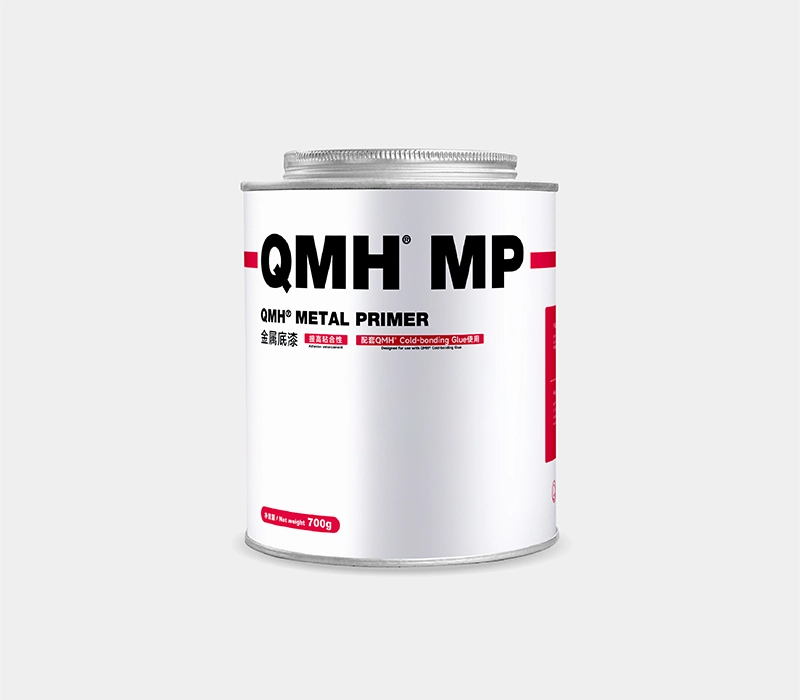
QMH® Metal Primer is a CFC free surface primer, designed to pair perfectly with QMH® Cold bonding Glue. It solves weak bond issues when joining rubber to metal and plastic to metal substrates.
Many bonding projects fail because metal surfaces cannot give enough grip for rubber or plastic materials. This primer builds a reliable intermediate layer between metal and your target material, greatly boosting bonding strength and long term connection stability. It works for on site assembly, repair jobs and workshop production use.
Product Specifications
| Item | Parameter |
| Color | Gray |
| Viscosity | 90 170 mPa·s |
| Density | 0.92 0.96 g/mL |
| Surface Curing Time | Around 30 minutes |
| Coverage | 50 200 g/m² per single coat |
| Storage Conditions | Keep in sealed barrels. Store in dry, cool area. Recommended room temperature: 20 25℃; humidity ≤ 50% |
| Shelf Life | More than 12 months under proper storage |
| Packaging | 700 g per can |
Key Benefits
- Zero CFC ingredients, meets common industrial environmental requirements
- Made for cold bond workflow, no high heat treatment needed during application
- Forms uniform grey priming layer on clean metal parts; improves glue anchoring performance
- Flexible coverage range, fits small repair pieces and large area metal workpieces
- Long shelf life with correct storage, good for factory stock and periodic maintenance use
Simple Application Tips
- Fully clean metal surface: wipe away oil, rust, dust before applying primer. Dirty surfaces will cut bonding performance.
- Apply one even coat of QMH® Metal Primer onto prepared metal surface.
- Wait roughly 30 min for surface cure. Do not use cold bonding glue before surface curing completes.
- Once surface is cured, apply QMH® Cold bonding Glue and complete your rubber metal or plastic metal bonding process.
Note: Coverage 50 200 g/m² varies, depends on metal surface roughness. Rougher metal consumes more primer per square meter.
FAQ
Q1: Can I use this metal primer without QMH® Cold bonding Glue?
A: This primer is formulated to work with QMH® Cold bonding Glue. Using other glues may not get expected adhesion results. We suggest matching the full QMH bonding system for best bond strength.
Q2: What will happen if storage humidity goes higher than 50%?
A: High humidity storage may shorten shelf life. Moisture can get inside once the can seal is broken. Always keep cans tightly sealed when you do not use them.
Q3: Is 30 minute surface cure time fixed for all environments?
A: 30 min is reference data under standard room conditions. Low temperature or high air moisture can slow surface curing. Check the primer surface is dry to touch before adding adhesive.
Q4: What substrates does this primer suit?
A: Mainly for metal base, to bond rubber and plastic onto metal. It is not designed to act as standalone protective paint for long term anti rust purposes.
Q5: How much primer do I need for my project?
A: Calculate area first. Smooth metal uses near 50 g/m²; rough, textured metal may go up to 200 g/m² for each coat. Adjust quantity based on actual workpiece surface condition.
Important Notes
- Only for industrial bonding use, not for consumer household DIY without proper operation protection.
- Keep good ventilation while handling. Avoid long term skin contact.
- Seal the can tightly right after each use.
Products

Sidewall Conveyor Belt

Pocket Type Conveyor Belt
It handles ultra high lift, high throughput tasks beyond conventional high angle sidewall belts, realizing stable continuous bulk material transportation.

Rope-track Sidewall Conveyor Belt

Bucket Elevator Conveyor Belt
They deliver low elongation, high throughput and stable operation with easy maintenance, helping operators reduce downtime from belt failures and frequent replacements.

Pipe Conveyor Belt
Supporting sharp horizontal and vertical bends, it meets strict environmental requirements and helps plants remove redundant transfer points, favored by operators troubled by on site dust and leakage issues.

Chevron Conveyor Belt
Various chevron patterns are available for different slope demands. Widely used in mining, farming, construction and recycling, it maintains stable performance under harsh on site working conditions.
Recent news

Sidewall Conveyor Belt Sagging Solutions: QBF rubber Free Zone Base Belt Design Extends Service Life by 30%
Sep 18, 2026

QBF Rubber Anti-stick Sidewall Belting Helps Shenzhen Tunnel Construction
Sep 18, 2026

Mining Vertical Lifting System Solution: Tackling Continuous Conveying Challenges for Deep-Mine Operations
Sep 17, 2026
See Latest Service





