-
Description
Product Overview
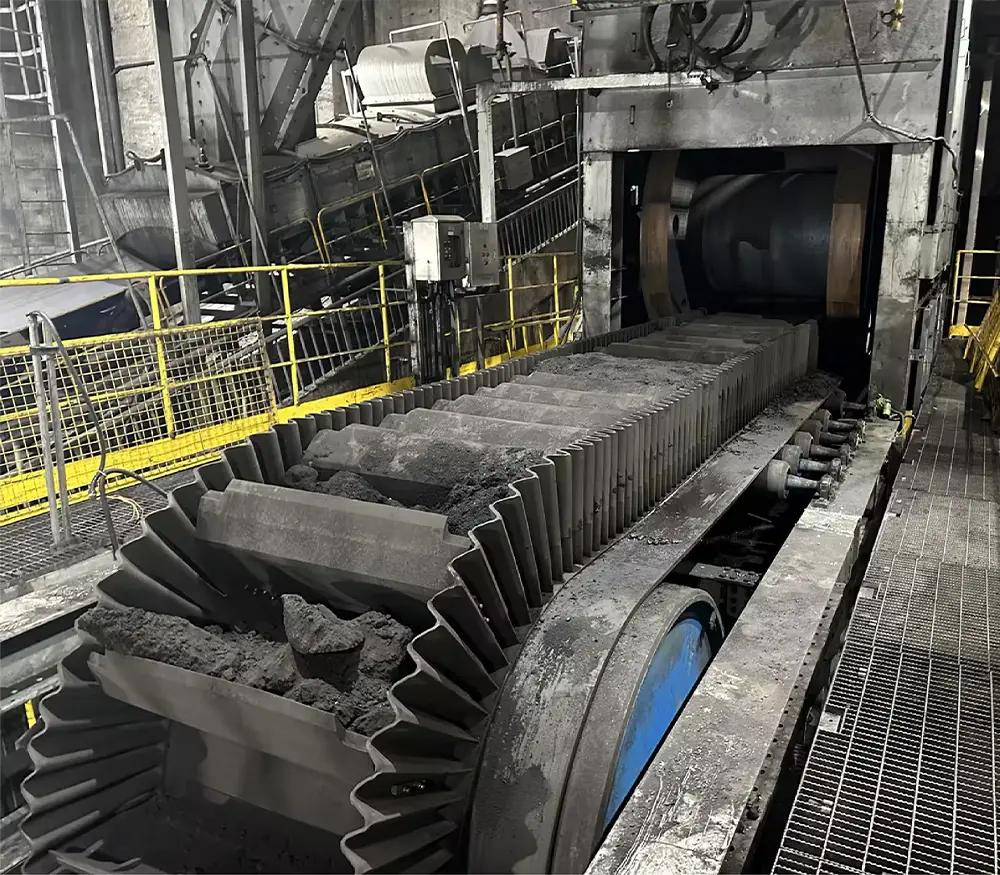
The belt uses EPDM rubber as the primary cover compound, paired with high strength heat resistant fabric carcass materials. Special rubber formulation plus dedicated hot vulcanizing process is adopted during manufacturing. Engineers know well that EPDM features high molecular saturation, which brings big challenges in rubber to fabric bonding, low inter ply adhesion risk is a common headache for many belt manufacturers. Our improved vulcanization workflow solves this long standing technical pain point effectively.
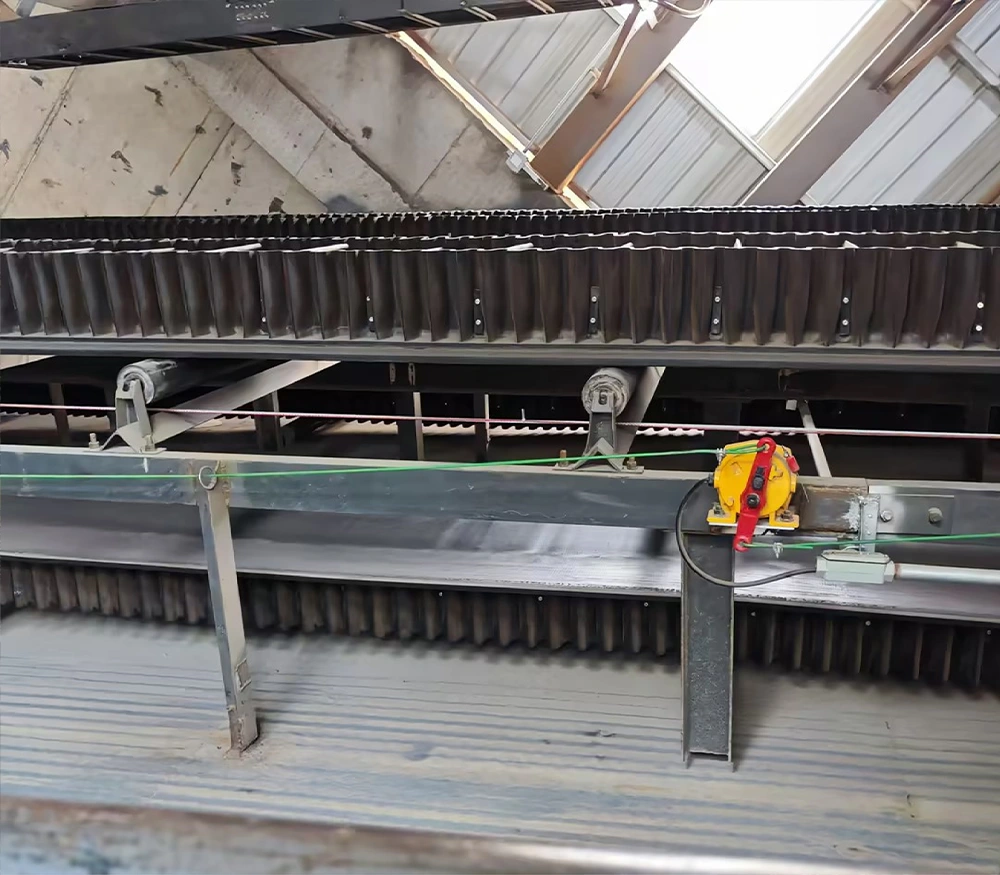
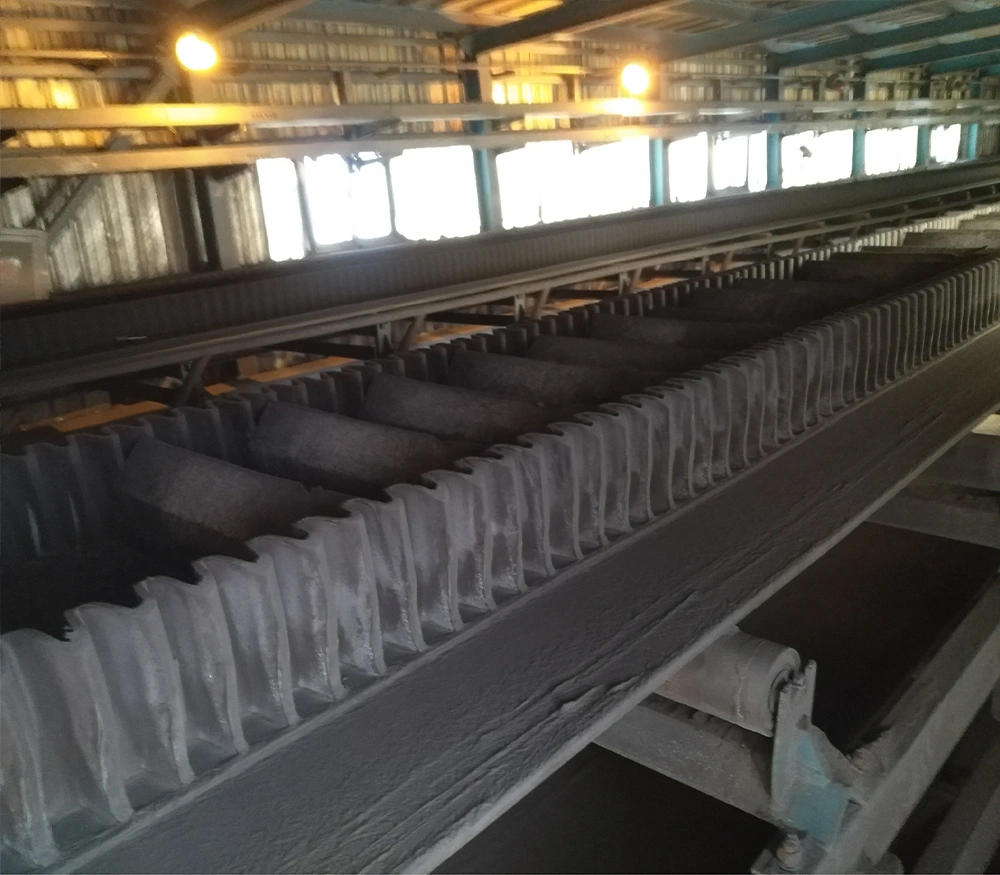
Combining high heat resistance, anti ageing performance, stable dimensional behaviour and good flexing property, this sidewall conveyor belt addresses typical failure modes of ordinary heat resistant sidewall belts under high heat conditions: rapid ageing, ply separation, sidewall peeling and premature belt failure. It delivers stable, long run conveying performance for production lines handling hot bulk solids.
Key Technical Data
| Cover layer aging resistance
(180 ℃ × 168 h) |
Before ageing | Cover rubber hardness | SHA | 70 |
| Tensile strength | MPa | 13.73 | ||
| Elongation at break | % | 510 | ||
| DIN abrasion volume | mm3 | 155 | ||
| After ageing | Cover rubber hardness | SHA | 80 | |
| Tensile strength | MPa | 12.29 | ||
| Elongation at break | % | 437 | ||
| Change value | Cover rubber hardness | SHA | 10 | |
| Tensile strength | % | 10.5 | ||
| Elongation at break | % | -14.3 | ||
| Adhesion property | Cover rubber to fabric ply | N/mm | ≥12 | |
| Fabric ply to ply | N/mm | ≥11 | ||
Product Advantages
Reliable Bonding with Custom Vulcanization Process
High saturation of EPDM polymer makes bonding between rubber sidewalls, cleats and fabric carcass one of the well known bottlenecks within conveyor belt industry.
By optimising rubber compound formula and implementing site adjusted hot vulcanizing parameters, we lift inter ply adhesion performance significantly. Under sustained high temperature service, the belt main body, corrugated sidewalls and transverse cleats stay firmly bonded. Common field failures like ply separation, internal bubble generation, sidewall or cleat debonding are largely avoided. This is critical for large angle inclined conveying where cyclic flex stress is constantly applied to sidewall joints.
Extended Service Life to Cut Down Total Operating Cost
EPDM cover compound delivers decent abrasion resistance and tear resistance. The whole belt structure keeps good flexibility, resisting repeated flex fatigue during continuous running.
Compared with conventional heat resistant sidewall belts on the market, this EPDM version can reach 2 4 times longer service cycle under equivalent high temperature working scenarios. Plant maintenance teams will see less frequent belt replacement, lower spare part stock pressure and reduced production downtime caused by belt breakdown. For continuous process factories, these indirect cost savings often weigh more than initial belt purchase price.
Field feedback from one cement plant: after switching from standard heat resistant belts to our EPDM grade, they got 2 4 times longer runtime on their clinker transfer line.
Robust Heat Resistance Against Thermal Shock & Temperature Fluctuation
EPDM rubber shows far better thermal oxygen ageing, ozone and UV resistance than general purpose rubber grades. It resists hardening and surface cracking when exposed to sustained heat.
Apart from steady high temperature service, the formulated cover rubber survives instant thermal shock up to 300 °C, which frequently occurs when hot clinker, slag or calcined ore drops onto belt surface. Dimensional stability is maintained under heat load; carcass shrinkage and permanent deformation are kept within acceptable engineering range, inter layer bonding strength will not drop sharply with cyclic temperature swings.
Good Chemical & Weathering Resistance for Complex Environments
The EPDM compound tolerates weak acid, weak alkali, water vapour and many common industrial chemical agents, making it suitable for conveying hot corrosive bulk solids.
When installed outdoors or under open air plant conditions, the belt withstands sun exposure, rain and big ambient temperature swings. It does not turn brittle quickly under long term outdoor exposure, helping minimise routine inspection and repair workload.
Typical Application & Conveyed Materials
Engineers and procurement specialists can reference below application matrix for preliminary project evaluation. Final specification should be confirmed combining real site temperature, lump size, impact loading and inclination angle.
| Industry | Working Sections | Conveyed Hot Materials | Main Performance Values On Site |
| Iron & Steel Metallurgy | Sintering, iron making, continuous casting process | Hot sinter ore, coke, steel slag, return sinter | Heat resistant plus anti abrasion. Resist hot material impact; mitigate fast ageing and debonding issues of ordinary belts |
| Cement & Building Materials | Clinker transfer, grate cooler discharge, preheater outlet | Hot cement clinker, slag, fly ash, limestone | Heat resistance and low thermal shrinkage. Prevent belt deformation and ply separation under clinker high heat |
| Thermal Power Plant | Boiler feeding, ash slag removal, desulphurisation system | Hot coal, boiler slag, gypsum, fly ash | Heat & corrosion resistance. Adapt to weak acid from desulphurised gypsum plus outdoor weather conditions |
| Mining & Coal Industry | Open pit / underground large angle lifting | Raw coal, gangue, hot ore chunks | Combine large angle conveying capability with heat resistance, save plant floor space |
| Chemical & Carbon Processing | Coking, carbon production workshops | Hot chemical granules, powder feedstock | Resist combined damage from high temperature plus chemical corrosion |
| Non Ferrous Metal Smelting | Aluminum, copper, zinc smelting lines | Hot furnace charge, alumina, matte, smelting residues | Resist high temperature erosion and abrasive wear from molten residues |
| Grain & Feed Industry | Post dry material transportation (food contact EPDM grade) | Hot grain, oil seeds, feed pellets | Food safe EPDM compound, withstand residual heat from drying process, no material contamination |
| Waste to Energy & Environmental Protection | Incinerator slag discharge, solid waste treatment | Hot incineration slag, fly ash, high temperature solid waste | Cope with complex chemical composition of waste slag, balance heat and chemical resistance |
Engineering Notes for Buyers & Site Technicians
- Submit key operating parameters during inquiry: maximum continuous material temperature, peak instant temperature, material lump size, belt width, required cleat height, sidewall height, conveyor inclination angle, belt running speed and material throughput. These data help us avoid over specification or under specification.
- Even premium EPDM sidewall conveyor belts have service limits. Sharp oversized hot chunks with direct long duration contact over 300 °C will accelerate cover rubber damage. If your site has such extreme conditions, please notify our technical team for structural optimisation suggestions.
- Installation and maintenance quality heavily influences actual service life. Mis alignment, excessive tension, poor skirt board friction will cause premature sidewall wear. Guide your on site fit up team to follow conveyor system operation manual.
- We support custom dimensions, cleat spacing, sidewall height and special food grade EPDM compound for hygienic material handling.
- For project review, you can request our technical data sheet PDF with full lab test records for internal evaluation.
FAQ
Q1:What is the maximum continuous operating temperature for EPDM sidewall conveyor belt?
Our EPDM sidewall conveyor belt handles 300℃ short term thermal shock. There is no fixed figure for continuous service temperature. Actual performance varies with rubber compound, carcass fabric grade and how long hot material touches belt surface. Send over your site temperature readings, our engineers will match you with suitable belt grade.
Q2:Why do sidewalls peel off on high temperature sidewall belts?
From real world project cases, peeling mostly comes from several causes: insufficient vulcanization bonding, frequent sharp temperature cycles, heavy hot lump impact, wrong belt tension or conveyor mis alignment. Our custom vulcanization improves inter ply adhesion to lower peeling risk. Even good belt material cannot compensate poor installation or neglect of routine maintenance.
Q3:What information do I need to provide for a quotation?
To get precise technical proposal and price quote, prepare material temperature, lump size, belt width, sidewall height and cleat dimensions. We also need conveyor inclination angle, belt speed and material throughput. Site photos or original drawings help speed up technical assessment.
Q4:Can EPDM sidewall conveyor belt work outdoors?
Yes, outdoor installation works well. EPDM rubber delivers good ozone and UV resistance. It performs better than natural rubber or SBR belts under long term sun rain cycles in plant yards.
Get Custom Quotation
Send us your site conditions, material properties and drawing files. Our technical team will go through your application and offer matched product specs plus formal quotation. Feel free to download our technical data sheet for your internal review.
Products

Sidewall Conveyor Belt

Pocket Type Conveyor Belt
It handles ultra high lift, high throughput tasks beyond conventional high angle sidewall belts, realizing stable continuous bulk material transportation.

Rope-track Sidewall Conveyor Belt

Bucket Elevator Conveyor Belt
They deliver low elongation, high throughput and stable operation with easy maintenance, helping operators reduce downtime from belt failures and frequent replacements.

Pipe Conveyor Belt
Supporting sharp horizontal and vertical bends, it meets strict environmental requirements and helps plants remove redundant transfer points, favored by operators troubled by on site dust and leakage issues.

Chevron Conveyor Belt
Various chevron patterns are available for different slope demands. Widely used in mining, farming, construction and recycling, it maintains stable performance under harsh on site working conditions.
Recent news

Sidewall Conveyor Belt Sagging Solutions: QBF rubber Free Zone Base Belt Design Extends Service Life by 30%
Sep 18, 2026

QBF Rubber Anti-stick Sidewall Belting Helps Shenzhen Tunnel Construction
Sep 18, 2026

Mining Vertical Lifting System Solution: Tackling Continuous Conveying Challenges for Deep-Mine Operations
Sep 17, 2026
See Latest Service





