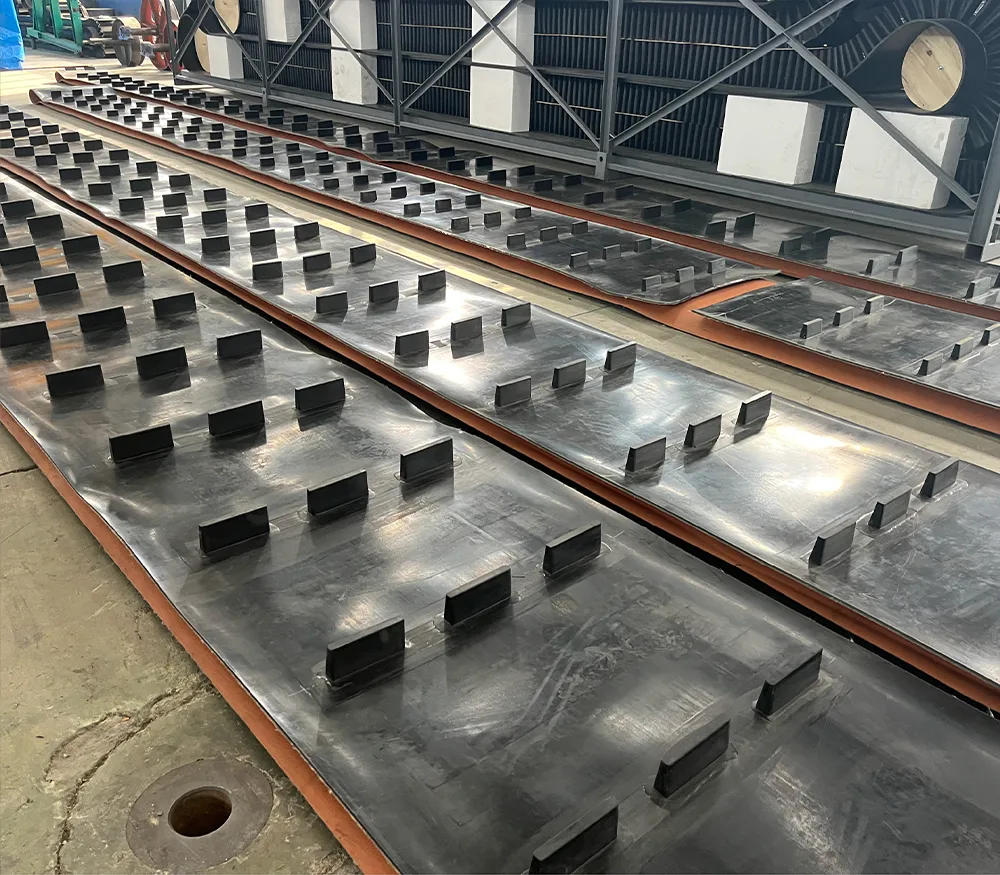
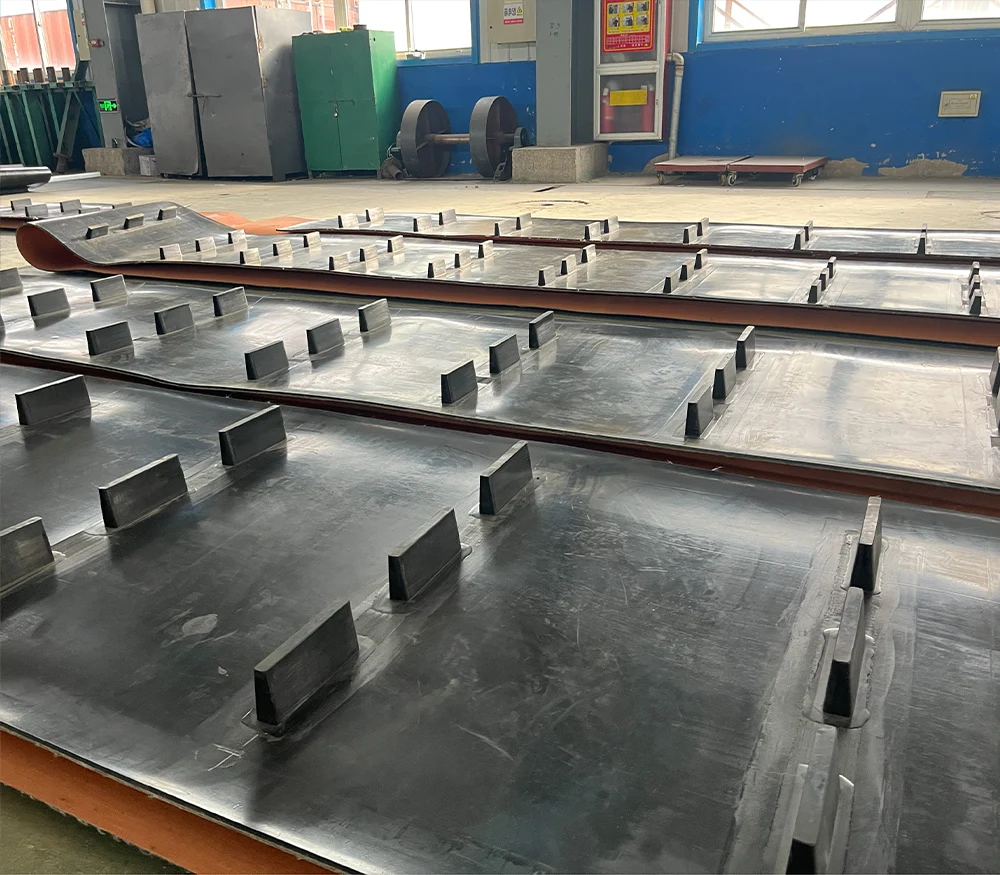
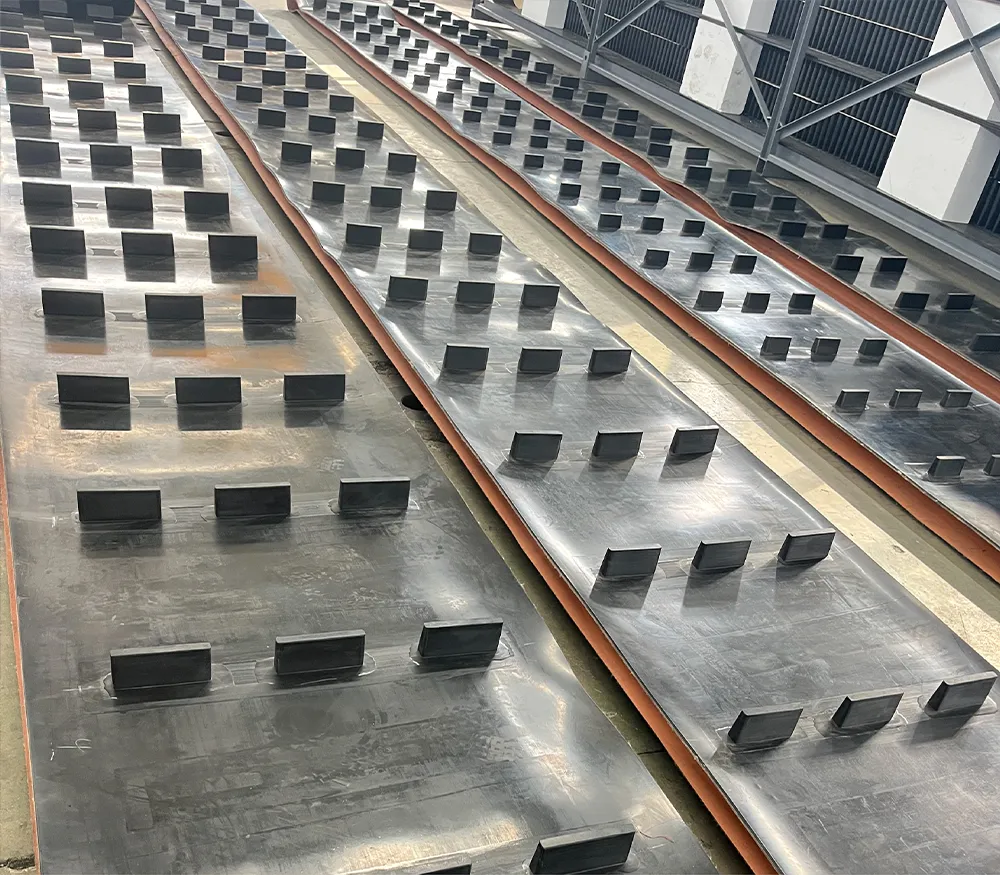
Cleated Conveyor Belt
-
Description
Product Overview
Many field engineers cooperate with our factory to solve typical conveying pain points including material reflux, low throughput and unstable line operation on inclined and steep angle conveyor systems.
A cleated conveyor belt is a purpose-built industrial belt designed specifically for inclined and steep-angle material transport. Unlike standard flat conveyor belts that struggle with sliding and back-rolling materials on slopes, this anti-backslide belt features raised cleats bonded or vulcanized onto the belt surface to hold bulk solids, granular materials and packaged goods firmly in place.
Types & Industrial Specifications
Different conveying angles, material textures and load weights require matching cleat profiles and base belt materials. We classify our inclined cleated conveyor belts by cleat geometry and base compound material, helping buyers and on site engineers select the most cost effective configuration for their projects.
Cleat Profile Types for Different Angles
- T Cleat Conveyor Belt: Straight vertical cleats deliver stable load support and simple daily cleaning. This is our most popular solution for general inclined conveying below 30°. It fits grains, plastic parts, fine particles and medium weight bulk materials.
- L Cleat Conveyor Belt: Right angle structured cleats offer improved lateral stability under high speed running conditions. It works well for small cartons, packaged goods and lightweight bulk materials that tend to shift sideways during transport.
- Chevron V Cleat Belt: Staggered V shaped cleats disperse material pressure and prevent material backflow for wet, sticky and damp feed such as soil, sand, fresh fruits and damp grains. It supports steep conveying angles up to 40° (for non sharp abrasive wet granular materials), where ordinary flat belts cannot function normally.
- Custom Wave & Partition Cleats: For vertical elevators and ultra steep conveying lines, we fabricate high baffle cleats, spaced partition cleats and wave sidewall cleats to minimize material leakage and overflow.
Standard Technical Parameters
| Item | Specification |
| Cleat height | 5 mm 50 mm, fully customizable |
| Cleat spacing | Adjustable according to conveyor speed & material particle size |
| Break elongation | ≥ 350 % for reliable tensile recovery |
| Abrasion performance | ≤ 150 mm³ volume loss (tested per DIN standard) |
| Available splicing | Hot vulcanization, cold glue joint, mechanical fastener |
| Belt finished form | Endless seamless belt, jointed belt, open belt |
Practical Advantages on Production Lines
From plant operation and procurement perspectives, our custom cleated conveyor belts resolve long term operational problems that standard flat belts cannot handle.
- Eliminate Material Backflow: Precisely engineered cleat geometry locks materials on inclined slopes. It stops repeated material return and greatly improves overall production line throughput.
- Wide Site Compatibility: Multiple compound formulas support low temperature freezing workshops, high temperature drying tunnels, oily food processing zones and corrosive chemical working environments.
- Reduced Downtime & Maintenance: Integral vulcanized or high strength bonded cleats resist cleat falling off and cracking under continuous load. It cuts frequent belt replacement and unplanned machine downtime.
- Good Equipment Compatibility: Standard and custom dimensions fit most mainstream conveyor frame models. Factories can replace old belts without large scale modification to existing equipment.
Applications
Cleated conveyor belts are critical components for automated production lines that require inclined or high angle material elevation.
- Food and Beverage Industry: Incline conveying for fruits, vegetables, frozen food, baked goods and granular food raw materials with strict hygiene requirements.
- Agricultural Processing: Sorting and elevating grains, nuts, potatoes and animal feed for indoor and outdoor processing plants.
- Mining and Construction: Transport sand, gravel, coal and cement raw materials with strong abrasion resistance and impact resistance.
- Chemical and Pharmaceutical Sector: Convey granular chemical feedstock and pharmaceutical raw materials with anti corrosion and easy to clean properties.
- Electronics & Hardware Manufacturing: Elevate small components, plastic parts and hardware accessories without material slipping or missing parts.
How To Request Quotation
To help us provide accurate matching solutions, please share below key information when sending inquiries:
- Conveyor inclined angle
- Material type, particle size, moisture content
- Working environment: temperature, oily / corrosive conditions
- Required belt width & total conveying length
- Preferred cleat style and height (if known)
- Special requirements: food grade certification, endless belt, abrasion enhanced grade etc.
Our service: OEM & ODM custom manufacturing; sample support upon request; production lead time subject to order complexity and quantity.
FAQ
Q1: When should I choose a cleated conveyor belt instead of a flat belt?
Select cleated belts when your conveying angle exceeds 10 15°, or when granular, loose or slippery materials keep sliding backward. Flat belts are only suitable for horizontal or ultra low angle transportation. Cleated belts are purpose built for inclined lifting and steep angle conveying scenarios.
Q2: Which cleat type performs best for steep angle conveying?
For conveying angles over 30°, chevron V cleats deliver the most stable performance thanks to staggered pressure dispersion. For heavy bulk materials, higher size T cleats with increased height bring better carrying capacity. For small packaged goods, L cleats effectively prevent lateral material shifting.
Q3: Why is my cleated conveyor belt still experiencing material slipping?
Most slipping troubles are caused by improperly selected cleat height, insufficient belt tension, worn surface rubber layer or overly slippery processed materials. We offer professional parameter matching based on your material particle size, moisture level and conveyor inclination angle to resolve slipping risks.
Q4: Can cleated conveyor belts be supplied in endless seamless form?
Yes. We manufacture seamless endless cleated conveyor belts for high speed automated production lines. Endless belts avoid joint bounce, running vibration and premature wear caused by traditional mechanical or glued joints.
Q5: Are there operating limits for cleated conveyor belts?
Cleated belts cannot completely stop material roll back for extremely fluid fine powder. Under such conditions, sidewall plus partition combined structure will be recommended instead of simple cleated belts.
Products

Sidewall Conveyor Belt

Pocket Type Conveyor Belt
It handles ultra high lift, high throughput tasks beyond conventional high angle sidewall belts, realizing stable continuous bulk material transportation.

Rope-track Sidewall Conveyor Belt

Bucket Elevator Conveyor Belt
They deliver low elongation, high throughput and stable operation with easy maintenance, helping operators reduce downtime from belt failures and frequent replacements.

Pipe Conveyor Belt
Supporting sharp horizontal and vertical bends, it meets strict environmental requirements and helps plants remove redundant transfer points, favored by operators troubled by on site dust and leakage issues.

Chevron Conveyor Belt
Various chevron patterns are available for different slope demands. Widely used in mining, farming, construction and recycling, it maintains stable performance under harsh on site working conditions.
Recent news

Sidewall Conveyor Belt Sagging Solutions: QBF rubber Free Zone Base Belt Design Extends Service Life by 30%
Sep 18, 2026

QBF Rubber Anti-stick Sidewall Belting Helps Shenzhen Tunnel Construction
Sep 18, 2026

Mining Vertical Lifting System Solution: Tackling Continuous Conveying Challenges for Deep-Mine Operations
Sep 17, 2026
See Latest Service





