-
Description
Product Overview
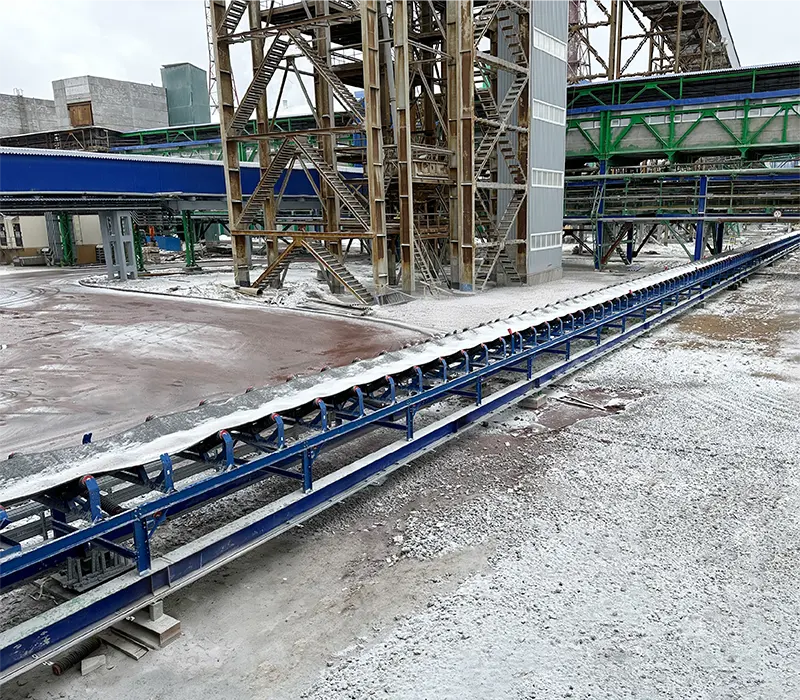
QBF rubber cold resistant conveyor belt ensures stable material handling in extreme cold conditions.
Anyone using standard belts at freezing job sites knows the common issues: rubber turns rigid, cracks and loses elasticity in low temperatures. These defects cause unplanned downtime, higher repair costs and potential safety hazards.
Our custom cold resistant cover rubber solves these on site problems. The specialized compound retains flexibility, tensile strength and wear resistance in deep freeze. It is a key conveying component for facilities operating in persistent cold environments.
Why Choose QBF rubber Cold Resistant Conveyor Belt
We do not just use general purpose rubber with minor adjustments. Every cold resistant belt comes from specially formulated rubber compounds mixed in house.
Many suppliers simply lower rubber hardness and call their belts “cold resistant”. Those cheap alternatives turn brittle after several weeks in continuous sub zero conditions. Our formula keeps stable performance through repeated freeze thaw cycles, which is very common for outdoor mines and ports.
- Strict lab cold resistance test before every batch shipment
- Real world field proven in high latitude cold mining sites
- Custom compound mixing to match your exact working conditions
- Full traceability for rubber raw materials
- Test reports available upon request for your project tender
Key Features
- Very reliable cold weather performance
- Holds high rubber elasticity under freezing conditions
- Good shock absorption when heavy bulk materials drop onto the belt
- All core mechanical properties hold steady down to 50 °C for consistent production
- Handles different bulk materials in extreme cold working conditions
- Flame retardant cover option for locations with fire hazards
- Oil resistant cover for sites exposed to grease or mineral oil
- Heavy duty anti abrasive cover for high wear material transport
Supported Belt Constructions
- Multitrans
- Sempercord
- Metalcord
- Metaltrans
- Autostable
- Ripstop (tear resistant for sharp, jagged bulk material)
Cover Rubber Physical Properties
Meets industry standard HG/T 3647 2014
| Parameters | Grade H | Grade D | Grade L |
| Tensile Strength (Mpa) | 24 | 18 | 15 |
| Elongation at Break (%) | 450 | 400 | 350 |
| Aging Test (70℃, 7d) Change of Tensile Strength % | ±25 | ±25 | ±25 |
| Aging Test (70℃, 7d) Change of Elongation at Break % | ±25 | ±25 | ±25 |
| Abrasion Loss mm³ | 120 | 100 | 200 |
| Tensile Cold resistant Coefficient mm³ C1 (-45℃) | 0.3 | ||
| Tensile Cold resistant Coefficient mm³ C2 (-50℃) | 0.2 | ||
| Change of Tensile Strength % C1 (-45℃) | ±20 | ||
| Change of Tensile Strength % C2 (-50℃) | ±25 | ||
| Change of Elongation at Break % C1 (-45℃) | ±20 | ||
| Change of Elongation at Break % C2 (-50℃) | ±30 | ||
Quick Selection Guide
Think over these points before sending your inquiry:
- Minimum site temperature: Confirm your lowest ambient temperature, choose C1 (-45℃ max) or C2 (-50℃ max) grade
- Material being conveyed: Is it sharp rock, heavy ore, oily coal, or combustible material? Decide if you need extra oil resistant, flame retardant or heavy anti abrasive cover
- Belt strength requirement: Textile carcass or steel cord carcass? Tell us your required tensile strength
- Working environment: Indoor workshop or fully open air site with wind chill? Wind chill will make actual belt surface temperature even lower than air reading.
Tip: Wind chill effect matters! If your location has strong cold wind, we suggest upgrading to one grade colder for longer service life.
Typical Application Scenarios
- Cold region open pit mining
- Lignite coal and hard rock mining
- Quarries & aggregate yards
- Long distance overland conveyor lines
- Ore and mineral processing plants
- Bulk cargo port terminals in cold areas
- Power and heating plants
Expected Service Life
Belt service life heavily depends on loading weight, material sharpness, impact force and actual minimum operating temperature.
When operated within our designed temperature range and with correct installation & maintenance:
- For open pit mine overland lines: Normally 12 24 months
- For port & power plant bulk conveying: Normally 18 30 months
Running the belt below its rated minimum temperature will drastically shorten service life and cause unexpected cracking damage.
Supported Belt Constructions
- Multitrans
- Sempercord
- Metalcord
- Metaltrans
- Autostable
- Ripstop (tear resistant for sharp, jagged bulk material)
FAQ
Q1: What belt carcass types pair up with this cold resistant rubber cover?
A: Our cold resistant covers work with many carcass constructions: textile reinforced Multitrans, Sempercord, steel cord Metalcord and Metaltrans, Autostable and rip stop tear resistant belts. Send over your required belt strength, and we can put together a proper suggestion.
Q2: Which industries order cold resistant conveyor belts most often?
A: Buyers mainly come from open pit mines, high latitude port terminals, power plants, rock quarries and mineral processing facilities in cold climate zones.
Q3: Does wind chill affect cold resistant conveyor belt performance?
A: Yes. Wind chill drops the real surface temperature of belt far below the air thermometer reading. For windy cold exposed sites, we often recommend C2 grade even if local recorded low temperature is only 42℃.
Q4: Can cold resistant belts work in hot summer weather as well?
A: Yes. Both C1 and C2 grades work fine up to +45℃. They handle big seasonal temperature swings, which is perfect for locations with freezing winter and hot summer.
Q5: What test methods do you use for cold resistance performance?
A: Our lab runs tensile cold resistant coefficient test following HG/T 3647 2014 standard for every batch. Test reports can be provided for tender or project review.
Daily Maintenance Tips for Cold Resistant Conveyor Belts
1.Keep belt surface clean from ice and snow build up. Thick ice will increase load and accelerate rubber fatigue.
2.Check cover rubber surface regularly for tiny cracks during cold seasons. Early inspection avoids sudden belt tearing.
3.Adjust pulley and roller alignment correctly. Misalignment creates extra stress and speeds up cracking under cold conditions.
4.Do not apply harsh chemical solvents onto cold resistant rubber cover. Solvents will destroy low temperature rubber performance.
Products

Sidewall Conveyor Belt

Pocket Type Conveyor Belt
It handles ultra high lift, high throughput tasks beyond conventional high angle sidewall belts, realizing stable continuous bulk material transportation.

Rope-track Sidewall Conveyor Belt

Bucket Elevator Conveyor Belt
They deliver low elongation, high throughput and stable operation with easy maintenance, helping operators reduce downtime from belt failures and frequent replacements.

Pipe Conveyor Belt
Supporting sharp horizontal and vertical bends, it meets strict environmental requirements and helps plants remove redundant transfer points, favored by operators troubled by on site dust and leakage issues.

Chevron Conveyor Belt
Various chevron patterns are available for different slope demands. Widely used in mining, farming, construction and recycling, it maintains stable performance under harsh on site working conditions.
Recent news

Sidewall Conveyor Belt Sagging Solutions: QBF rubber Free Zone Base Belt Design Extends Service Life by 30%
Sep 18, 2026

QBF Rubber Anti-stick Sidewall Belting Helps Shenzhen Tunnel Construction
Sep 18, 2026

Mining Vertical Lifting System Solution: Tackling Continuous Conveying Challenges for Deep-Mine Operations
Sep 17, 2026
See Latest Service





