Impact Bar
-
Description
Product Overview
Impact bars, also called conveyor impact bars or impact bed bars, sit right at your conveyor’s loading point. When bulk material drops onto the belt, these bars take the brunt of that heavy fall force. Many sites run into belt rips, gouges and early wear purely from repeated material impact, and that’s exactly what this component solves.
You will commonly find them on coal mines, aggregate yards, cement facilities and bulk material transfer stations.
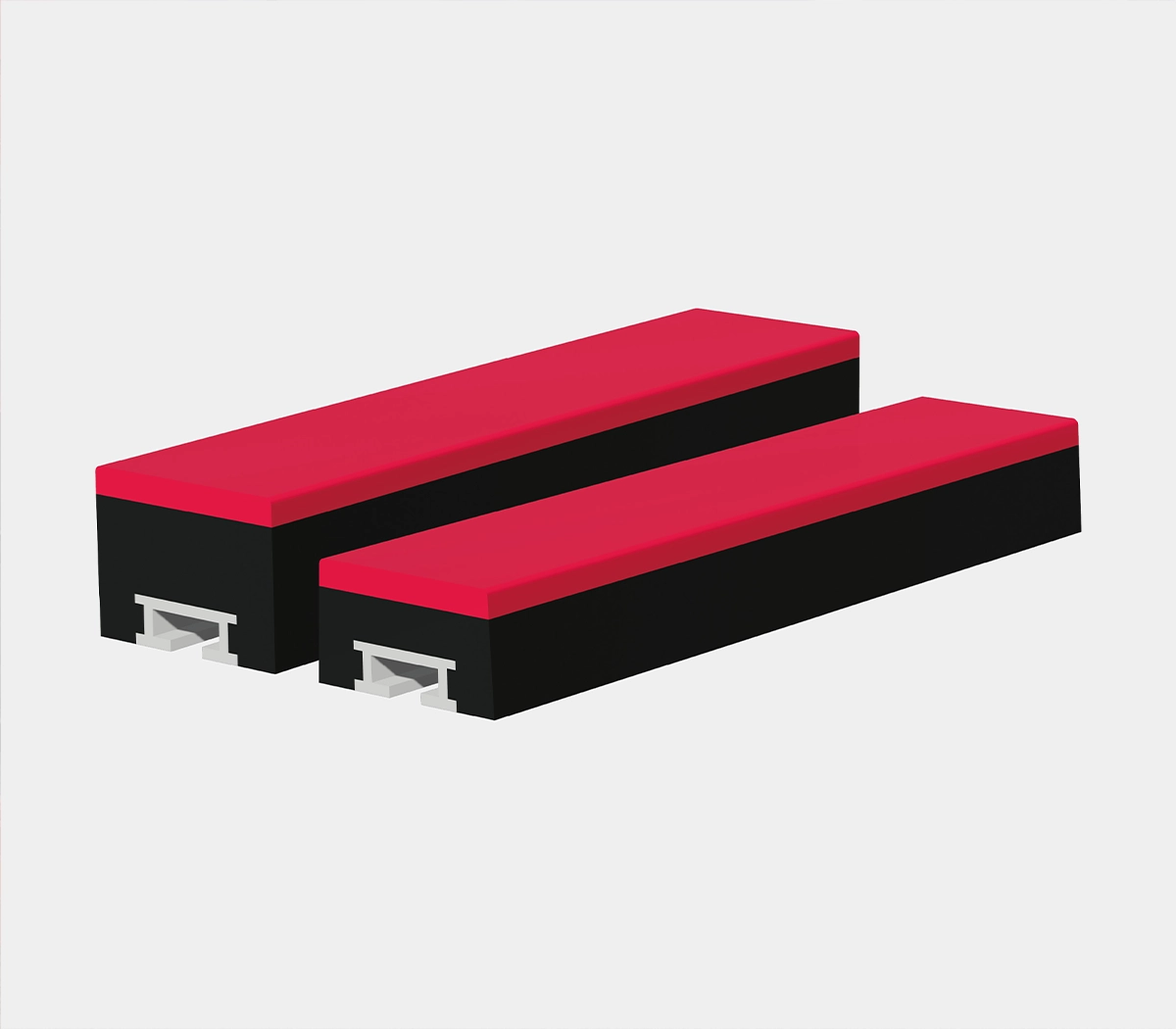
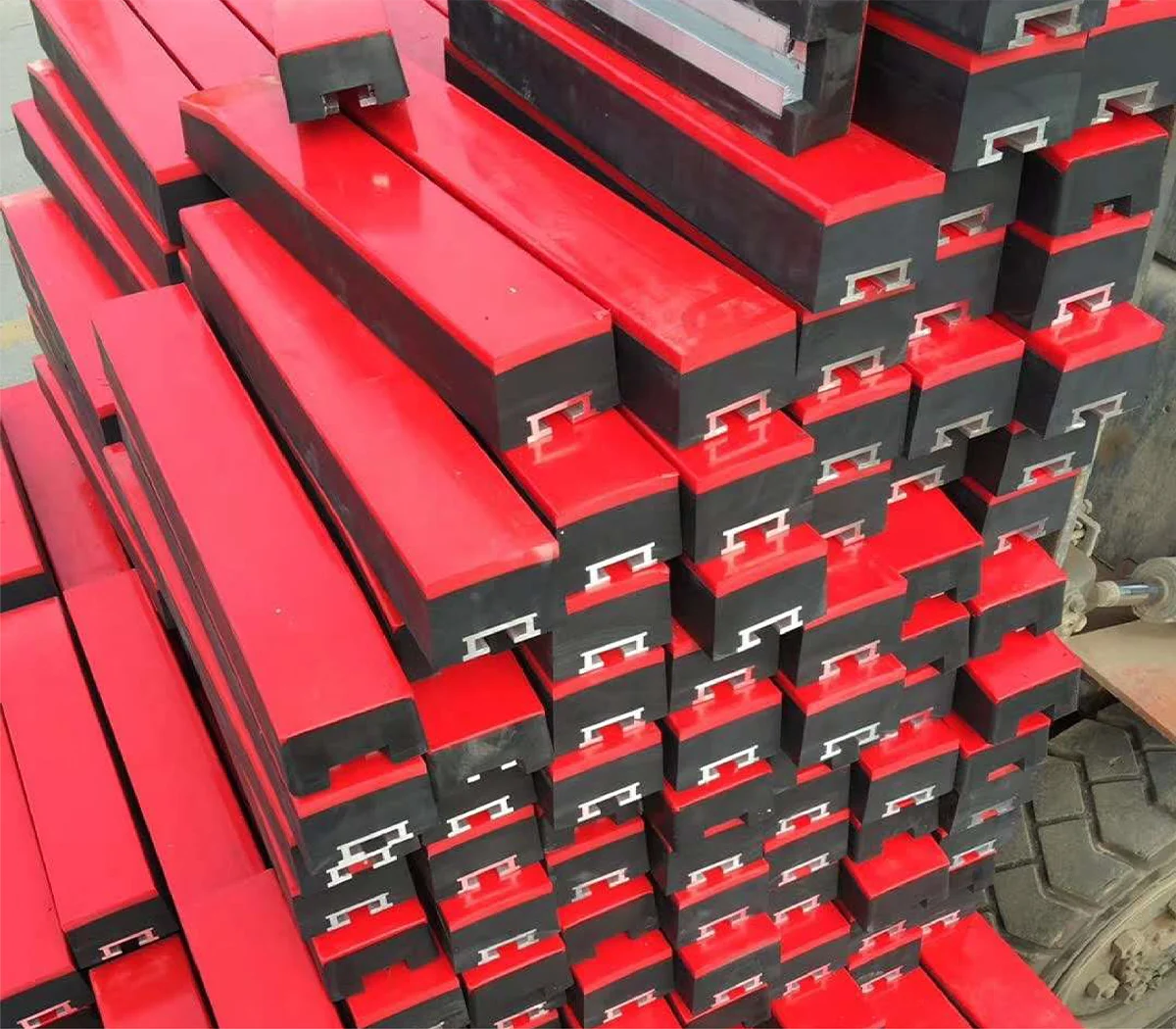
This bar uses a three piece composite build: UHMW polyurethane top surface, high elastic rubber body plus metal carcass base. Instead of simple glue bond assembly, all layers go through one shot integral vulcanization. This manufacturing method stops layers from peeling apart under continuous heavy load, delivering stable performance out in the field and longer service life.
Key Advantages
Surface Layer – UHMW Polyurethane Top
We use ultra high molecular weight polyurethane for the top working surface. It delivers low friction so your conveyor belt slides smoothly across the bar.
Field proven buffer and wear resistance stand up to constant bulk material rubbing. It absorbs heavy impact from falling material and cuts down shock transferred straight to your conveyor belt.
It also handles tough site conditions well: repels water, resists material sticking, and holds up against mild chemical exposure. Wet, sticky coal dust or light chemical splashes won’t easily stick on or erode the bar surface.
Highly Elastic Rubber Body
The rubber core boasts strong tear resistance, critical for repeated shock cycles at loading zones. Good tensile strength and solid elongation at break let the rubber deform under impact and bounce back. It won’t stay permanently crushed even after countless material hits.
Metal Carcass Base
We supply two base options: steel carcass and aluminum alloy carcass. Custom anti corrosion steel carcass is available for sites with corrosive atmosphere. The rigid metal base fastens the whole bar firmly onto impact bed frames, preventing shifting during daily operation.
Production Process
UHMW wear layer, elastic rubber body and metal carcass are vulcanized together as one unit. A lot of cheap competing impact bars only glue layers together. Those products tend to delamination quickly under heavy impact. Our integrated vulcanized structure avoids that common failure, keeps consistent performance and extends service life.
Real World Operational Benefits
- Soaks up falling material impact, protects conveyor belts from cuts, punctures and impact related damage
- Helps cut down material spillage at loading points, less loose bulk material scattered around transfer stations
- Slows down local belt wear at loading sections, so your conveyor belt can stay in service much longer
- Cuts down unexpected downtime caused by belt damage, supporting higher overall conveying output
- Reduces spare part replacement frequency and lowers your on site maintenance labour cost
Model Selection Guide
QBF LD 0 General Impact Bar
Best fit for bulk materials carrying high sulfur content, coal mine conveying is the typical use case. Custom anti corrosion steel carcass copes well with corrosive working environments.
QBF LD A General Impact Bar
All round model that works for most bulk material conveying conditions. Its curved arc surface paired with special shock absorbing rubber gives running conveyor belts maximum buffer protection.
Specification
| Specifications | Length | Width | Thickness | Wear layer width |
| QMH-LD-0 | <2000mm
Customizable |
Top 100mmBottom 95mm | 55mm | 12.5mm |
| QMH-LD-A | <2000mm
Customizable |
Top 100mmBottom 95mm | 75mm | 12.5mm |
| Polyethylene performance parameters | |
| Tensile strength | ≥20Mpa |
| Average molecular weight | ≥350 ten thousand |
| Coefficient of friction | ≤0.15μ |
| Abrasion | ≤90mm3 |
| Density | 0.1±0.05g/cm³ |
| Rubber Performance Parameters | |
| Tensile strength | ≥12Mpa |
| Elongation at break | ≥350% |
| Hardness | 60±5 SHORE A |
| Abrasion | ≤250mm3 |
Where These Impact Bars Are Used
Our conveyor impact bars install at almost all bulk material loading points. Typical working sites include:
- Surface and underground coal mines
- Gravel, stone and aggregate crushing plants
- Cement production lines
- Mineral ore processing facilities
- Port bulk cargo transfer terminals
- Power plant raw coal conveying systems
Quick tip: If you run high drop heavy duty loading points, send over your actual site data: drop height, material density, belt speed and material composition. Our technical team will help you lock in the right impact bar model.
FAQ
Q: What makes impact bar better than impact rollers?
A: Impact rollers often jam or fail when dealing with wet, sticky bulk material. Impact bars create a continuous buffer surface for the belt. There are no rotating parts to get stuck, failure rates go down, and you get much better spillage control around loading zones.
Q: Can I get impact bars made to my custom sizes?
A: Yes. Standard finished length stays under 2000 mm. We can adjust bar length, swap carcass material for corrosion or special environment needs. Just share your dimensions or drawings with our sales team.
Q: How many impact bars do I need for one loading station?
A: There is no fixed number. It depends on your belt width, material drop height and actual handling capacity. Normally multiple bars sit side by side to fully cover the whole loading zone. Send your conveyor parameters, we can give practical layout suggestions.
Q: Will the UHMW top layer scratch my conveyor belt?
A: The UHMW surface features low friction. When your conveyor runs normally, sliding over these bars will not scratch belt covers. Most belt scratch issues come from bad installation: uneven bar height or protruding fasteners.
Order & Customization Notes
Got special needs for carcass material, dimensions or special environment adaptation? Share your site operating conditions with us. Our engineering team will work out suitable impact bar solutions matching your conveyor setup.
Products

Sidewall Conveyor Belt

Pocket Type Conveyor Belt
It handles ultra high lift, high throughput tasks beyond conventional high angle sidewall belts, realizing stable continuous bulk material transportation.

Rope-track Sidewall Conveyor Belt

Bucket Elevator Conveyor Belt
They deliver low elongation, high throughput and stable operation with easy maintenance, helping operators reduce downtime from belt failures and frequent replacements.

Pipe Conveyor Belt
Supporting sharp horizontal and vertical bends, it meets strict environmental requirements and helps plants remove redundant transfer points, favored by operators troubled by on site dust and leakage issues.

Chevron Conveyor Belt
Various chevron patterns are available for different slope demands. Widely used in mining, farming, construction and recycling, it maintains stable performance under harsh on site working conditions.
Recent news

Sidewall Conveyor Belt Sagging Solutions: QBF rubber Free Zone Base Belt Design Extends Service Life by 30%
Sep 18, 2026

QBF Rubber Anti-stick Sidewall Belting Helps Shenzhen Tunnel Construction
Sep 18, 2026

Mining Vertical Lifting System Solution: Tackling Continuous Conveying Challenges for Deep-Mine Operations
Sep 17, 2026
See Latest Service





