-
Description
Product Overview
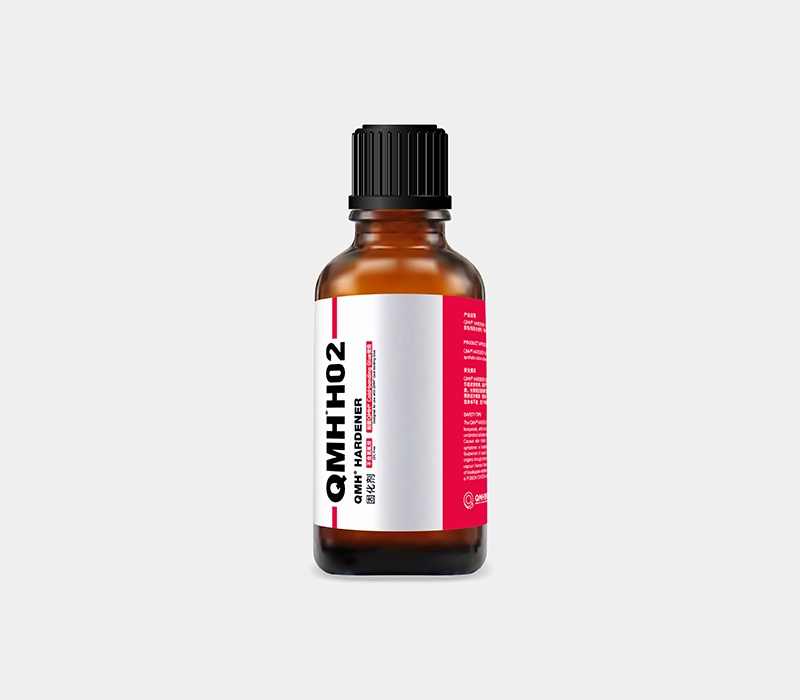
QMH Hardener (H02) is a zero CFC hardener formulated as a cross linking additive for adhesive systems. It works well with hydroxyl polyurethane, polychloroprene, natural rubber, and synthetic rubber adhesives. This hardener is purpose built to pair perfectly with the QMH Cold bonding Glue system to boost bond strength and adhesive durability.
Application & Operation
Apply by brushing or coating onto bonding surfaces. Mix or apply this hardener together with matched QMH cold bond glue to get stable bonding performance.
Coverage: Roughly 250 g/m² for each single layer. Real consumption may shift based on
substrate texture and surface roughness.
Storage & Shelf Life
Keep goods inside sealed original barrels. Choose dry, cool storage space.
- Recommended ambient temperature: 20 25°C
- Humidity: ≤50%
- Shelf Life: More than 24 months for unopened original packages.
Note: Once opened, use up as soon as possible. Moisture exposure will hurt hardener performance.
Packaging
Standard unit: 30 g per bottle. Small bottle packaging brings convenience for field repair and small batch bonding jobs.
Quick Spec Table
| Item | Specification |
| Operation Method | Brushing or coating |
| Coverage | Approx 250g/m² per layer |
| Storage | Sealed barrel, dry & cool, 20 25℃,humidity ≤50% |
| Unopened Shelf Life | >24 months |
| Pack Size | 30g / bottle |
FAQ
Q1: What adhesives can I use QMH Hardener H02 with?
A: It fits hydroxyl polyurethane, polychloroprene, natural rubber and synthetic rubber adhesives. Best results come when matched with QMH Cold bonding Glue system. Do not test on unknown adhesive without small sample trial first.
Q2: Will storage environment change its usable time?
A: High humidity or over heat storage shortens shelf life. Always seal containers tightly after partial use. Store strictly within 20 25°C and humidity ≤50%.
Q3: Can I adjust the coating weight freely?
A: We suggest 250 g/m² per layer. Too thin causes weak cross linking; over thick coating may lead to brittle glue lines. Run small test pieces before full scale work.
Q4: What happens once the bottle is opened?
A: Air and moisture will react with the hardener. Finish usage quickly after opening. Discard leftover material if you notice texture change or sediment.
Products

Sidewall Conveyor Belt

Pocket Type Conveyor Belt
It handles ultra high lift, high throughput tasks beyond conventional high angle sidewall belts, realizing stable continuous bulk material transportation.

Rope-track Sidewall Conveyor Belt

Bucket Elevator Conveyor Belt
They deliver low elongation, high throughput and stable operation with easy maintenance, helping operators reduce downtime from belt failures and frequent replacements.

Pipe Conveyor Belt
Supporting sharp horizontal and vertical bends, it meets strict environmental requirements and helps plants remove redundant transfer points, favored by operators troubled by on site dust and leakage issues.

Chevron Conveyor Belt
Various chevron patterns are available for different slope demands. Widely used in mining, farming, construction and recycling, it maintains stable performance under harsh on site working conditions.
Recent news

Sidewall Conveyor Belt Sagging Solutions: QBF rubber Free Zone Base Belt Design Extends Service Life by 30%
Sep 18, 2026

QBF Rubber Anti-stick Sidewall Belting Helps Shenzhen Tunnel Construction
Sep 18, 2026

Mining Vertical Lifting System Solution: Tackling Continuous Conveying Challenges for Deep-Mine Operations
Sep 17, 2026
See Latest Service





