QBF rubber rubber Mengundang Anda ke bauma CHINA 2026
9 November 2026
 admin
Moving bulk material becomes more difficult when a conveyor has to climb. A conventional flat belt may handle a long horizontal run with ease, but on a steep incline, loose material tends to slide backward. Increasing the conveyor length can help, although a factory, mine or port terminal may not have room for a gentler slope.
A sabuk konveyor dinding samping offers another way to move material uphill. Its raised edges and cross cleats create carrying compartments that travel with the belt. This article explains how the design works, what makes it different from an ordinary conveyor belt, and where it is commonly used.
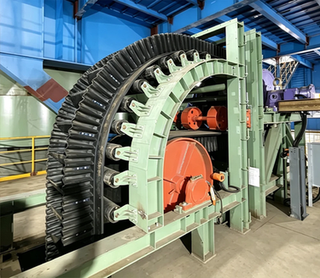
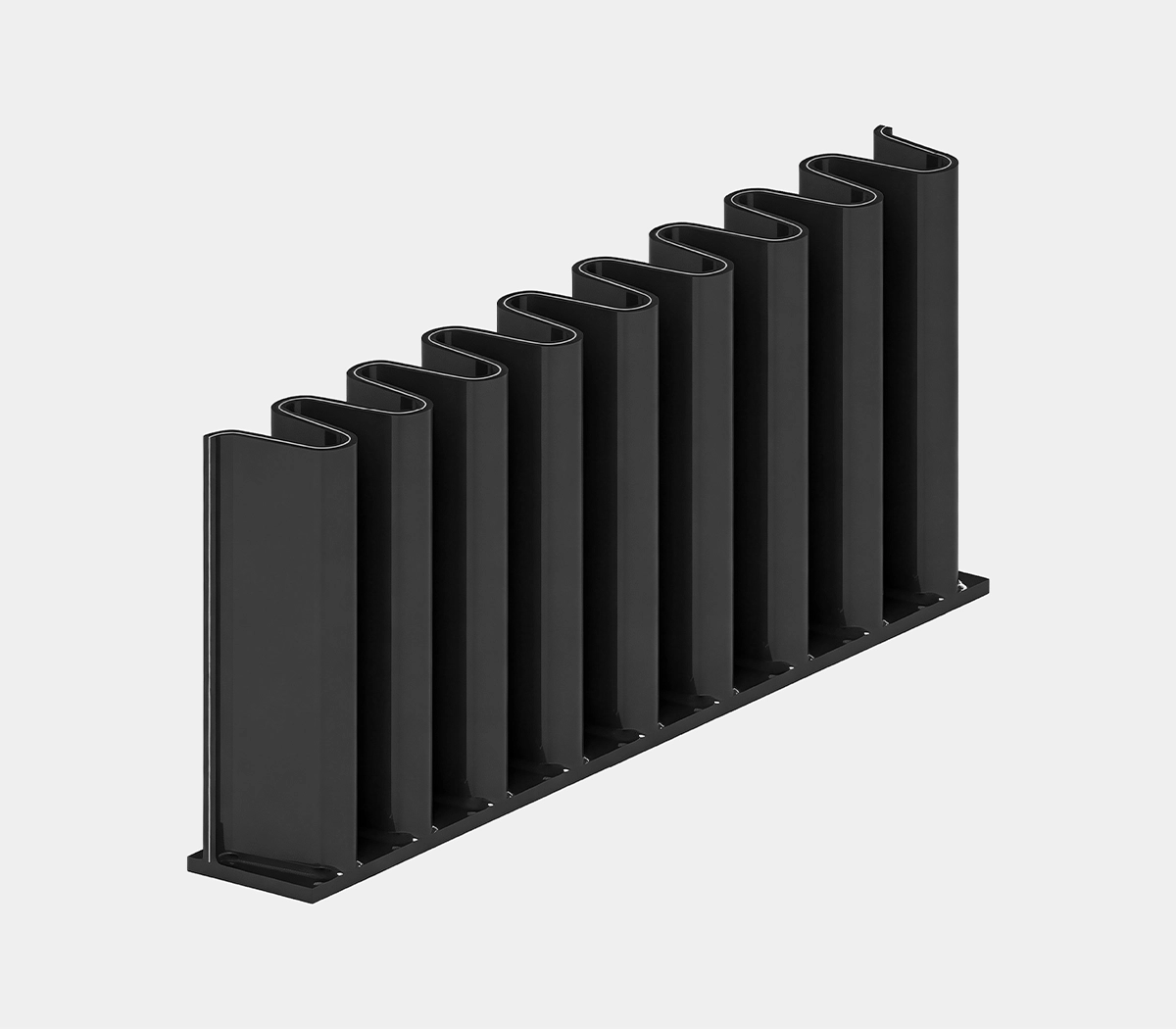
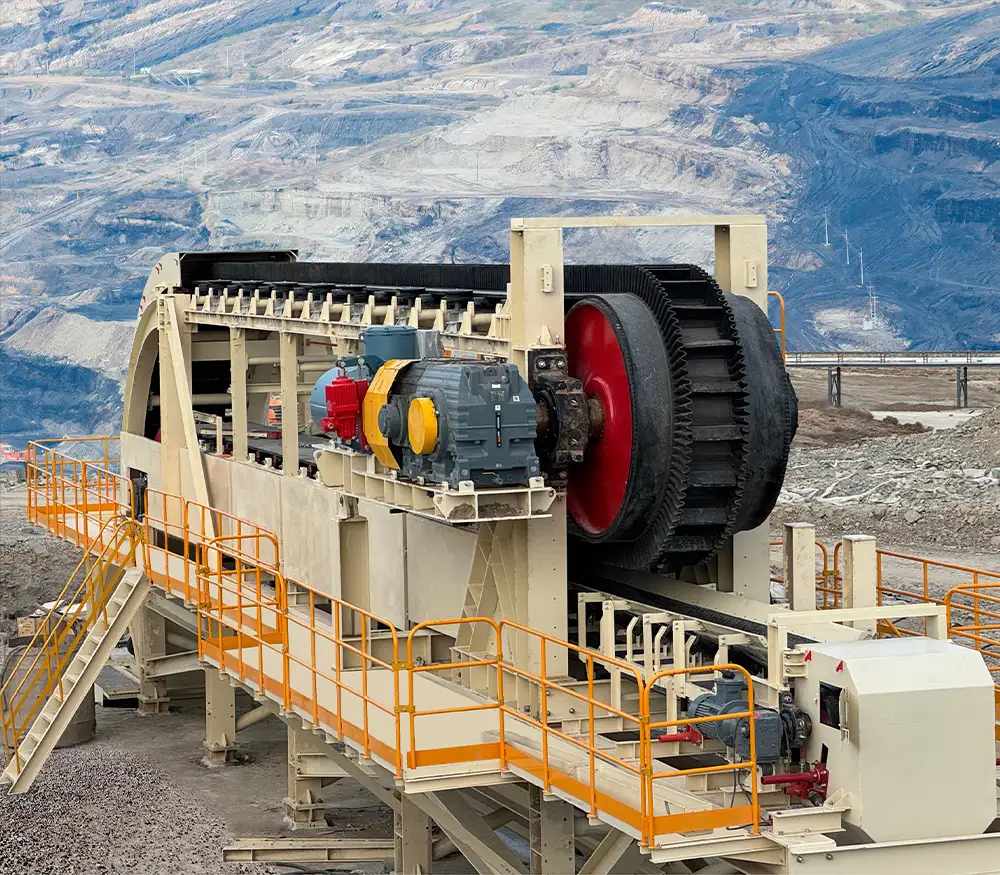
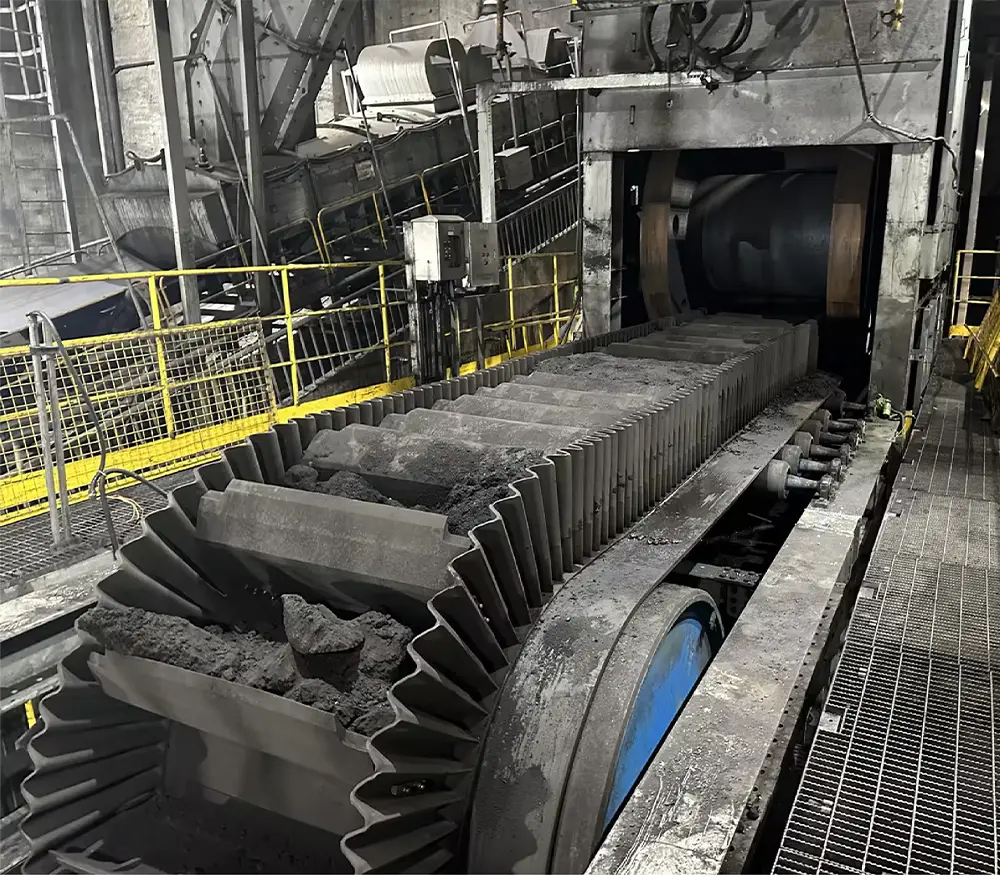
A sidewall conveyor belt is a rubber conveyor belt built for transporting bulk solids on steep inclines. It is also called a corrugated sidewall conveyor belt because its two raised edges have a flexible, wave-like shape. Cross cleats are positioned between those edges to support material as the belt rises.
Seen from above, the belt resembles a series of open compartments rather than a flat moving surface. Coal, crushed stone, sand and other loose materials can rest between the cleats while the belt moves upward. The corrugations allow the edges to flex around curved parts of the conveyor without losing their raised shape along the carrying run.
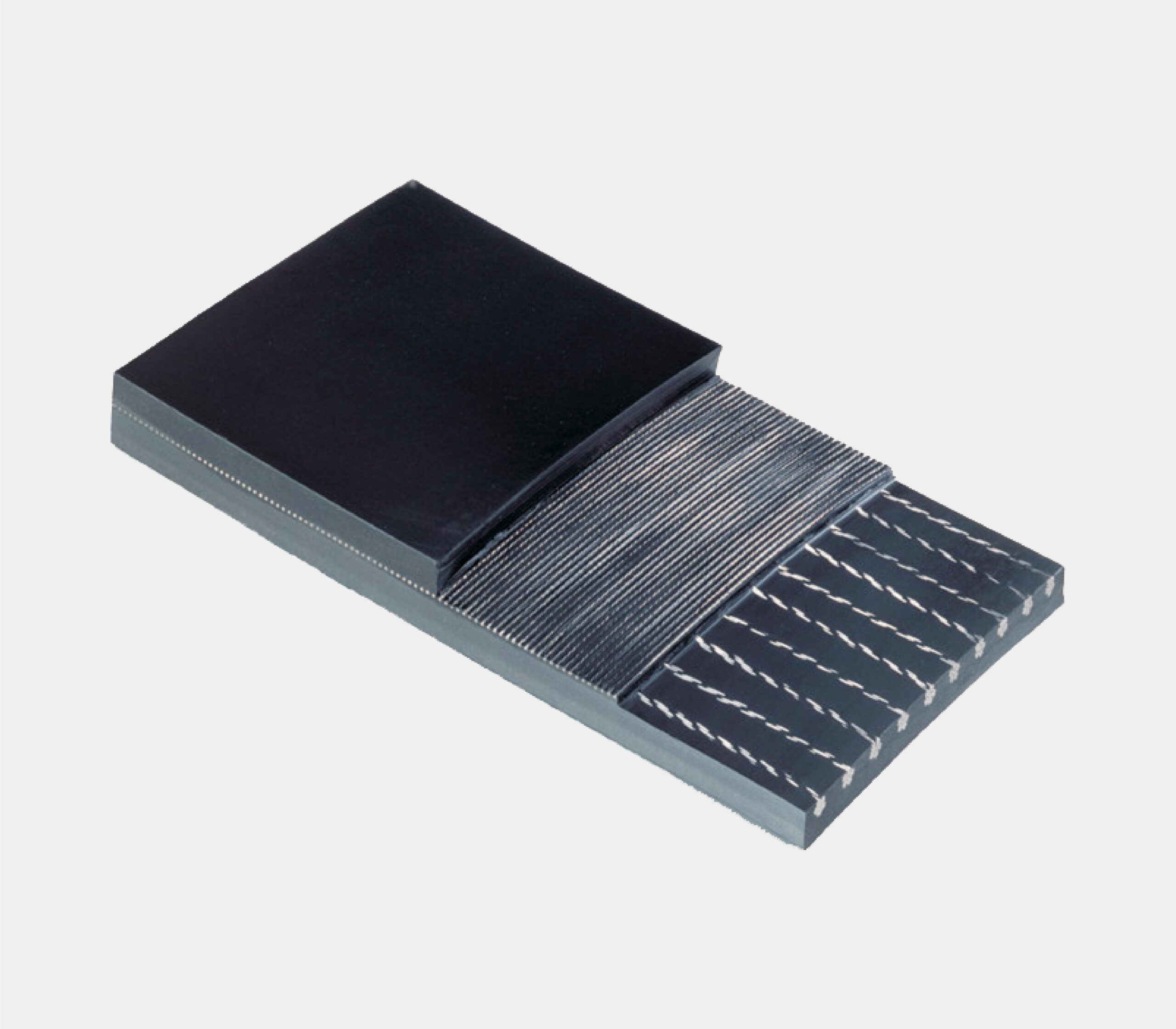
The base belt carries the load and transmits the pulling force from the drive. It needs strength along its length, yet it also needs to bend around pulleys. Unlike many ordinary flat belts, a sidewall base belt often has additional transverse rigidity to help it hold its shape beneath the weight of the material. QBF describes different reinforced constructions in its base belt range.
The sidewalls run along both belt edges. Their folds open and close slightly as the belt moves around curved sections, which is why they are corrugated instead of being made as straight, stiff walls. On the inclined carrying section, they keep material within the usable belt width.
Cross cleats are raised profiles fixed across the belt between the sidewalls. They take much of the load on a steep incline and prevent the material from simply sliding to the bottom. Cleats are produced in different heights and shapes, including T, C and TC profiles. Each has its own carrying and discharge characteristics; QBF shows several examples in its cleat product range.
Imagine a stream of crushed limestone entering the conveyor near ground level. The material falls into the spaces between the cross cleats. As the belt climbs, the cleats act as supports behind the load while the corrugated sidewalls keep it from spilling sideways. The compartments move upward with the belt rather than staying fixed in one place.
Near the top, the belt changes direction around the discharge section and the material leaves the compartments. The empty belt then returns to the loading end for another cycle. Depending on the conveyor layout, a single belt can include horizontal, inclined and nearly vertical sections along the same route.
Some sidewall conveyor systems operate at angles approaching 90 degrees. Their ability to do so comes from the carrying compartments, not from trying to make the rubber surface unusually grippy. That is the main difference between a steep-angle sidewall belt and a conventional inclined belt.
Mines and quarries often have to move broken rock from a lower working level to a crusher, screen or stockpile. A sidewall conveyor can handle the elevation change on a relatively compact route. Typical materials include crushed ore, gravel and stone aggregates, with the belt construction chosen to handle their weight and abrasion.
Cement production involves moving limestone and other bulk raw materials between processing levels. Power stations also use conveyor systems for materials such as coal. In both settings, a sidewall conveyor can connect equipment at different heights without requiring a long sloping conveyor across the plant.
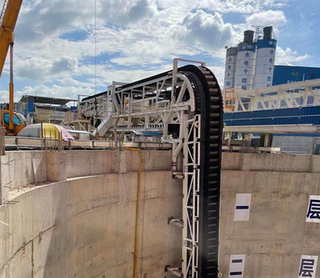
Space around ship-loading equipment, storage areas and existing structures is often tightly used. Steep-angle conveyors can help move bulk materials between conveyors or equipment located at different elevations. Their raised carrying profile is especially useful where a conventional inclined run would occupy too much of the available area.
On tunneling and excavation projects, spoil must often travel from a lower working area to a higher discharge point. A sidewall system can form part of that lifting route, particularly where shafts, structures or temporary works restrict the space available for a long incline.
The cleats and sidewalls change how loose material behaves on the moving belt. A flat belt depends heavily on friction between its surface and the load; as the slope increases, gravity works against that grip. A sidewall belt instead supports material within compartments, making a much steeper route possible.
That layout can also reduce the need for intermediate transfer stations. In a plant with several conveyor levels, eliminating a transfer may mean fewer chutes and fewer locations where material falls from one machine to another. The advantage is not simply a steeper belt: it is the ability to connect different elevations using a shorter, more direct material-handling route.
Both types are used on inclined conveyors, but they hold material in different ways. A chevron conveyor belt has molded rubber patterns on its carrying surface. Those profiles increase the grip between the belt and the load and are commonly used for moderately inclined transport of materials such as sand, grain, coal and aggregates.
A sidewall belt has much taller side edges and transverse cleats that form separate carrying spaces. It is designed for steeper lifts and more complex elevation changes. The visual difference is easy to spot: a chevron belt looks like a patterned flat belt, while a sidewall belt has a high-sided, compartmented profile.
The belt is constantly flexing, carrying weight and moving around pulleys. That puts repeated stress on the base belt and on the points where the sidewalls and cleats are attached. Transverse stiffness helps the loaded belt maintain its shape, while the corrugated edges must bend without cracking.
The material also leaves its mark. Sharp, abrasive stone wears rubber differently from fine grain; damp powder may stick inside the compartments after discharge. Wear-resistant rubber and secure attachment of the raised profiles are therefore important to the working life of the belt. QBF uses hot vulcanization to bond its sidewalls and cleats to the base belt, one of the manufacturing methods used for these assemblies.
Yes. Sidewall conveyor systems can be designed for steep inclines and, in some applications, vertical lifting. The cross cleats support the material during the upward run, while the corrugated sidewalls contain it along the edges.
The wave-like folds make the raised edges flexible. They can bend as the belt travels around curved sections and pulleys, then return to their working shape on the carrying run.
They are used with a wide range of bulk solids, including granular and crushed materials. Fine powders place greater demands on sealing around the compartment edges, while sticky materials can leave more residue after discharge. Those differences affect how the conveyor is built and cleaned.
A sidewall conveyor belt turns an ordinary moving belt into a series of travelling carrying compartments. With a reinforced base, flexible corrugated sidewalls and cross cleats, it can move bulk solids along routes that would be difficult for a conventional flat belt, especially where the material must climb sharply.
admin